
The conflict may disrupt Budget 2026-2027 projections, squeezing revenues and raising subsidies, prompting fiscal adjustments and potential reforms, echoing lessons from the Covid-era shock, points out A K Bhattacharya.

Both Houses of Parliament were adjourned sine die, concluding a Budget session marked by the passage of key legislations and the defeat of a Constitution amendment bill on women's reservation. The session saw frequent opposition protests and discussions on various issues, including the West Asia conflict.

The Gujarat assembly complex received a bomb threat via email, leading to the evacuation of staff and MLAs and a search operation by local police.

The Delhi Legislative Assembly received a bomb threat via email hours before the scheduled budget presentation, prompting heightened security measures and an investigation.

The Maharashtra Vidhan Bhavan in Mumbai was evacuated following a bomb threat received via email during the budget session, prompting security checks and a search operation.

The Indian Parliament is expected to extend its budget session to introduce a bill increasing Lok Sabha seats to 816, reserving 273 for women, and amending the women's reservation law.

The Delhi government's 2026-27 budget prioritises social welfare, introducing the 'Vayo Anand' scheme for senior citizens' recreational activities and constructing an integrated complex for children in juvenile reform homes.

The Punjab government has allocated Rs 11,577 crore to home affairs, justice, and jails in the 2026-27 budget, focusing on strengthening institutional capacity, technology-driven surveillance, and prison security.
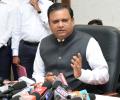
Maharashtra Assembly Speaker Rahul Narwekar warned senior bureaucrats against skipping important discussions in the House, especially debates on the state budget, emphasising the importance of their presence for providing administrative inputs to ministers.

The Maharashtra Vidhan Bhavan in Mumbai received a bomb threat via email during the budget session, leading to a security search and evacuation. Authorities deemed the threat a hoax after finding nothing suspicious.

The Michael Jackson biopic, Michael, has made an explosive debut at the worldwide box office, setting new records for the highest opening weekend for a music biopic.
The Bangalore Chamber of Industry and Commerce (BCIC) has welcomed the Karnataka Budget 2026-27, highlighting its focus on economic growth, support for MSMEs, and infrastructure development. Industry leaders have expressed optimism about the budget's potential to boost manufacturing, create jobs, and drive innovation in the state.

India's defence expenditure surged to $92.1 billion in 2025, making it the world's fifth-largest military spender, according to SIPRI data. This 8.9 per cent year-on-year rise was primarily driven by operational and procurement needs following heightened regional tensions with Pakistan in May 2025.

The Budget reflects a clear focus on strengthening India's long-term prospects by leaning on nation-building sectors such as infrastructure, manufacturing, and technology while maintaining fiscal responsibility.

China's latest defence budget surges to $275 billion, fueling its ambitious military modernisation program and intensifying geopolitical dynamics in the region.

Telangana Chief Minister A Revanth Reddy will virtually deliver the keynote address at the Harvard Kennedy School's AI symposium, focusing on the global AI landscape.

The first leg of the Budget session concluded with debates over the India-US trade deal and a former army chief's memoir, and will reassemble on March 9.

India's state-run oil marketing companies (OMCs) are projected to incur under-recoveries of approximately Rs 80,000 crore on liquefied petroleum gas (LPG) sales in FY27 if current loss levels persist, according to rating agency Icra.
India's fiscal deficit is projected to reach 4.5 per cent of GDP for the current fiscal year, exceeding the budgeted target, as the government's policy responses to the West Asia conflict are expected to strain public finances, according to research firm BMI.

The Union Budget for 2026-27, presented by Finance Minister (FM) Nirmala Sitharaman on Sunday, which was a first, had an excellent domestic macro backdrop. According to the first advance estimates, gross domestic product (GDP) in constant prices is projected to grow 7.4 per cent in the current financial year, against 6.5 per cent in 2024-25.

The Union Cabinet headed by Prime Minister Narendra Modi on Sunday approved the Union Budget 2026-27.

Sometimes, the most powerful Budgets whisper and the wisest investors listen, notes Ramalingam Kalirajan.
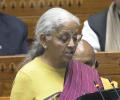
This Budget positions India's taxation ideology as not merely a revenue source but as a strategic catalyst for growth, inclusion and long-term confidence.

The idea of back-loading the target of fiscal consolidation is perhaps guided by the government's desire to be prepared for any adverse developments in the coming year, points out A K Bhattacharya.

Households should moderate large discretionary expenses for the time being.
'They should prioritise essential spending. They should maintain an emergency fund covering 6 to 12 months of expenses.'

Of the Rs 31,820.80 crore allocated to central sector schemes and projects, only Rs 11,868.05 crore was utilised, according to the revised estimates.

'If you go by the capital expenditure, this is a good defence budget. But we will have to see if the government can keep defence spending at 2 per cent or higher in 2027-2028.'

The Congress party has strongly criticized the Union Budget, calling it 'lacklustre' and 'disappointing,' claiming it fails to address the needs of farmers, unemployed youth, and other key sectors.

India's fertiliser subsidy bill for the current financial year (FY27) is projected to increase by approximately 20% due to surging global prices, primarily driven by the West Asia crisis, a senior official confirmed. Despite this, retail prices for urea and di-ammonium phosphate (DAP) will remain unchanged, ensuring adequate supply for the kharif season.

Manufacturers are planning a hike of over 15 per cent in the second quarter of calendar year 2026, as memory prices shoot through the roof.
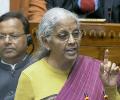
The 2026-27 Budget, seeking to harmonise the government's imperative to grant certainty while ensuring a rational tax policy, had several notable announcements to usher in halcyon days, says Mukesh Butani.

Lok Sabha takes up FCRA Amendment Bill amid opposition protests.

Rahul Roy addresses social media trolls mocking his financial situation, revealing ongoing legal matters and the impact of his brain stroke in 2020. He emphasises his commitment to working despite challenges and seeks genuine work opportunities.

Even if there is an early agreement on a cessation of hostilities in West Asia, the price shock will not go away easily, points out A K Bhattacharya.

Infographics break down the key numbers and decisions, making it quick and easy to understand what the Budget means for the economy.

Ashok Lahiri, a distinguished economist with experience in government, the private sector, and electoral politics, has been appointed as the new Vice-Chairman of NITI Aayog, tasked with strengthening India's reform trajectory and policy-making.

Here are the key numbers to watch out for in the Union Budget for 2025-26:

This is the first Budget in my memory of Budgets over the last half a century which has embraced upfront, enthusiastically and emphatically, technology, modernity and fiscal sobriety, notes Shreekant Sambrani.

Nirmala Sitharaman moved into her Kartavya Bhavan office on October 2, in time to get the work on the Budget 2026-2027 going.

The Lokpal, India's anti-corruption ombudsman, has been allocated Rs 30 crore in the Union Budget 2026-27. The Central Vigilance Commission (CVC) has been allocated Rs 54.56 crore.
 © 2026 Rediff.com - Advertise with us - Disclaimer - Privacy Policy - Sitemap - Feedback - About us - Terms of use - Grievances