
A special MP-MLA court acquitted all six accused, including Ayodhya MLA Abhay Singh, in a 24-year-old Nadesar shootout case involving former Jaunpur MP Dhananjay Singh due to insufficient evidence.

The Punjab and Haryana High Court has acquitted Dera Sacha Sauda chief Gurmeet Ram Rahim Singh in the 2002 murder case of a journalist, overturning a previous conviction by a special CBI court.

Ben Shelton said he had laid down a claycourt marker for US men with his Munich Open win on Sunday after the World No. 6 became the first American to claim an event above the ATP 250 level since Andre Agassi's 2002 Rome Masters triumph.

The Supreme Court has referred activist Teesta Setalvad's application for the release of her passport to a three-judge bench, in a case related to alleged fabrication of documents in the 2002 Gujarat riots.

The Enforcement Directorate (ED) conducted raids at the residences of a senior Kolkata Police officer and a businessman in connection with a money laundering case.

A special court in Thane, Maharashtra, has sentenced the mastermind of an investment fraud to rigorous imprisonment and ordered the auction of his properties to repay duped investors.

The final teams have qualified for the 2026 FIFA World Cup, which will be hosted by the United States, Canada, and Mexico. Find out which teams have qualified and their group stage assignments.

Turkey has qualified for the 2026 World Cup after a 24-year absence, defeating Kosovo in their playoff final. Kerem Akturkoglu's goal secured the victory, sparking celebrations across Turkey.

The Election Commission has issued instructions to district election officials in West Bengal regarding voters marked as 'unmapped' due to technical issues during the digitisation of the 2002 electoral rolls.

Rory McIlroy overcame a shaky start to secure his second consecutive Masters title, joining an elite group of golfers who have achieved this feat. His victory came after a tense final round where he held off a strong challenge from Scottie Scheffler.

Nationalist Congress Party (SP) MLC Eknath Khadse and his daughter have been booked for allegedly cheating an elderly woman out of her land in Maharashtra's Jalgaon district.

Pakistan's media regulatory authority, PEMRA, has issued a show-cause notice to GeoNews for allegedly violating a ban on Indian content by airing Indian songs and visuals while reporting on the death of legendary singer Asha Bhosle.

Ram Gopal Varma celebrated his 64th birthday on April 7 with his friends in Mumbai.

The India Meteorological Department (IMD) has predicted below normal monsoon rains for India this year, citing the potential emergence of El Nino conditions. This could significantly impact the country's agriculture-dependent economy.

Bengaluru FC appoint former India coach Savio Medeira as Head of Youth Development, aiming to strengthen its grassroots pathway and nurture local talent.

Australian sprinter Gout Gout made history at the Australian Athletics Championships in Sydney, becoming the first Australian to break the 20-second barrier in the 200 metres with a time of 19.67 seconds.

A Delhi court has remanded I-PAC co-founder Vinesh Chandel to the Enforcement Directorate's custody for 10 days in connection with a money laundering case involving alleged diversion of funds worth crores of rupees.
Nationalist Congress Party (SP) MLC Eknath Khadse and his daughter have been booked for allegedly cheating an elderly woman by assuring a sugar factory on her land and taking its possession with the help of forged papers in Maharashtra's Jalgaon district.
The Uttar Pradesh Special Task Force (STF) has dismantled two significant fraud operations involving crores of rupees in fraudulent share market, cryptocurrency, and forex schemes, leading to multiple arrests and uncovering a vast network of deceit.
The Indian men's national football team will participate in the Unity Cup 2026, a four-nation friendly tournament held in London, marking their return to the UK for international matches after 24 years.

Former India captain Sourav Ganguly supports the BCCI's decision to host Test matches in new venues like Guwahati and Ranchi, alongside traditional centres.

Rory McIlroy and Sam Burns share the lead after the first round of the Masters, while Aaron Rai finishes in the top 10. Akshay Bhatia faces challenges on the back nine.

An Indian-origin couple in the UK has been sentenced for breaching a disqualification order, operating companies despite a ban imposed after tax fraud claims.

Rory McIlroy takes a commanding lead at the Masters, setting the stage for an exciting weekend as he aims to become the fourth player to win back-to-back titles.

'You cannot run Parliament with 800 MPs as nobody will get time (to speak in Parliament). And Parliament sits for barely 60 days in a year.' 'Look at the House of Commons of the United Kingdom. They have 650 MPs and they sit for 150 days on an average in a year.'

Filmmaker Aditya Dhar once pursued a cricket career and aimed for the 2002 ICC Under-19 World Cup before a selection setback pushed him toward Bollywood, where he found success as a director.

A US-sanctioned tanker carrying Iranian crude oil is heading to India, marking the resumption of oil imports from Iran after seven years.

The Dhurandhar movies will undoubtedly shape the minds of the audience much more than news reports, court investigations, books and documentaries. But it is worth remembering that Pakistan's irridentist claims against India's national security have succeeded due to strategic planning, diplomacy, and the unsung heroines and heroes across government agencies, not due to a single maverick leader, points out Shweta Desai.But it is worth to remember that Pakistan's irredentist claims against India's national security have succeeded due to strategic planning, diplomacy, and the unsung heroines and heroes across government agencies -- not a single maverick, points out Shweta Desai.

Cooperation Minister Amit Shah addressed Parliament regarding the challenges faced by Bharat Taxi, a government-backed cooperative ride-hailing platform, including competition from established private aggregators and resistance to digital adoption among drivers.

Bengaluru FC has appointed Savio Medeira, former Indian national team coach, as their head of youth development, aiming to strengthen the pathway for young players to the first team.
An Ahmedabad court has convicted the wife of a former Income Tax Officer in a disproportionate assets case dating back nearly two decades. The husband, also an accused, died during the trial.

Gurmeet Ram Rahim Singh, head of Dera Sacha Sauda, has been acquitted by the Punjab and Haryana high court in the 2002 murder case of journalist Ram Chander Chhatrapati, a verdict that is being challenged in the Supreme Court.

Wayne Rooney urged Arsenal FC to allow teenager Max Dowman to enjoy his moment after he became the youngest goalscorer in Premier League history at 16.

India has refuted claims of payment issues hindering crude oil imports from Iran, clarifying that refiners have the flexibility to source oil from various global suppliers. The Ministry of Petroleum and Natural Gas addressed reports of a tanker rerouting to China, emphasising standard industry practices and secured oil requirements.
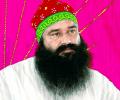
The Punjab and Haryana High Court has acquitted Dera Sacha Sauda chief Gurmeet Ram Rahim Singh in the 2002 murder of a journalist, citing a failure by the prosecution to prove its case and questioning the CBI's investigation.

A US-sanctioned tanker carrying Iranian crude oil has rerouted mid-voyage from its previously indicated destination of India to China, raising questions about payment issues and the future of India's Iranian oil imports.

'Portfolios built in these phases often deliver the strongest outcomes over time.'
'Portfolios built in these phases often deliver the strongest outcomes over time.'

Guwahati will host the India vs Australia Test match in February, while traditional venues like Mumbai and Kolkata have not been given any games in the 2026-27 Border-Gavaskar Trophy.

Donald Trump's inconsistent statements and actions regarding the conflict with Iran have drawn criticism and confusion, raising questions about American credibility and the direction of US foreign policy.
 © 2026 Rediff.com - Advertise with us - Disclaimer - Privacy Policy - Sitemap - Feedback - About us - Terms of use - Grievances