The Indian Space Research Organisation (ISRO) has announced that cowpea seeds sent to space onboard the PSLV-C60 POEM-4 platform have successfully germinated under microgravity conditions, marking a significant milestone for India's space program. This experiment, known as CROPS (Compact Research Module for Orbital Plant Studies), aims to understand how plants grow in the unique conditions of space, which is essential for future long-duration space missions.

The Indian Space Research Organisation (ISRO) has rescheduled the launch of PSLV-C59 to Thursday due to an "anomaly" detected in the PROBA-3 spacecraft. The launch was originally scheduled for Wednesday at 4.08 pm from the spaceport in Sriharikota. The anomaly was identified by scientists at the European Space Agency (ESA), who requested the rescheduling of the launch. The PROBA-3 mission, a joint project between ESA and ISRO, aims to study the Sun's corona using two spacecraft that will fly in formation. The launch will provide valuable insights for ISRO's future solar missions, including the Aditya-L1 mission which was launched in September 2023.
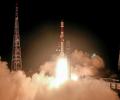
The two Space Docking Experiment (SpaDeX) satellites that the Indian Space Research Organisation is hoping to unite are at a distance of 1.5 km and will be brought much closer on January 11, the space agency said on Friday.
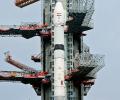
The main focus of the all weather RISAT-1B satellite will be to observe the Indian land with its C-band synthetic aperture radar.
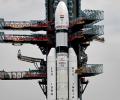
'The LVM3 rocket will orbit one Block 2 BlueBird satellite in Low Earth Orbit.'
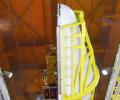
PSLV-C51/Amazonia-1 is the first dedicated commercial mission of NewSpace India Limited, Indian Space Research Organisation's commercial arm.
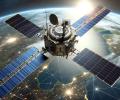
India is marching towards becoming the fourth country in the world to have space docking technology.

The launch of Polar Satellite Launch Vehicle (PSLV-C52) is scheduled at 05:59 hours on Monday from the First Launch Pad of Satish Dhawan Space Centre, Sriharikota, the Bengaluru-headquartered space agency said.
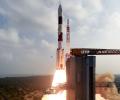
The launch is scheduled at 11.46 am on November 26, said the national space agency headquartered in Bengaluru.

The Indian Space Research Organisation (ISRO) on Sunday said the two satellites launched to perform space docking experiments were brought within three metres and then moved safely back in a trial attempt.
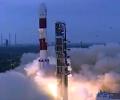
RESOURCESAT-2A, intended for resource monitoring, is a follow-on mission to RESOURCESAT-1 and RESOURCESAT-2, launched in 2003 and 2011 respectively. It is intended to continue the remote sensing data services to global users provided by RESOURCESAT-1 and 2.

The countdown began at 6.27 am for the launch on board ISRO's third generation workhorse Polar Satellite Launch Vehicle, in its 47th flight, ISRO said.
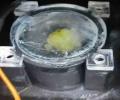
The spinach callus tissue, sent by Amity University-Mumbai to space, has shown signs of growth in the POEM-4 module that is orbiting the earth at an altitude of 350 kms, scientists associated with the experiment said.
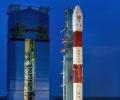
Antrix, ISRO's commercial arm, is eyeing 10% of the $357 billion global market.

In a landmark late Monday night journey into a new era of space application, India successfully launched its first dedicated navigation satellite using the Polar Satellite Launch Vehicle which blasted off from the Satish Dhawan Space Centre.

The launch vehicle that lifted off from a newly built launchpad will release two satellites in the earth's orbit.

Other than the Cartosat-2 series satellite, the PSLV is carrying 29 nano satellites from 14 countries - Austria, Belgium, Chile, Czech Republic, Finland, France, Germany, Italy, Japan, Latvia, Lithuania, Slovakia, the United Kingdom and the United States of America besides a nano satellite from India.
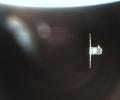
The Indian Space Research Organisation (ISRO) has successfully performed the docking of satellites as part of the Space Docking Experiment (SpaDeX). The docking was achieved after a series of maneuvers, including a trial attempt on January 12. The SpaDeX mission, launched on December 30, 2024, aims to demonstrate in-space docking technology using two small spacecraft. This technology is crucial for achieving complex mission objectives that require multiple rocket launches.

'The launch of Nila, our very first satellite was very emotional as well as nerve wracking. We tried to calm ourselves by cracking some poor jokes!'
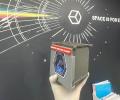
'To access our satellite, you don't need any IQ test, you don't need to write an examination.' 'You can be a Class 1 student, an engineering student, a 60-year-old person, anybody can access our satellite.'

Narayanan has a long and distinguished career at ISRO, having played a key role in several important missions, including Chandrayaan-2 and 3, and the Gaganyaan programme.
ISRO is part of an exclusive league which has forayed into the Moon and Sun.

President Pranab Mukherjee on Monday congratulated space agency ISRO for the successful launch of rocket PSLV-C23, saying it is a significant milestone in the progress of the country's space capabilities.
The placing of four satellites into orbit on October 12, 2011 is yet another milestone in the glorious career of Indian Space Research Organisation's trusted Polar Satellite Launch Vehicle.

PSLV C-29 blasted off from the Satish Dhawan Space Centre, about 110 km from Chennai, at 6 pm and released the six satellites one by one into a 550 km circular orbit.
Hailing Indian Space Research Organisation for its track record in launches, President Pranab Mukerjee on Monday said the country was looking forward to the success of homegrown GSLV mission.
In an exclusive commercial launch to be witnessed by Prime Minister Narendra Modi, India's national space agency ISRO is set to launch five satellites from four countries from the spaceport of Sriharikota.

India's Polar Satellite Launch Vehicle will lift off from Sriharikota on July 10 taking five foreign satellites into orbit, including three earth observation spacecraft whose imagery will be utilised by a Beijing-based company as well as an experimental nano-satellite that will deploy a large, light-weight sail in order to hasten its descent back to earth.
The placing of four satellites into orbit on October 12, 2011 is yet another milestone in the glorious career of Indian Space Research Organisation's trusted Polar Satellite Launch Vehicle.
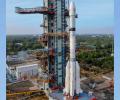
At 6.23 am on 29.1.2025, the 50.9 metre tall and weighing 420.7 ton Geosynchronous Satellite Launch Vehicle-F15 (GSLV-F15) is slated to blast off from the second launch pad carrying the 2,250 kg NVS-02 navigation satellite.
The Indian Space Research Organisation successfully launched its 100th mission on Wednesday, with a GSLV rocket carrying navigation satellite NVS-02.
If it becomes a reality, the Chennai-based company will become the first private player from India to conduct such a mission to the lunar surface.
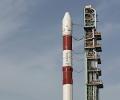
ISRO said, initially the launch was slated for 9.49 am, but now there is a 3-minute delay owing to the probability of space debris in the path of rocket.
"I would like to warmly congratulate all scientists of the Indian Space Research Organisation (ISRO) for the successful launch today of the Polar Satellite Launch Vehicle (PSLV)-C19 carrying the Radar Imaging Satellite -1(RISAT -1), the heaviest satellite launched till date using PSLV, " Dr Singh said.
Delhi will be the first place to be mapped by Cartosat followed by Goa.
The PSLV-C8 rocket will make its first commercial launch with an Italian astronomical satellite on board.

Docking technology is crucial for sending people and cargo to space stations.
The 51-hour countdown for the 17th flight launch of Indian space agency's Polar Satellite Launch Vehicle PSLV-C 15 from Sriharikota spaceport is expected to begin on Saturday morning."The rocket will put into orbit five satellites remote sensing satellite Cartosat-2B from India, Alsat from Algeria, two nano satellites from Canada and Switzerland, and a pico (very small) satellite called Studsat built by 7 Indian engineering students.
India's Polar Satellite Launch Vehicle on Wednesday successfully sent into orbit four satellites, including the Indo-French tropical weather satellite Megha-Tropiques.

India on Wednesday successfully launched a record 104 satellites -- all but three of them foreign--from Sriharikota and put them into orbit in a single mission onboard its most dependable Polar rocket.
