
NASA's Artemis II mission, launched on April 1, 2026, marks humanity's return journey to the Moon with four astronauts aboard the Orion spacecraft. Commander Reid Wiseman, Pilot Victor Glover, Mission Specialist Christina Koch, and Canadian astronaut Jeremy Hansen are on an approximately 10-day mission around the Moon. Stunning images from Orion's windows capture breathtaking views of Earth after the historic translunar injection burn.

NASA's Artemis II crew offers a rare look at Earth shrinking into space and the Moon coming into view during humanity's return to deep space.
The National Aeronautics and Space Administration (NASA) on Monday said the crew of Artemis II is preparing for a historic lunar flyby that will take humans farther from Earth than ever before.

Seen from Orion, a solar eclipse unfolds in silence -- the Moon crossing the Sun as Earth hangs in the distance.

Glimpses from Artemis II's dramatic return to Earth

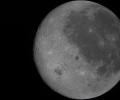
The Artemis II mission has made history as its astronauts journeyed farther from Earth than any humans before, conducting a lunar flyby and observing the moon's far side in unprecedented detail.

One of the most striking features in this view is the Orientale Basin, a massive impact crater about 600 miles (965 km) wide.

From selfies to science, astronauts aboard Orion document life, work and discovery during their historic Moon flyby.

The mission ferries four astronauts -- NASA's Reid Wiseman, Christina Koch and Victor Glover and Canada's Jeremy Hansen -- onboard the Orion spacecraft for a 10 day lunar flyby. Unlike the Apollo missions that aimed for landing, Artemis II is focused on testing. The crew will evaluate critical systems such as life support, navigation, and communication in deep space -- essential steps before humans can return to the lunar surface.

A crew of four astronauts boarded their spacecraft for the landmark flight, which represents a major milestone in lunar exploration.

The glimpses from NASA's Artemis II mission capture a historic moment -- preparations for humanity's return to the Moon for the first time since the Apollo 17 Moon landing in 1972.

After days of intense activity, this phase is about staying sharp and ready for the last critical steps.

For the first time, there will be an Indian connection to a crewed Moon mission.

The Orion capsule returns to earth after a 26 day mission orbiting the Moon and back.

As India celebrated its success in testing an unmanned space crew module on Thursday, over 1.7 lakh Indians had another reason to be happy as a similar National Aeronautics and Space Administration spacecraft carrying a microchip containing their names was brought back safely to the Kennedy Space Center in Florida, United States, on the same day after a space odyssey.

The Artemis I flight test is an uncrewed mission around the Moon that will pave the way for a crewed flight test and future human lunar exploration as part of Artemis.

Half a century after America's National Aeronautics and Space Administration stopped sending rockets to the moon, NASA's unmanned Artemis I mission lifted off from launch complex 39-B at Cape Canaveral, Florida, November 16, 2022.

Lt Col Raja "Grinder" Chari, 39 is in the batch of 2017.

The much-awaited launch of Nasa's most powerful rocket Artemis 1, which is to go on a voyage around the moon, has been deferred and teams are working on "an issue with an engine bleed."


Here's a glimpse of all that happened around the world last week, in 16 images.

Deep-learning machines are conquering realm after realm of human expertise, but is there a difference between Them and Us?
