
The eminent jurist was on Saturday admitted to the intensive care unit of the Jaslok Hospital in Mumbai.

Dinesh Trivedi's experience as a businessperson and his fluency in Bengali are expected to be crucial in strengthening India-Bangladesh relations, particularly in attracting Indian investments to Dhaka.
A multi-faceted personality, Nani was a lawyer par excellence, custodian of the Indian Constitution, a renowned public speaker, philanthropist and a distinguished ambassador.

Mundane as it may seem, this is in some ways a metaphor for the challenges facing the nation, argue Arvind Subramanian and Devesh Kapur in their new book, A Sixth Of Humanity.
I feel Nani was the most outstanding lawyer of our times. He was a genius
Anirudh Belle and Vineeth Samdaria, both 21, want to change the way urban youths vote.

The common man in India is bogged down by corruption and there is a need to fix accountability at all levels, the Supreme Court observed on Friday as it dealt with a petition seeking debarment of those against whom charges have been framed in criminal cases from contesting elections.

Over the years, a noticeable unpleasantness began to develop between senior and junior, Sorabjee and Salve. Salve gave credit, for his rise in the profession, to Nani Palkhivala, and not to Sorabjee. This hurt Sorabjee, though he never admitted it.

The remarks by the CJI came against the backdrop of the recent remarks by Vice President Jagdeep Dhankhar who questioned the landmark 1973 Kesavananda Bharati case verdict that gave the basic structure doctrine.

'On hard cases like this one, the Supreme Court has only episodically stood against Parliament and the executive government.' 'I worry that this decision sets a precedent where President's rule is imposed in another state... and during the operation of President's rule, the state is fundamentally altered.'

He rued that people who work hard and honestly are put through enormous difficulties and Indians excel in making an ordinary task into an extraordinary one.

In 1970, Bharati, the hereditary head of Edneer Hindu 'Matha' in Kasaragod district of Kerala, had moved the top court challenging the state government's two land reform Acts meant to restrict the management of religious properties. The case had a number of firsts to its credit.

Former Chief Justice of India Rajendra Mal Lodha, who recommended overhaul of the cricket governance in India, said things would move fast in the Board of Control for Cricket in India after the newly-appointed administrators take charge of the Cricket Board after January 19.
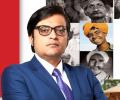
The top court said as per its understanding the plea could be entertained only if there is any action on the recommendation of the privilege committee of the house pursuant to the show cause notice issued to Goswami.

Jai Bhim is a story of hope and despair, observes Utkarsh Mishra.

'Soli steadfastly believed in Voltaire's famous dictum that he would disagree violently with anyone but defend to death that person's right to disagree with him.'

During the hearing, the 92-year-old senior lawyer had told the apex court that it must do 'full and complete justice' in all matters before it and that his last wish before he died was to finish the case.
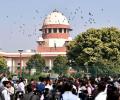
Sensitive cases like the validity of the scrapping of Article 370 of the Constitution, the Citizenship Act, and states challenging perceived assault on federalism were on the back burner. An analysis of the judgments delivered in the past months would show that it was acting more like a court of appeal rather than a Constitutional court, observes M J Antony.
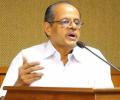
'I cannot think of a teacher who has had such a high impact on students across several generations and who has produced several professionals in various disciplines of law.' L Vishwanath salutes Professor N R Madhava Menon, who passed into the ages recently.

'Cyrus was always very different. He would think before acting.'

Not all change is good, but this one is, applauds Shekhar Gupta.

One should appreciate the sagacity and audacity of JRD and Nani Palkhivala in founding TCS on April 1, 1968. At that time there was no Microsoft or Intel, SAP or Accenture, much less Google.
They needed a person who could build and execute their vision: A frontiersman; a problem solver and an institution builder. It was their and India's good fortune that Faqir Chand Kohli more than measured up to their requirements and indeed laid the foundation to take TCS to unimaginable heights and to the giant success that it is today. Shivanand Kanavi salutes the incomparable F C Kohli, who passed into the ages last week.

For the new millennium generation, slowly and at an accelerating pace, it is attractive to harbour a start-up ambition, says R Gopalakrishnan.
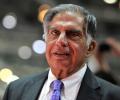
'I think Ratan felt he had to do everything that he could to retain control of the company started by his forefathers, because that was the first priority and nothing else mattered compared to that.'

'Parsis are brought up with a great sense of the importance of truth and speaking your mind.'
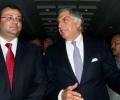
'And he was really trying just to do the best by the shareholders, and by the laws of India.'

'The choice of chief minister after the win is a pointer to what issues really mattered at the polls.' 'Perhaps, demonetisation was an electoral side issue -- a reflection of the disconnect between commentators in the cities and the realities on the ground,' says Somasekhar Sundaresan.

The inquiry by will not deal with the allegations of sexual harassment against the CJI.
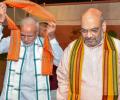
Prime Minister Narendra Modi and Home Minister Amit Shah will soon get around to reworking their organisational set-up and administrative priorities to regain lost ground in the wake of the Delhi electoral debacle, but there's third course available to them as well. That is to introduce the presidential form of government, which prime ministers Indira Gandhi and A B Vajpayee flirted with before abandoning it. Will Modi go further than them? N Sathiya Moorthy analyses the scenario.
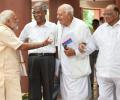
'Being authoritative is one thing -- Nehru was that -- but being authoritarian is quite another -- the current prime minister is clearly one.'

The Tata empire turns 150 this year. R Gopalakrishnan, former director, Tata Sons Ltd, imagines a conversation among the group's founder Jamsetji, his son Dorabji, his successor, Nowroji Saklatwala, and his successor, J R D Tata.

'In her insecurity, she destroyed the institutions of democracy.' 'She packed Parliament with her supporters with loyalty being more important than ability; she superseded judges; she corrupted the civil service.' 'She knew how to use people against each other and was quite a master of that.' 'She would do this with calculated skill and in the bargain cause enmity between brothers, split up families.'

'In her insecurity, she destroyed the institutions of democracy,' says Khushwant Singh.
