
oreign Policy magazine named him as one of the world's top 100 global thinkers in 2011.

Confronting a slowdown in growth, China says it will only increase its defence budget by 7.6% this year, against the anticipated rise of between 20% and 30%. 'It is difficult to explain the reduction in the Chinese defence budget,' says Claude Arpi. 'Is there a hidden budget? Possibly!'
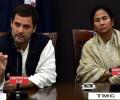
Unfazed by the absence of leaders of the Left, the Janata Dal-United, the Samajwadi Party and the Bahujan Samaj Party, Congress leader Rahul Gandhi and Trinamool Congress chief Mamata Banerjee along with some regional parties on Tuesday sought to put up a united face raising the pitch against demonetisation by demanding the resignation of Prime Minister Narendra Modi.

'Castro's huge appeal lies in the fact that he stood up to the Americans.' 'However, it becomes difficult to be judgmental about his legacy, because there are huge uncertainties about the future of the Cuba that he built,' says Ambassador M K Bhadrakumar.

'Europe can be discussed on a golf course...' 'North Korea? What do I care what the man with the bad haircut does?'

Communist China's biggest political trial in decades involving disgraced top politician Bo Xilai ended on Monday on an acrimonious note, with prosecutors demanding "severe" punishment for the defiant pro-Maoist leader who accused a key official witness of having illicit relations with his wife.

China's major economic problem has been that its heartland is an agricultural region with about one-third of the arable land per person as the rest of the world.

52 world leaders, including Narendra Modi, will attend this week's Nuclear Security Summit in Washington, DC. Obama will meet separately only with the Chinese president.

One of the most prolific filmmakers of his time, VB turns 50 August 4!

'India is a huge market for Chinese goods. I don't think a war stands to logic when you have economic compulsions, but then Chinese are known to do illogical things.'

Despite the language barrier, Beijing is a city where getting lost is not necessarily a bad idea
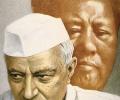
'Delhi was not concerned.' 'It would continue sleeping for several more years, with the result that Indian territory is still occupied by China today,' says Claude Arpi.

The bravado of NDA ministers may have undone the gains made in cross-border security cooperation over the past several years.

PM Modi's China visit may strengthen ties between both the countries.

Besides weakening the Maoists' lethal capacities and reducing violence, it is essential to ensure that governance is improved, so that those prone to sympathising with, or supporting, the Maoists would, in the long run, realise the needlessness and futility of doing so, says P V Ramana and Raj Bala Rana.

Nearly two decades ago, then defence minister George Fernandes said: 'China has built roads up to the border, while there has been negligence on India's part.' Since Fernandes uttered these brave words, what has been done on the Indian side? The Modi Sarkar is apparently trying, but little has been achieved so far, says Claude Arpi.
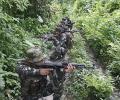
A lack of understanding on how to tackle the Maoist challenge is adversely affecting security operations on the ground and not the inefficiency or inability of the security forces to put pressure on the Maoists, says former Chhattisgarh top cop Vishwa Ranjan.
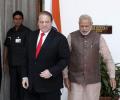
India'Prime Minister Narendra Modi has been congratulated for his speedy diplomacy and his talks with Pakistani counterpart Nawaz Sharif. However, academic Christine Fair and former Pakistan ambassador to US Husain Haqqani dismiss the meeting, calling it merely a photo-op and an exercise in futility. Aziz Haniffa reports.
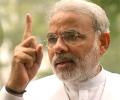
To be sure, Modi is no Vajpayee; at least that is the impression he gives. However, this doesn't mean that he will be looking for a fight. All it means is that if Pakistan seeks a fight, he will not back down. What it also means is that the pusillanimous approach of the previous governments to ceaseless provocations from Pakistan will probably change, says Sushant Sareen.

'Why would the Communists do this? I have three possible answers: One, they are specifically opposed to the Global Education Meet that the ambassador organised. Two, they are beginning to realise their days are numbered in Kerala. Three, the standard modus operandi of leftists is anarchism because they are not constrained by any codes of ethics. Roughly, the bad, the good, and the ugly,' says Rajeev Srinivasan.
'Will anything change for you after the election?' And the man said 'Kuch nahin badlega.' And he had a smile on his face. He knew nothing was going to change.

India still has to go a long way to implement reforms in various sectors.

No large nation has done less to feed its millions of poor than India has in the past decade or two since the beneficial effects of the Green Revolution wore off.

'Young IFS officers today would take it for granted that they represent a major country with strengths and capabilities.' 'They will be aware that India is seen as one of the 10 significant countries in the world and therefore their voice will be heard whether on climate change or regime change,' says Ambassador B S Prakash.

War on ebay explores Jack Ma's mercurial mind

What was the need for Xi Jinping, general secretary of the Chinese Communist Party, President of the People's Republic of China and Chairman, Central Military Commission, to don the new role of Commander in-Chief? Does this mean that the most powerful Chinese leader since Mao faces numerous threats from within the Communist Party?

The State must stand as a solid tower of confidence to provide a guarantee of safety to its citizens and instill fear in the hearts of offenders. But where is that State, asks Tarun Vijay
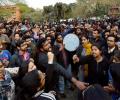
The State is trying to curb the students movements, therefore, there are suspicions against some of the Subramanian report on education's recommendations, says Mohammad Sajjad.

While the row over allowing women into the AMU library has been wrongly portrayed, it does not mean gender biases are non-existent in AMU. The campus does have its own shares of all kinds of cultural and ideological prejudices prevalent in the world outside. The AMU campus is not a segregated island, says Mohammad Sajjad.

'Tibet remains a prickly issue between the giant Asian nations. China still claims more than 80,000 sq kilometres of Indian territory in the Northeast. Why? Just because Beijing refuses to acknowledge the McMahon line which separates India and Tibet, and this, simply because the 1914 Agreement delineating the border was signed by the then government of independent Tibet with India's then foreign secretary (Sir Henry McMahon),' says Claude Arpi.

'The original dream of people like Faiz was that Pakistan would be something different from the old India: Progressive, forward looking, democratic (if not socialist), tolerant, diverse and pluralistic.' 'I don't think anyone foresaw the catastrophe that Partition was to become.'

Can you find a world leader who has met generations of Indian politicians, most US Presidents, European head of States, several Popes, celebrated cricketers, Hollywood and Bollywood stars, some of the greatest scientists and many ordinary people, including what he calls, 'Chinese brothers and sisters?'

'Until India fully absorbs the fundamentals of international relations, it will continue to get evil for good,' says Brahma Chellaney.

Rajeev Srinivasan on how India has continued to disappoint, but could outdo Singapore one day.

Disgraced Chinese leader Bo Xilai's high-profile trial was abruptly adjourned after prosecutors produced more evidence to nail the former Communist strongman, who in turn described his ex-police chief and a key witness as a "liar with extremely bad character."

'They do not want us to construct roads or to conduct health camps. I see no logic in their demands,' says West Bengal Chief Minister Buddhadeb Bhattacharya.
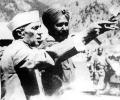
Let us hope that what happened in 1962 will never happened again, prays Claude Arpi
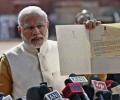
he has to demonstrate the ability of his government to take a quantum leap, almost tantamount to setting the Ganga on fire, in the next six months, if not in 100 days, if the people were to take seriously the cascade of commitments spewing out of the President's address to both Houses of Parliament on June 9, says B S Raghavan. B S Raghavan suggests five practical propositions through which the Modi government can bring in paradigm changes.
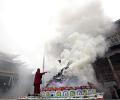
China has been keeping tabs on the restive Tibet province through a 'grid' system and some 600 'convenience police posts' armed with high-tech equipment that monitor the daily life of the citizens of Lhasa and other Tibetan towns. Worse, 'volunteer security groups' known as 'Red Armband Patrols' are roaming around in order to get more information and 'classify' each and every citizen, says Claude Arpi

On the title page of the Top Secret Report, Henderson-Brooks quotes the Chinese tactician Sun Tzu: 'Know yourself, know your enemy: A hundred battles, a hundred victories', says Claude Arpi, highlighting where the Indian Army and government failed to counter the Chinese attack in 1962.
