
Chief Justice of India DY Chandrachud has set in motion the process of appointment of his successor by recommending to the Centre the name of senior-most Supreme Court judge Justice Sanjiv Khanna.

Justice Khanna, who will serve as CJI for a little over six months, will demit office on May 13, 2025.

He will take oath on November 11, a day after incumbent Justice DY Chandrachud demits office on attaining the age of 65.

The Supreme Court of India has agreed to examine whether Muslims can be governed by secular Indian succession law for ancestral properties instead of Shariat without renouncing their faith. The court will consider three petitions on the matter, including one filed by Naushad K K, a resident of Kerala, who wants to be governed by the succession law without leaving Islam. The court has issued notices to the Centre and the Kerala government to file their responses.

After the conclusion of the ceremonial bench proceedings, the CJI met journalists in the apex court premises and said,
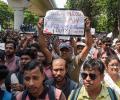
The Supreme Court has extended the services of terminated teachers in West Bengal who were found untainted by the CBI, providing relief to the state. The court did not, however, extend the services of grade 'C' and 'D' employees of state-run and aided schools. The court directed the state government to start the recruitment process by May 31 and conclude it by December 31.
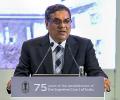
Justice Sanjiv Khanna 'belongs to that school of legal luminaries who give the highest primacy to facts.'

The Supreme Court expressed its disapproval of an analogy used by the Centre in support of the inclusion of non-Muslims in Waqf boards, stating that such logic would disqualify a bench of Hindu judges from hearing matters related to Waqf. The CJI questioned the Centre's stance on the provisions of the Waqf (Amendment) Act, 2025, which allows non-Muslim members in the Central Waqf Council and state waqf boards. The Solicitor General defended the provisions, emphasizing that the non-Muslim inclusion is limited and does not impact the Muslim composition of these bodies. However, the CJI asserted that judges shed their religious affiliations while serving on the bench and maintained their secularity in their judicial capacity.

The Supreme Court of India has made public the asset details of its judges, including Chief Justice Sanjiv Khanna who has Rs 55.75 lakh in a fixed deposit, a three-bedroom DDA flat in south Delhi, and a four-bedroom apartment measuring 2,446 square feet in the Commonwealth Games Village. The court has also uploaded the complete process of appointments to the high courts and the Supreme Court on its website for public awareness.

The Supreme Court on Friday refused to entertain a fresh plea challenging constitutional validity of the Waqf (Amendment) Act, 2025.

The Supreme Court of India has rejected a plea by a woman claiming to be the legal heir of the Mughal emperor Bahadur Shah Zafar-II, seeking possession of the Red Fort in Delhi. The court termed the plea as "misconceived" and "meritless", dismissing the petition against the Delhi High Court order. The petitioner, Sultana Begum, argued that her family was deprived of the Red Fort by the British East India Company after the first war of Independence in 1857. The court, however, dismissed the petition, citing the delay in filing the appeal and the lack of justification for the claim.
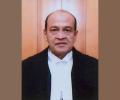
The Supreme Court will hear a plea on Friday seeking a direction to Delhi Police to lodge an FIR over the alleged discovery of semi-burnt stash of cash from the official residence of High Court judge Yashwant Varma. The plea was filed by lawyer Mathews J Nedumpara and three others on Sunday. It challenges the 1991 judgement in the K Veeraswami case, in which the top court ruled that no criminal proceedings could be initiated against a judge of the high court or the top court without the prior nod of the Chief Justice of India. The alleged cash discovery happened following a fire at Varma's Lutyens Delhi residence on March 14, prompting the fire officers to rush to the spot. A Supreme Court-appointed in-house committee visited the residence of Justice Varma on Tuesday to commence its inquiry in the matter. Justice Varma denounced any insinuation and said no cash was ever placed in the storeroom either by him or any of his family members.
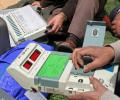
The Supreme Court of India dismissed a plea seeking a directive for 100% manual counting of Voter Verified Paper Audit Trail (VVPAT) slips in addition to electronic counting. The court cited its previous rulings on the safety and security of Electronic Voting Machines (EVMs) and stated that the issue was not open for reconsideration. The plea argued for a modified VVPAT system where voters could verify printed ballots before leaving the polling station, and for 100% manual counting of VVPAT slips. The court upheld the Delhi High Court's decision dismissing the plea, referring to previous Supreme Court judgments on the matter.
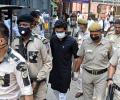
The Supreme Court of India questioned whether former JNU student Sharjeel Imam can be prosecuted in multiple states for sedition based on a single speech. The court is considering a plea to club multiple FIRs filed against Imam in Uttar Pradesh, Assam, Manipur, and Arunachal Pradesh for his alleged inflammatory remarks during protests against the Citizenship Amendment Act (CAA). The court is concerned about the potential for double jeopardy and has indicated that it may transfer the cases to Delhi.

The Indian government has claimed a significant increase in waqf land following the 2013 amendment to the Waqf Act, asserting that the addition of 20 lakh acres raises concerns about potential "misuse" of the provisions. In an affidavit to the Supreme Court, the Centre highlighted a 116% rise in auqaf area after the amendment and urged the dismissal of petitions challenging the Act's validity.

Podcaster Allahbadia's remarks on parents and sex on comedian Samay Raina's YouTube show India's Got Latent triggered a controversy and several FIRs have been lodged against him and others in various parts of the country.

The Supreme Court of India has granted interim police protection to Discovery Communications India officials who have been receiving threats from followers of self-styled godman Asaram Bapu. The threats were triggered by the release of a documentary series titled "Cult of Fear: Asaram Bapu". The court has directed the Centre and several state governments to ensure the safety of the petitioners, including their offices.

Instant 'triple talaq', also known as 'talaq-e-biddat', is an instant divorce whereby a Muslim man can legally divorce his wife by pronouncing 'talaq' three times in one go.
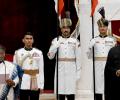
Justice Bhushan Ramkrishna Gavai was on Wednesday sworn in as the 52nd Chief Justice of India.

The law prohibits conversion of any place of worship and provides for the maintenance of the religious character of any place of worship as it existed on August 15, 1947.

The Supreme Court of India has sharply criticized the Uttar Pradesh police for filing FIRs in civil cases, stating there is a "complete breakdown of rule of law" in the state. The court expressed its displeasure after discovering FIRs filed by the UP police in civil disputes, questioning the use of criminal law in such matters. The Chief Justice highlighted the absurdity of converting civil disputes into criminal cases, emphasizing that non-payment of money cannot be considered a criminal offense. The bench has summoned the investigating officer to justify the registration of an FIR in a specific case, and has stayed criminal proceedings against the accused while allowing the cheque bounce case to continue.
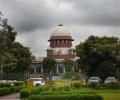
The Supreme Court of India has decided to issue a showcause notice to senior advocate Rishi Malhotra, asking why the designation conferred upon him by the apex court should not be revoked. The decision comes in the wake of allegations of misconduct against Malhotra, including suppressing material facts in multiple cases and making misleading statements despite warnings from the court. The full court, convened by Chief Justice Sanjiv Khanna, has decided to give Malhotra one more opportunity to explain his conduct before stripping him of the senior designation. The court has expressed concerns about the effectiveness of the senior designation system and whether it ensures that only deserving advocates are being designated.
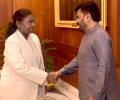
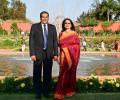
Speaking at the banquet she hosted in President Dissanayake's honour, President Murmu said Sri Lanka is an important part of India's 'Neighbourhood First' policy and New Delhi would continue to support Colombo's efforts for economic development.
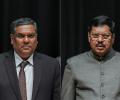
From demonetisation to sub-categorisation of Scheduled Castes to bulldozers, Justice Gavai has been part of several judgments.
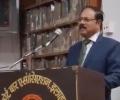
Allahabad High Court judge Justice Shekhar Yadav, who was embroiled in controversy for his speech at a VHP event in December, has opted out of a seminar on the Ram temple movement in the Kumbh Mela area on January 22. Yadav was scheduled to deliver the keynote address at the seminar, which is being held to mark the first anniversary of the consecration ceremony of Lord Ram Lalla in the Ayodhya temple.
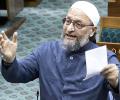
The Supreme Court on Thursday agreed to consider a plea of All India Majlis-e-Ittehadul Muslimeen (AIMIM) chief Asaduddin Owaisi seeking the implementation of the 1991 places of worship law, which asks to maintain the religious character of a place as it existed on August 15, 1947.

The Supreme Court of India has transferred a Public Interest Litigation (PIL) concerning the safety and longevity of bridges in Bihar to the Patna High Court. The court expressed concern over the state government's handling of bridge collapses, noting that officials were suspended after incidents but reinstated after the public outcry subsided. The court also criticized the state's voluminous response to the PIL, which lacked explanations for the collapses. The Patna High Court will now monitor the state's efforts to ensure structural and safety audits of bridges in Bihar.
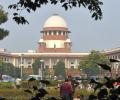
The Supreme Court on Monday said the pleas challenging the Waqf (Amendment) Act's constitutional validity will now be taken up by a bench headed by Chief Justice of India-designate Justice B R Gavai on May 15 as the incumbent CJI will be demitting office on May 13.

Podcaster Allahbadia's remarks on parents and sex on comedian Samay Raina's YouTube show 'India's Got Latent' triggered a controversy and several FIRs have been lodged against him and others in various parts of the country.

The Supreme Court on Wednesday ordered the deletion of advocate Bansuri Swaraj's name from its order of granting bail to AAP leader Sanjay Singh after the Enforcement Directorate said her name got added to the list due to an "inadvertent error".

"Liberty is granted to newly-added respondents (states) to file a response within 15 days from the date of service, and rejoinder if any be filed after 15 days. The interim order to continue and will equally apply to the cases mentioned in the amended writ petition. We direct no further cases be registered without the permission of this court," the bench's order said.
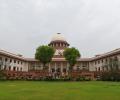
The Indian government has defended the Waqf (Amendment) Act, 2025 in the Supreme Court, arguing that there cannot be a blanket stay on the law as there is a presumption of its constitutionality. The Centre countered the pleas challenging the law's validity, asserting that the amendments were undertaken after a comprehensive study by a parliamentary panel. The government also highlighted the "reported misuse" of earlier provisions and the increase in waqf land, claiming that over 20 lakh hectares were added after 2013.
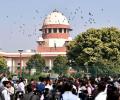
The Supreme Court on Monday said the trial of the Manipur ethnic violence cases, probed by the Central Bureau of Investigation, would be conducted in Guwahati, Assam, where it was transferred to earlier.

The Supreme Court declined to hear a public interest litigation (PIL) seeking directions to the Election Commission and state election bodies to address purported duplication and multiple entries in voter lists. The court suggested the petitioner approach high courts with specific grievances and file representations with appropriate authorities.
Some of his directives had the Supreme Court judges disclose their assets whereas the row over the discovery of cash from a sitting judge's official residence paved way for inquiry.
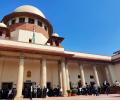
The Supreme Court on Monday agreed to consider listing for urgent hearing the petitions challenging the constitutional validity of the Waqf (Amendment) Act, 2025.

The Supreme Court of India has refused to halt the redevelopment project of Dharavi in Mumbai, allowing the Adani Group to proceed with their project. The court rejected a plea from Seclink Technologies Corporation, the original highest bidder for the project in 2018, which challenged the tender process and the award to Adani Properties Pvt Ltd in 2022. The court directed Adani Properties to make payments through a single bank account and ordered Seclink Technologies to file an affidavit detailing their increased offer for the project. The project work has already commenced, with constructions underway and 2,000 people employed on the site.

The Supreme Court has agreed to examine a PIL alleging that Arunachal Pradesh Chief Minister Pema Khandu awarded government contracts to his family members. The court has asked the state government to provide details of the beneficiaries and inform if due process was followed. The bench also sought responses from union ministries of home affairs, finance and the Comptroller and Auditor General of India on the issue within five weeks.
The Supreme Court of India has asked petitioners in two Public Interest Litigations (PILs) to make representations to the Election Commission of India (ECI) regarding their demand for uploading polling booth-wise voter turnout data on the ECI website. The PILs, filed by TMC MP Mahua Moitra and NGO Association for Democratic Reforms, seek a direction for the ECI to upload the data within 48 hours of the conclusion of polling in Lok Sabha and assembly elections. The ECI, represented by senior advocate Maninder Singh, expressed willingness to deliberate on the matter and suggested a meeting with the petitioners to address their concerns. The court has adjourned the hearing to the week of July 28.
The Supreme Court has allowed the parents of the RG Kar Medical College rape and murder victim to pursue their plea for a further court-monitored CBI probe into the incident before the Calcutta High Court. The parents had expressed dissatisfaction with the CBI's initial probe and sought a more thorough investigation. The court, without making comments, disposed of the application, allowing the parents to continue the proceedings before the high court. The case has also prompted the Supreme Court to consider recommendations for preventing gender-based violence and developing safety protocols for medical staff at hospitals across the nation.
 © 2026 Rediff.com - Investor Information - Advertise with us - Disclaimer - Privacy Policy - Sitemap - Feedback - About us - Terms of use - Grievances