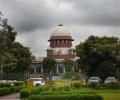
Three academics involved in drafting a controversial NCERT textbook chapter on corruption in the judiciary have approached the Supreme Court to defend their work, stating it was a collective effort and not the view of any single individual.

The Centre has directed the NCERT to review all textbooks after the Supreme Court raised concerns about 'offending' content on corruption in the judiciary in a Class 8 social science book.

The NCERT has issued a public apology and withdrawn a social science textbook for Class 8 after the Supreme Court objected to a chapter on judicial corruption. The court imposed a ban on further publication of the book.

The NCERT has apologised for 'inappropriate content' in a Class 8 textbook chapter discussing judicial corruption, following Supreme Court criticism. The textbook will be rewritten, and its circulation has been put on hold.

A new Class 9 NCERT textbook describes the judiciary as an "impartial and independent institution" that safeguards citizens' rights and upholds the Constitution, contrasting with a previous Class 8 textbook that sparked controversy over its depiction of judicial corruption. The new textbook was prepared before the Class 8 controversy erupted.

Michel Danino, one of the NCERT academics previously barred by the Supreme Court over a controversial chapter on the judiciary, maintains the content was 'correct' and defends its inclusion in the textbook.
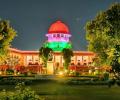
The Supreme Court has initiated suo motu action regarding an NCERT class 8 textbook that references corruption in the judiciary, raising concerns about potential defamation and the integrity of the judicial system.
The NCERT Class 8 social science textbook has undergone significant revisions, including a tweaked narrative on the 1947 Partition, the inclusion of VD Savarkar's demand for Swaraj, and the removal of references to Adolf Hitler and Nazi ideology. These changes follow a Supreme Court intervention regarding controversial content on the judiciary.
The Supreme Court has modified its previous order regarding three academics involved in a controversial NCERT textbook chapter on corruption in the judiciary, allowing government bodies to make independent decisions about their association with the academics.

Chief Justice of India, Justice Surya Kant, advocates for careful integration of AI in the judicial system, emphasising the importance of human judgement and oversight in delivering justice.

The NCERT has included in the class 9 social science textbook a section on Emergency, which it described as "one of the major challenges to democracy in India" with Education Minister Dharmendra Pradhan hailing the move saying future generations should know about the "dark deeds".

'...Or will we take a positive approach and learn from those mistakes so that it is not repeated in future?'

Union Education Minister Dharmendra Pradhan has expressed strong disapproval of a chapter in an NCERT Class 8 textbook addressing judicial corruption, prompting government action and a Supreme Court ban on the book's circulation.

A director of a Pune coaching centre claims that Tejas Shah, a physics teacher arrested in connection with the NEET UG paper leak, contacted Manisha Havaldar, a senior faculty member and accused, for clarification on physics topics in his individual capacity.

IIT-Gandhinagar is reviewing Michel Danino's position as guest professor after the Supreme Court directed institutions to disassociate from him due to a controversy over a chapter on judicial corruption in a withdrawn NCERT textbook.
The apex court ordered that the Centre and state authorities comply with its directions immediately, and warned of 'serious action' if directions are defied in any form.
The NCERT's class 8 textbook is under scrutiny for its content on judicial corruption, potentially leading to its removal after government concerns and objections from the judiciary.

The Delhi High Court has stated it will examine the Wrestling Federation of India's selection policy before issuing any order on Vinesh Phogat's plea for a fair opportunity to return to competitive wrestling.

Chief Justice of India, Justice Surya Kant, advocates for the integration of Artificial Intelligence (AI) into the judicial system, emphasising that it should enhance efficiency without compromising core judicial functions and human oversight.

'This process is the punishment.' 'Once the trial starts, they know this fairy tale case will fall on its face. So they don't want to begin the trial.'

Mundane as it may seem, this is in some ways a metaphor for the challenges facing the nation, argue Arvind Subramanian and Devesh Kapur in their new book, A Sixth Of Humanity.

'Shock, confusion, and paralysis reigned.' 'Pakistan was caught in a most embarrassing situation. It could neither claim credit for the operation nor admit to a dismal intelligence failure and lack of army preparedness.'
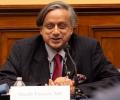
Senior Congress leader Shashi Tharoor has criticised the Emergency declared by Prime Minister Indira Gandhi in 1975, saying the people of the country responded clearly to the excesses of that period by voting her party out of power by a large margin.

Amid this unrest came the verdict of the Allahabad high court on June 12, 1975 that found Gandhi guilty over discrepancies in the electoral campaign, which led to the Emergency on the night of June 25.

'The time has come to have a relook at the Constitution as every document has a shelf life.'

The sudden and surprising announcement by Anderson comes within days of a Republican Congressman, a member of the House Judiciary Committee, asking the Department of Justice to preserve all the documents and communications related to the investigations of Adani and his companies.

Speaking after laying the foundation stone of the Bombay high court's new complex on land allotted by the Maharashtra government in Mumbai's upscale Bandra area, he noted the mega project was a collaboration between the state and the judiciary to provide modern infrastructure to citizens.
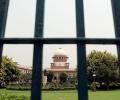
If the judiciary loses this fight, it will suffer irreparable damage and all of us citizens will be the losers.

Lok Sabha Speaker Om Birla on Wednesday read out a resolution condemning the imposition of Emergency and termed the decision by then prime minister Indira Gandhi an attack on the Constitution, triggering a wave of protests by the opposition in the House.

Alamgir said that even after the fall of the Hasina government following a people's uprising, the 'Indian establishment is yet to reach out to BNP, even though China, the US, the UK, and Pakistan have already done so.'
Crucial reforms in Muslim personal law, especially laws related to inheritance and adoption, need to be initiated forthwith; historically speaking, without the State's backing, hardly has any reform taken place or allowed to prevail, asserts Mohammad Sajjad.

'Earlier in my career DGs were nearly 100 per cent honest.' 'By the time I retired, many DGs have not been honest.' 'One DG asking me to go and meet a home minister whom everybody knew is a corrupt guy.' '
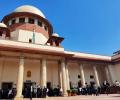
I would say, unhappiness of the Government of the fact that NJAC does not pass the muster, Justice Kaul observed.

Prime Minister Narendra Modi on Tuesday linked opposition parties coming together against the Bharatiya Janata Party to his government's campaign against corruption, and asserted that the clampdown on graft will continue without being hindered by "false allegations".
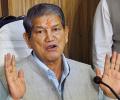
Rawat, who thanked Congress President Sonia Gandhi, Rahul Gandhi and other party leader for lending support, said the state would need active support of the central government and that he would meet Prime Minister Narendra Modi and Finance Minister Arun Jaitley.

He also made it clear that judiciary cannot depend on executive in choosing judges.

'It is the common people, not lawyers and judges, who are the stakeholders of the judiciary.'

Iconic dialogues from Bollywood movies like Sunny Deol's Damini, have found its place in the Economic Survey 2018.
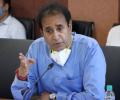
Maharashtra Home Minister Anil Deshmukh resigned on Monday after the Bombay high court ordered a Central Bureau of Investigation probe into the allegations of extortion against him by former Mumbai police commissioner Param Bir Singh.
Various farmers association and individuals have raised objection to Justice Mishra hearing the matter on the grounds that he has already expressed his mind in the judgment pronounced by the apex court in February last year.
