

'This process is the punishment.'
'Once the trial starts, they know this fairy tale case will fall on its face. So they don't want to begin the trial.'
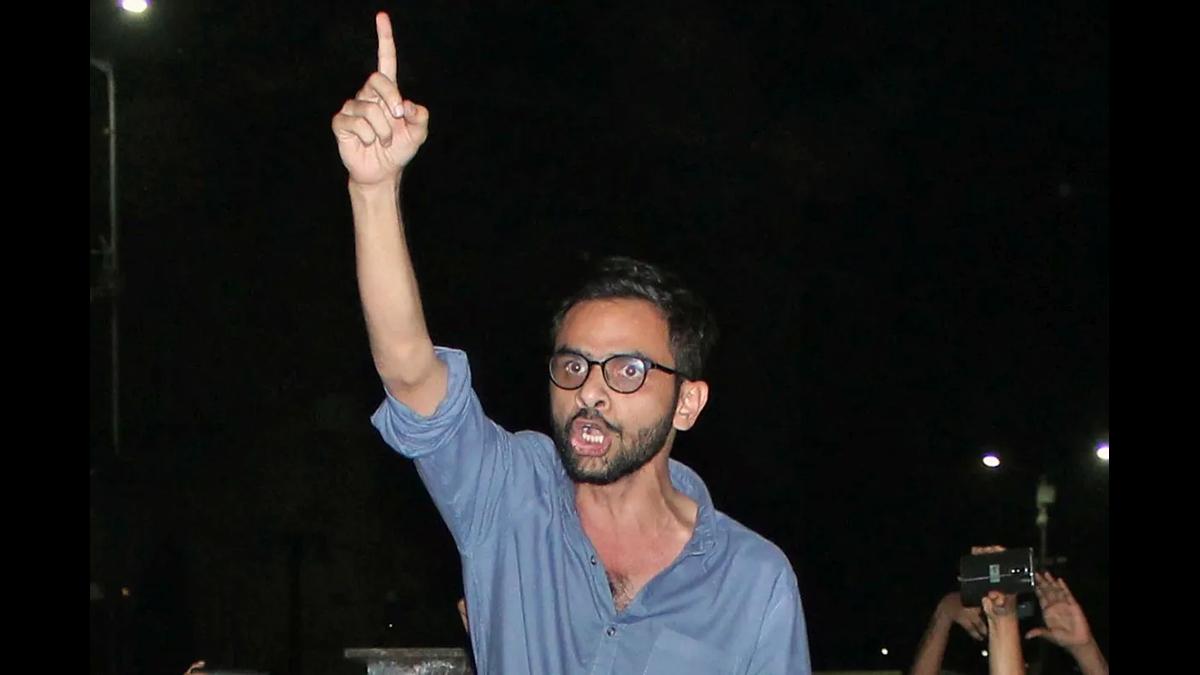
After five years in prison without trial and six rejections of Umar Khalid's bail pleas, his partner Banojyotsna Lahiri speaks of their despair, resilience, and hope.
For Banojyotsna, a Delhi-based researcher, when the Delhi high court denied bail to Khalid in the Delhi riots case on Tuesday, September 2, along with co-accused Gulfisha Fatima and Sharjeel Imam, it was another blow in what has become a seemingly endless quest for justice, another chapter in a case that has stretched over five years without trial.
Umar Khalid, a former Jawaharlal Nehru University student leader and prominent voice against the Citizenship (Amendment) Act, has been lodged in Tihar jail since September 2020 under the stringent Unlawful Activities (Prevention) Act (UAPA) for his alleged role in the 2020 Delhi riots conspiracy case.
What makes his case particularly striking is not just the length of his incarceration, but the fact that the trial is yet to begin after five years.
In a conversation with Prasanna D Zore/Rediff shortly after the latest bail rejection, Banojyotsna speaks with remarkable composure about the emotional toll, the systemic patterns she observes, and the hope that continues to sustain both her and Umar Khalid through this endless ordeal.
'We Have to Trust the Judiciary'
When asked about her response to the repeated rejection of Umar's bail applications, Banojyotsna's voice carries both disappointment and determination. "What can I say? Seriously, I'm at a little loss of words right now. But as ordinary citizens, we don't have any other option but to go to the judiciary for justice. But it did not happen again and we will move to the Supreme Court very soon."
"Because we still have to trust the judiciary and we feel that some judge will give us justice," she explains.
In her conversation Banojyotsna emphasises the fundamental unfairness of prolonged pre-trial detention: "Pre-trial detention is something that democratic countries and courts in the whole world denounce now. And it's been five years that the trial hasn't started. It's only at the stage of arguments on charge."
The Morning's Fragile Hope
The morning of the bail hearing had begun with the familiar mixture of hope and anxiety. "In the morning when the bail plea came up for hearing," Banojyotsna recalls, "we, in order to survive, we have to be hopeful. So we all were hopeful because that's what we knew we need to survive."
According to Banojyotsna, Umar, speaking from jail, had framed the situation pragmatically, saying, "If it gets rejected, then it's not getting worse. It's like continuation of the stalemate. But if we get bail, then it's an improvement. So yeah, we'll continue with the stalemate as of now."
'He Remains Absolutely Unshaken'
Despite the harsh realities of prison life, Umar has found ways to maintain his intellectual and emotional well-being. "He reads a lot. He has read a lot of books," Banojyotsna shares. The daily routine of reading and conversations with fellow inmates apparently provides him some structure in an otherwise constrained existence.
Umar's response to the latest bail rejection demonstrated his resilience, says Banojyotsna. In a phone call from jail "he was absolutely fine. He said that it's okay. I was at that point of time just coming out of the courtroom and I was a little shaken; but he remains absolutely unshaken, he is absolutely fine."
This strength, Banojyotsna observes, comes from understanding the broader context of their struggle: "Despite the setbacks, you know you have to pay the price for the courage of your convictions. When you are in jail, you also see everybody around you. There are people who are also unfairly incarcerated. And they meet in the court and they see each other in court, all the detainees, and they know why they're there. When you know that, it becomes a little easier."
'They Don't Want The Trial'
One of Banojyotsna's most pointed observations concerns the authorities' approach to the case itself. "The point is this trial -- if they wanted, they could have started the trial in the first month itself, right after the charges and the arrests were made, but they did not because they don't want the trial."
"This process is the punishment. We have been saying this right from the beginning that once the trial starts, they also know this fairy tale case will fall on its face. So they don't want to begin the trial. They want to prolong the incarceration and this is how they want to punish (Khalid)."
'This Incarceration Is Part Of The Battle To Strengthen The Constitution'
Despite everything, both Umar and Banojyotsna continue to draw strength from their faith in Constitutional values. "We cannot dismiss the Constitution, ultimately. That is the one that gives us strength. And we know that this incarceration is also part of that battle to strengthen the Constitution. So that continues. The incarceration in itself is the battle."
In their most recent conversation, Umar asked Banojyotsna to convey a specific message to well-wishers: 'Please don't get overwhelmed with grief. I am fine. This is part of the larger struggle that we have been fighting and we should keep fighting to safeguard the Constitution.'
As Banojyotsna notes, "This is part of the larger struggle that we have been fighting and we should keep fighting to safeguard the Constitution."
'The Ones Who Are In Jail Are Stronger Than Us'
Perhaps one of the most poignant aspects of the conversation is Banojyotsna's observation about who suffers more -- those inside the prison or those outside. "The ones who are outside are more heartbroken. Because it's difficult for us to accept. I would say the ones who are in jail are stronger than us and they are in higher spirits."
As the conversation concludes, Banojyotsna confirms their immediate plans: An appeal to the Supreme Court will be filed "very soon". This would mark Umar's seventh appeal for bail after his arrest five years ago.
Umar's bail has been denied six times so far -- three times by the sessions court, twice by the Delhi high court, and once after a plea was withdrawn in the Supreme Court.






 © 2026