
Luckily for us, a Russia that is desperate to stay relevant in an emerging multipolar world finds in India a reliable geostrategic partner. The Russian proximity to India also keeps China from exploiting its economic dominance vis a vis Russia, points out Colonel Anil A Athale (retd).
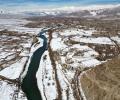
India has accused Pakistan of violating the spirit of the Indus Waters Treaty by engaging in acts of terrorism and refusing to modify the treaty. India's Permanent Representative to the UN, Ambassador Parvathaneni Harish, addressed the UN Security Council, highlighting Pakistan's disinformation regarding the treaty and its continued support for cross-border terrorism. He stated that India has always acted responsibly as an upper riparian state and that Pakistan's actions have jeopardized civilian lives, religious harmony, and economic prosperity. India has suspended the treaty until Pakistan ends its support for terrorism.

He clarified that though China has not announced any such move, but even if it happens, it would in fact help mitigate the annual Assam floods.

Pak warned of "appropriate action" if India violates the Indus Water Treaty and said it is closely monitoring the situation, amid reports that New Delhi may revisit the key water sharing accord.

The statement of the Minister of State in the Prime Minister's office comes on the heels of India issuing a notice to Pakistan seeking a review and modification of the IWT in view of Islamabad's "intransigence" in complying with the dispute redressal mechanism of the pact that was inked over six decades ago for sharing of waters of cross-border rivers.

Pakistan will take up with India 'certain violations' of the provisions of a 1960 treaty in water projects, being constructed by the neighbouring country on Chenab and Jhelum rivers, during External Affairs Minister Pranab Mukherjee's visit to Islamabad in May.Design changes in the water projects being built by India go beyond the provisions of the Treaty and Pakistan is making efforts for their rectification. The Indus Waters Treaty gave Pakistan the rights to the rivers.

Experts say the treaty needs a review to address the ongoing and the likely impact of climate change on river-flow

The court said that it has perused the entire petition and does not wish to agree with it.

"Pakistan will not accept any modifications or changes to the provisions of the Indus Waters Treaty. Our position is based on the principles enshrined in the treaty. And the treaty must be honoured in... letter and spirit," Special Assistant to Prime Minister Tariq Fatemi told Dawn News.

Lieutenant Governor Manoj Sinha asserts that the Indus Waters Treaty was a 'historic mistake' and its termination will greatly benefit Jammu and Kashmir by allowing it to harness its hydropower potential.
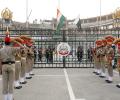
Pakistan's Foreign Office spokesperson Shafqat Ali Khan said on Friday that the ceasefire with India was holding and the country is committed to it. He also said that Pakistan is committed to making the ceasefire hold and de-escalation succeed, and then engagement to lead to stability and resolution of issues. Khan said that the two militaries have a channel of communication through the Directors General of Military Operations, through which they are working for de-escalation, in terms of the movement of troops. He added that Pakistan remains committed to the ceasefire announced on May 10 and lately, both sides have taken steps for de-escalation and return of stability.
The 40-year-old Indus Water Treaty between India and Pakistan has been an outstanding example of conflict resolution but scarcity of water in the basin states since the early 1990s has brought the agreement under strain and its "survival appears weak", according to a UN report.

He conveyed this during a telephonic conversation with US Secretary of State Marco Rubio, according to a statement posted by the state-run Pakistan Television on X.

'What must the Indian Air Force pilots -- who destroyed terror bases in Pakistan using BrahMos missiles' -- be thinking?'

Another official said that India is planning to enhance its current hydropower capacity of around 3000 megawatts on the rivers that were earlier being used by Pakistan and a feasibility study in this regard is planned, the official said
What appeared to be a generous act of friendship was, in truth, a manoeuvre within a much larger strategic game. The United States used the 1962 war not just to aid India but to test how far it could be pulled into the Western fold, points out Dr Kumar.

"The treaty has caused huge loss to Jammu and Kashmir" as the people of the state cannot fully utilise the waters of various rivers, particularly Chenab in Jammu, for agricultural and other activities, Singh said.
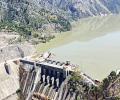
Pakistan has halted the construction of contentious canals in Punjab province after India suspended the Indus Waters Treaty following a deadly terrorist attack in Kashmir. The decision to suspend the canals project was made after Prime Minister Shehbaz Sharif met with PPP chairman Bilawal Bhutto-Zardari and agreed to address the concerns of Sindh province, where the project had sparked protests. The canals project, aimed at irrigating the desert region in Punjab, was seen as a threat to water resources in Sindh. Both sides have agreed to seek consensus on the issue in the Council of Common Interests (CCI), a high-powered inter-provincial body. Meanwhile, Pakistan has reiterated the importance of the Indus Water Treaty for its water security and economy, and condemned India's move to suspend it.

In his address, Sharif praised US President Donald Trump, saying his "efforts for peace helped avert a ... war in South Asia".

External Affairs Minister S Jaishankar clarified that there was no third-party intervention in the ceasefire with Pakistan during Operation Sindoor. He asserted that halting the operation was not linked to trade and refuted claims of mediation by US President Donald Trump.

'China has thus far been cautious, emphasising its focus on development rather than weaponising water resources.'

The National Democratic Alliance's vice presidential candidate C P Radhakrishnan was felicitated at a meeting of the ruling bloc's MPs in the presence of Prime Minister Narendra Modi and other Union ministers. He is expected to file his nomination soon.
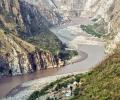
Pakistan may face a significant water shortage during the Kharif season due to reduced water supplies from India.

'Engaging with Pakistan at this stage sends out a message that undermines the sentiments of the people of India who stand firmly against any compromise on national security.'

India has closed its airspace to flights operated by Pakistani airlines in a retaliatory move following the Pahalgam terror attack. The ban will be in effect until May 23 and applies to all aircraft registered in Pakistan, as well as planes operated, owned or leased by Pakistani airlines and operators. This comes a week after Pakistan closed its airspace to Indian carriers. The move is part of various measures taken by the Indian government against Pakistan in the wake of the Pahalgam terror attack that killed 26 people.

Floodwaters from the Ravi River have inundated the Kartarpur Corridor in Pakistan, including Gurdwara Darbar Sahib, stranding over 100 people. Rescue operations are underway as thousands are evacuated from flooded areas.

The Pakistani military fired unprovoked shots across the Line of Control (LoC) in Kashmir for a second consecutive night, triggering retaliatory action from Indian troops. This escalation follows heightened tension between India and Pakistan after the Pahalgam terror attack that killed 26 civilians. Despite the exchange of fire, no casualties were reported. India has imposed a series of punitive measures in response to the attack, including the suspension of the Indus Waters Treaty and closing the Attari land-border crossing. Pakistan has responded in kind, closing its airspace to Indian airlines and suspending trade with India.

The CCS meet was held at the prime minister's Lok Kalyan Marg residence, a day after he held a meeting with the top military brass and accorded operational freedom to the armed forces on the "mode, targets and timing" of India's response to the April 22 attack that killed 26 people.
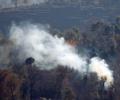
Pakistani troops continued to violate the ceasefire along the Line of Control (LoC) by resorting to unprovoked firing in Jammu and Kashmir's Poonch and Kupwara districts, army officials said. This was the fourth consecutive night that Pakistan resorted to unprovoked firing along the LoC and came amid heightened tension between New Delhi and Islamabad following last week's terror attack in Pahalgam. Indian troops responded swiftly and effectively.

Pakistan is holding a high-level security meeting to formulate a response to India's suspension of the Indus Water Treaty and downgrading of diplomatic ties. The meeting, convened by Prime Minister Shehbaz Sharif, will include the National Security Committee, three services chiefs, and key ministers. The move comes after India blamed Pakistan for a terror attack in Pahalgam, which Pakistan has denied. Diplomatic observers warn that the escalation could further strain relations between the two countries.

India's Permanent Representative to the UN Ambassador Parvathaneni Harish said that the Indian sub-continent offers a "stark contrast" in terms of progress, prosperity and development models.
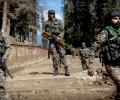
China hopes both sides will remain restrained, move toward each other, and work together to de-escalate the situation.

This marked the sixth consecutive night of ceasefire violations by Pakistan along the LoC, amidst heightened tensions between New Delhi and Islamabad following a recent terror attack in Pahalgam on April 22.

It was said that Sharif wanted the PML-N-led coalition government to utilise all available diplomatic resources to restore peace between the two nuclear-armed states, saying he was not keen on taking an aggressive position, The Express Tribune reported.

The meeting under the chairmanship of Prime Minister Narendra Modi has been convened at 11 am on Wednesday.

The firing exchanges are taking places in five districts out of seven border districts of Jammu and Kashmir. So far, there has been no firing reports along International Border in Samba and Kathua districts.
Pakistan's Deputy Prime Minister and Foreign Minister Ishaq Dar has warned India of a strong response, saying Pakistan will respond to a "brick with a stone" if India takes any action against Pakistan, amid heightened tensions following the April 22 terror attack in Jammu and Kashmir's Pahalgam. Dar alleged that India might have staged the Pahalgam attack to abolish the Indus Waters Treaty (IWT) and warned that any attempt by India to interfere with the treaty would be considered an act of war. He also said that Pakistan had no involvement in the Pahalgam incident and is getting support from countries like Saudi Arabia, China, the United Arab Emirates, the United Kingdom, Kuwait, Bahrain, and Hungary.
India has stopped releasing water from the Baglihar Dam on the Chenab River and is planning similar measures at the Kishanganga Dam on the Jhelum River, following a recent terror attack in Jammu and Kashmir. These hydroelectric dams offer India the ability to regulate water releases. This decision potentially affects the Indus Waters Treaty, a decades-old agreement between India and Pakistan governing the use of the Indus River and its tributaries. The Baglihar and Kishanganga dams have been points of contention between the two nations in the past.

China on Tuesday called for a 'comprehensive and lasting ceasefire' between India and Pakistan, urging both countries to properly handle their differences through dialogue.

Modi said India has now established a "new normal" of not differentiating between terrorists and those who nurture terrorism as they are both enemies of humanity.
 © 2026 Rediff.com - Investor Information - Advertise with us - Disclaimer - Privacy Policy - Sitemap - Feedback - About us - Terms of use - Grievances