
'India's letter to Pakistan on April 24 (2025; two days after the Pahalgam terrorist attack) didn't tear up the treaty -- but it did put it on ice.'
Experts discuss the Indus Waters Treaty, highlighting its engineering aspects and addressing criticisms of unfairness to India.
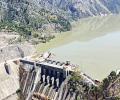
India has suspended the Indus Waters Treaty with immediate effect, accusing Pakistan of breaching the pact by refusing to negotiate modifications and engaging in sustained cross-border terrorism. The decision follows a recent terror attack in Jammu and Kashmir that killed 26 people. Pakistan has rejected India's move, calling it an "act of war."

India has asserted that the Indus Waters Treaty with Pakistan will remain in "abeyance" until Islamabad "credibly and irrevocably" abjures support to cross-border terrorism. External Affairs Ministry spokesperson Randhir Jaiswal said that any bilateral talks with Islamabad will only be on vacation of illegally occupied territories of Kashmir by Pakistan. He also said that India is open to discussing the handing over of terrorists whose list was provided to Pakistan some years ago. India on April 23 announced a raft of punitive measures against Pakistan including suspension of the Indus Waters Treaty after the Pahalgam terror attack that killed 26 civilians.
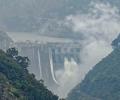
Pakistan has written to India seeking information about the Svalkot hydroelectric project on the River Chenab, according to the Foreign Office spokesperson.
The Indus system of rivers comprises the main river -- the Indus -- along with its five left bank tributaries, namely, the Ravi, the Beas, the Sutlej, the Jhelum and the Chenab. The right bank tributary, the Kabul, does not flow through India.
Weeks after India placed the 1960 Indus Waters Treaty (IWT) in abeyance following the April 22 Pahalgam terror attack, Pakistan has signalled its willingness to discuss New Delhi's long-standing concerns about the treaty, sources said.

The Cabinet Committee on Security (CCS) met on Wednesday under the chairmanship of Prime Minister Narendra Modi and firmed up the responses to the terror attack.

A Pakistani senator has warned that India's approval of a hydel power project on the Chenab River will further inflame tensions between the two countries, particularly in light of the suspended Indus Waters Treaty.

The MEA said that Pakistan had been stonewalling India's requests for a government-to-government negotiation over the treaty due to changes in the ground situation since it was signed.

Pakistan has voiced concerns over the alleged variations in the flow of the Chenab River and has written a letter to India seeking clarification. They also commented on an incident in Bihar involving the removal of a Muslim woman's veil.

India's Permanent Representative to the UN, Ambassador Parvathaneni Harish, delivered a sharp response to comments made by Pakistan's Ambassador to the UN, Asim Iftikhar Ahmad.
The talks as part of the annual Permanent Indus Commission meeting are being held after a gap of over two years.

India strongly responded to Pakistan's remarks on Jammu and Kashmir and the Indus Waters Treaty at the UN Security Council, accusing Pakistan of supporting terrorism and violating the spirit of the Indus Waters Treaty.
The Standing Committee on Water Resources has recommended renegotiating the Indus Water Treaty with Pakistan to address the impact of climate change on water availability in the river basin and other challenges which are not covered under the agreement.

Pakistan has responded to a letter by India asking to start negotiations for the review of the Indus Water Treaty, the foreign office said on Wednesday.
It is the first major contact of its kind since the Pakistan-India conflict in May, the paper said, citing sources.

China and Pakistan concluded their strategic dialogue, reiterating their opposition to unilateral actions in South Asia and discussing Kashmir, Afghanistan, and trilateral cooperation.

The government has finalised the details of a task force on Indus Water Treaty, which will be formed within one week, with the aim to stop river waters going waste in Pakistan.
The sources said India has always been a steadfast supporter and a responsible partner in implementing the IWT in letter and spirit.
India has issued a notice to Pakistan for modification of the Indus Waters Treaty of September 1960 following Islamabad's "intransigence" on its implementation

Shehbaz emphasised that water was a lifeline for Pakistan, and no compromise would be made on the country's rights under international agreements, as per Geo News.
"I do not think they (World Bank) are in a position to interpret the treaty for us. It is a treaty between our two countries and our assessment of the treaty is that there is a provision of graded approach," External Affairs Ministry Spokesperson Arindam Bagchi said.
Surprised at the World Bank's decision to appoint a neutral expert, as sought by the Indian government, and at the same time establish a Court of Arbitration as wanted by Pakistan, India said proceeding with both the steps simultaneously "legally untenable".
India rejects this so-called "supplemental award", the ministry of external affairs said, referring to the ruling in the case related to Pakistan's objections to Kishenganga and Ratle hydropower projects.
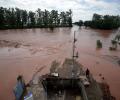
Pakistan has urged India to fully adhere to the Indus Water Treaty (IWT), expressing concerns about the level of detail in flood information shared through diplomatic channels.

In 2025, India launched Operation Sindoor, a multi-domain combat mission against Pakistan in response to cross-border terrorism. The operation involved precision strikes, military retaliation, and diplomatic measures, marking a significant shift in India's security policy.

The Pakistani delegation, in its meetings with World Bank officials, insisted on early appointment of the judges and setting up the court.

India has issued a strong warning to Pakistan against continuing its 'hateful' rhetoric and any potential misadventures, following recent nuclear threats and remarks from Pakistani leadership.

The talks will be the first official engagement between India and Pakistan since Khan became prime minister on August 18.

'Make no mistake, depriving water deliberately to a nation of 190 million people is a repugnant idea.' 'The world community won't forgive us.'

According to sources, Union water resources ministry officials gave a presentation to the prime minister on the treaty and the projects involved.
Foreign Office spokesperson Tehmina Janjua said in a statement that the US report "Avoiding water wars in South and Central Asia," released on February 22, acknowledges that dams India is building in Jammu and Kashmir "will limit supply of water to Pakistan at crucial moments."

Pakistan has reiterated its desire for normal neighbourly relations with India, while also criticizing India's decision to put the Indus Waters Treaty in abeyance. The Foreign Office spokesperson emphasized Pakistan's commitment to diplomacy and regional cooperation.

A simple explainer to the Indus Water Treaty.

The announcements were made after a meeting chaired by Prime Minister Shehbaz Sharif to formulate the country's response to India's move to suspend the Indus Water Treaty and downgrade diplomatic ties after the Pahalgam terror attack.

India on Monday extended the closure of its airspace for flights operated by Pakistan airlines by another month till July 24.
The World Bank's move came as it told the two countries that it was responding to their separate proceedings initiated under the Indus Waters Treaty 1960.

Dar recalled that when he met US Secretary of State Marco Rubio in July and asked about dialogue with India, the top US diplomat clarified that India has maintained it is a "bilateral issue."
 © 2026 Rediff.com - Investor Information - Advertise with us - Disclaimer - Privacy Policy - Sitemap - Feedback - About us - Terms of use - Grievances