
The cost of the war is being counted not in the corridors of power in Washington or Tehran, but in Firozabad's darkened furnace rooms, Howrah's idle casting sheds, and a barbershop in Kochi where the wait is suddenly, inexplicably, an hour long, notes Prem Panicker in his must read blog on the Iran War.

The question is no longer whether the war will expand. It has. The next few days will tell us whether the war stabilises around Hormuz or whether the Strait itself becomes the trigger for a far larger rupture. What to watch for over the next 48 hours is simple: Any move by the US toward direct naval control of the Strait; any credible Iranian attempt to disrupt or mine shipping lanes and, critically, whether energy infrastructure in the Gulf continues to be targeted.If those lines are crossed in tandem, the war will no longer be containable within the region.

The purge in Washington does not pause the war. Strikes continue, Hormuz remains closed, and Brent crude is still dancing around $109 a barrel. For India, the command chaos in the Pentagon is another layer of uncertainty piled on five weeks of conflict that was already straining every buffer Delhi has.

The United States, which entered this war in expectation of a short, sharp win along the Venezuela model, is now preparing for deeper involvement in a conflict it does not fully control, without the allies it typically relies on, against an adversary that is not behaving as expected, in a global environment that is already absorbing economic shock. Prem Panicker continues his must read daily blog on the Gulf War.

Saudi Arabia and the UAE are actively pushing Trump to take the war to its bitter finish and 'erase' Iran's presence in the geopolitics of the region. Simply put, the two most powerful Sunni Arab oligarchies are on the same page as Israel. Such interference increases the risk of a breakdown in dialogue between the US and Iran, points out Ambassador M K Bhadrakumar.

The delegations from the US and Iran head to Islamabad on Friday, carrying a ceasefire that is already fraying, a Strait that is technically open and practically closed, and a negotiating agenda that would challenge even parties actually negotiating in good faith, which these groups are not. Prem Panicker continues his must read blog on the Iran War.

'Was the five-day pause ever meant to hold, or was it simply another instrument of signaling, of positioning, of buying time in a war where even the pauses are tactical?' asks Prem Panicker in his must read daily blog on the Gulf War.

Taking Kharg would give the US control over virtually all of Iran's oil exports and thus provide significant leverage, notes Prem Panicker in his must read daily blog on the Gulf War. It would also put American troops within range of Iran's remaining missiles, drones, and artillery on a piece of real estate that is just eight square miles in size, and just 15 miles from the Iranian mainland.

Alliances fight wars effectively only when they share an endgame. If Israel acted without US knowledge, then the military alliance is operating without real coordination at the level of strategic targeting. Neither picture is reassuring in a war that is no longer regional in its consequences. Prem Panicker continues his must read daily blog on the Gulf War.

For weeks, the war skirted the edge of catastrophe without tipping over. Missiles flew, there was much destruction, commanders were assassinated, cities across the Gulf and even in Israel struggled to absorb the shock. But one line held: Energy infrastructure, the arteries of the global economy, remained largely untouched. That is no longer true. Prem Panicker continues his must read daily blog on the Gulf War.

The pause gives the US time to breathe, to regroup, to move its expeditionary force into position without risk of interception along the way. It gives Iran nothing -- on the ground, attacks against its infrastructure continue apace. Prem Panicker in his must read daily blog on the Gulf War.

Israel and the United States had a plan. Iran punched back. And now the Gulf is reeling, the world is beginning to feel the pain and, as on date, no one in Washington or Tel Aviv appears willing to admit that the punch has landed, notes Prem Panicker, continuing his must-read blog on the war in the Middle East.

India is yet to take a call on United States President Donald Trump's invitation to be part of the 'Board of Peace' that will work towards bringing lasting peace to Gaza and possibly resolve global conflicts, people familiar with the matter said on Wednesday.

Trump's 'Board of Peace' is being projected by Washington, DC as a new international body to usher in peace and stability in Gaza and beyond, triggering speculation that it could throw a challenge to the United Nations.
Prime Minister Narendra Modi's goal of making India a high-income economy by 2047 is unlikely to be achieved, but the country should become an upper middle-income nation by then, Financial Times chief economics commentator Martin Wolf said on Friday. Wolf further said that India would also become a superpower by 2047. "India wishes to become a high-income country by 2047.

In an interview with Russian journalist Pavel Zarubin on Saturday, Putin said that such a move by Trump would "lead to the destruction of our relations. At least the positive tendencies that have appeared in these relations."
Notably, US President Donald Trump and his administration have continuously targeted India over its purchase of Russian crude oil. India, on the other hand, has always maintained that India's purchases are based on its domestic needs and economic security.
British Prime Minister Keir Starmer joined European allies in a video call to discuss the Ukraine conflict ahead of President Zelensky's visit to the White House for talks with President Trump.

External Affairs Minister S Jaishankar defends India's purchase of Russian oil, stating it is not the largest purchaser and that the US had previously supported such actions to stabilize energy markets. He also addresses concerns about tariffs and trade relations with the US.
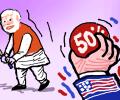
'Things may get much worse before they get better,' predicts Ajay Chhibber.
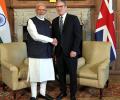
For UK automakers, market access to India will be limited by quantity caps and phased tariff cuts, especially on petrol, diesel and electric vehicles.

Russian President Vladimir Putin briefed Prime Minister Narendra Modi on his summit talks with US President Donald Trump on ending the war in Ukraine.
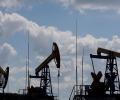
The government has no say in where the country's refiners source oil from because these are commercial transactions.

By threatening to punish India with high tariff, Trump is actually planting a tantalising thought in the Indian mind that the Modi government should suitably 'incentivise' him, explains Ambassador M K Bhadrakumar.

The Financial Times recently announced the global MBA rankings for the year 2025.
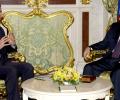
As Damascus teetered, Assad's aide orchestrated a shadowy airlift, spiriting millions and secrets to Russia, paving his own escape route.

In 2008, FT inked a content partnership with Network18 Media and Investments after ending its 15-year-old content partnership with Indian financial daily Business Standard.
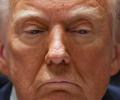
'As negotiations continue, the path forward demands not only diplomatic skill, but also vigilance against legal asymmetries embedded in America's trade playbook.'

Nikkei is one of the largest media houses in Japan.

A day after Rupert Murdoch made a plea to allow greater foreign direct investment in the media sector, London-based Financial Times on Thursday asked the government to permit publication of foreign newspapers from India.

'Putin dreams about his legacy. He wants to forcibly restore the Russian empire.' 'Unfortunately, after three years of large-scale war with massive human losses, Putin will not budge from his goal because human life is the cheapest resource in the Russian State.'

Dr Manmohan Singh first embossed himself on the national consciousness when as India's finance minister he flagged off economic reforms which changed this nation forever.
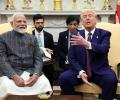
From bhikshus of Ashokan 3rd century BC and medieval Sufis to Oxfam, Omidyar and Soros now, non-State actors have any real power only when they work in conjunction with a real State, asserts Shekhar Gupta.
In recognition of his efforts in making India an attractive foreign direct investment destination, Commerce and Industry Minister Kamal Nath has been selected as the "Global fDi Personality of the Year
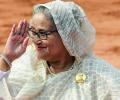
Bangladesh's interim government on Sunday said it will seek Interpol's assistance in repatriating deposed prime minister Sheikh Hasina from India, and other 'fugitives', to face trial for alleged crimes against humanity.

Manmohan Singh represented the finest aspects of India, asserts Aakar Patel.

Just 10 days ahead of the Election Day, the United States presidential race remained very tight with both Vice President Kamala Harris and former President Donald Trump locked in a dead heat for the popular votes in most swing states.

If the deal is indeed being considered, this will be the first time that Ambani will be putting his money in a print media venture since he and his younger brother, Anil Ambani, split businesses to form their own groups

The FT report said the existence, size and investments of the highly profitable internal trading fund, which was set up three decades ago, have until now remained largely unknown outside a circle of former and current insiders.

The letter comes after a report by the London-based Financial Times, citing documents from George Soros-backed Organized Crime and Corruption Reporting Project (OCCRP), alluded to a "fraud" by the Adani Group by selling low-grade coal as high-value fuel in 2013.
