
'The main problem the country faces is not low GDP growth, but low employment growth.'

A new report by EY-Parthenon and CREDAI indicates that Generative AI (GenAI) could inject USD 14-17 billion into India's real estate economy over the next seven years. The technology is expected to significantly enhance operational efficiency, boost sales velocity by 30-50 per cent, and accelerate product launches, offering competitive differentiation and improved customer experiences for developers.

India's services sector growth experienced a significant slowdown in June, reaching a 17-month low due to challenging market conditions and reduced domestic client interest, as indicated by the HSBC India Services PMI Business Activity Index.

Indian benchmark indices, Sensex and Nifty, extended their rally for the fourth consecutive day, driven by a significant drop in crude oil prices and strong performance from IT firms, despite mixed global cues.
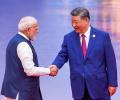
India's dual pursuit of a robust strategic partnership with Washington and a pragmatic, tension-management policy with Beijing represents the essence of modern multi-alignment. By embracing economic pragmatism, learning to compartmentalize political differences, and engaging in continuous dialogue, India can secure its borders, grow its economy, and contribute to a stable, multipolar Asian century, points out Ambassador Rajasekhar.

Most members of the Reserve Bank of India's Monetary Policy Committee (MPC) expressed concerns about inflation becoming generalised and highlighted uncertainties surrounding both inflation and growth prospects due to the West Asia conflict, according to the recently released minutes.
As India marks a decade of the Goods and Services Tax (GST), the focus is shifting towards enhancing efficiency through artificial intelligence, data sharing, and process simplification. The reform, which unified India's indirect tax system, has significantly broadened the tax base and boosted revenues, with future plans including a streamlined two-tier rate structure and continued technological integration to reduce compliance costs and combat evasion.

Avesh Khan remains determined for a India comeback, hoping to catch the selectors' attention with strong Ranji Trophy performances this season.

The United States and India are on the verge of finalising a landmark bilateral trade deal, aiming to boost trade to USD 500 billion by 2030, according to US Deputy Assistant Secretary of State Bethany Poulos Morrison. The agreement seeks to open India's 1.4 billion-strong market to American goods on reciprocal terms, with ongoing high-level discussions to recalibrate the pact after recent changes in US tariff policy.

Modi thanked Seychelles for the honour and dedicated it to the nations which are fighting the challenges of climate change.

The H-1B visa once symbolised the American Dream for Indians, but today's students are increasingly asking whether they need America at all. In 1995, the question was: How do I get to America? In 2026, it may be: Do I need to?

'Why not aspire for 8 or 9 or even 10 per cent?'

Amazon CEO Andy Jassy announced an additional USD 13 billion investment in India, bringing the company's total capital commitment to USD 48 billion by 2030. This significant investment will primarily focus on expanding AI and cloud infrastructure, supporting job creation, boosting e-commerce exports, and digitising small businesses, aligning with India's growing digital economy.

Amazon CEO Andy Jassy met Prime Minister Narendra Modi and announced the company's intention to invest an additional USD 13 billion in India by 2030, focusing on expanding AI and cloud infrastructure.

Despite backing from the team management, Washington Sundar's inconsistent usage with both bat and ball has raised questions over his undefined role, with Ravichandran Ashwin urging India to utilise him more clearly as a genuine all-rounder.

Immigrants' contribution to the US economy is disproportionate to their share of the population, meaning that losing them would shrink the economy even more than losing a random group of Americans, points out Sree Sreenivasan.

India's digital economy is projected to constitute nearly 20 per cent of the nation's GDP by 2030, fuelled by a growth rate twice as fast as the overall economy, according to a senior government official.

West Bengal Chief Minister Suvendu Adhikari outlined his government's priorities, focusing on strengthening the state's economy, attracting investment to create jobs, and improving law and order. He criticised the previous administration for alleged corruption and appeasement politics, while highlighting initial successes in border management and reducing criminal activities.

India's Goods and Services Tax (GST) collections saw a significant 14 per cent increase in June, reaching approximately Rs 1.95 lakh crore. This surge was primarily driven by a substantial 34.6 per cent growth in tax mop-up from imports, alongside a 6.5 per cent rise in domestic supplies, reflecting the country's economic resilience despite global uncertainties.

AI-driven job disruption, rising debt, shrinking savings and a changing global economy are reshaping India's middle class. Saurabh Mukherjea discusses jobs, entrepreneurship, investing and the future of India's economic growth on THE REDIFF PODCAST.

Global oil prices fell on Thursday to their lowest levels since before the outbreak of the Iran conflict, offering a significant economic tailwind for India, the world's third-largest crude importer, by easing inflation risks, reducing the import bill and improving the government's fiscal position.

India's finance ministry anticipates inflation will remain relatively contained in the coming months, supported by a correction in crude oil prices and softening input costs following the cessation of the West Asia conflict, despite earlier spikes in wholesale and retail inflation.

IT stocks had their worst first half fall in decades, with the Nifty IT index declining 31% in the January-June 2026 period, its biggest decline in the first six months of a calendar year since 2003.

Oracle has partnered with the Uttar Pradesh State Skill Development Mission (UPSDM) to provide free digital skills training in AI, cloud, cybersecurity, and data science to 300,000 students and professionals by 2029, aiming to enhance employability and build a future-ready workforce.

Indian benchmark indices Sensex and Nifty rallied in early trade, driven by a significant decline in Brent crude oil prices, which fell below the USD 73 per barrel level, and positive trends observed across most Asian equities.

'India has initiated a bear market and we will still go lower. It has nothing to do with the economy.'

India's remittance inflows have remained robust despite the West Asia conflict, driven by precautionary transfers and diversification of remittance sources, with bankers expecting continued stability for the year.

Pakistan Prime Minister Shehbaz Sharif announced that Pakistan would host the signing ceremony of a peace agreement between the US and Iran in Switzerland on June 19, calling it a "historic milestone" that ends a 107-day conflict and promises global economic stability.

Your children may always love you but should you expect them to to finance your retirement in today's economy?

Indian benchmark indices Sensex and Nifty rebounded in early trade, recovering from previous losses, driven by softening crude oil prices and renewed buying interest in blue-chip stocks. Analysts note that the fall in Brent crude below USD 77 has removed significant macro headwinds for India, contributing to market stability.
The US and India are collaborating to de-risk global supply chains for artificial intelligence technologies, particularly in semiconductor manufacturing and critical minerals processing. This partnership is facilitated through the US-led Pax Silica initiative, which aims to address over-concentration issues and single points of failure in supply chains, fostering a resilient global economy.

Despite current headwinds, India remains the world's fastest-growing major economy and should not allow near-term challenges to obscure its long-term growth potential, said Jane Fraser, Citi Chair and Chief Executive Officer.

History may remember Takaichi Sanae not as the leader who simply accelerated Japanese rearmament, but as one who governed during Japan's transition from an industrial-age security model to a post-industrial strategic member of the global order, points out Varun Arya.

Global investment firm KKR remains optimistic about India's long-term growth, citing rising incomes, premiumisation, financial deepening, and demand for quality services as key drivers for its consumption story, even as higher energy prices and AI disruption pose near-term challenges.

Indian benchmark indices Sensex and Nifty surged significantly in early trade, mirroring a global rally and a sharp decline in crude oil prices following the finalisation of a peace deal between the US and Iran to end their 107-day conflict and reopen the Strait of Hormuz.

India's Women's T20 World Cup campaign ended in another group-stage exit, putting Harmanpreet Kaur's captaincy under scrutiny and exposing issues with team selection, batting approach, bowling balance and fielding that could trigger a major reset.

Indian pacer Prasidh Krishna achieved a historic milestone at Chennai's Chepauk Stadium, taking his maiden five-wicket haul (5/23) in ODIs against Afghanistan. This performance marked the best figures by an Indian bowler at the venue and placed him among an elite group of Indian pacers.

India's economy in FY26 saw significant momentum from investment demand, with gross fixed capital formation (GFCF) accelerating to 8.2 per cent, while private final consumption expenditure (PFCE) also grew steadily, according to provisional estimates.

S&P Global Ratings projects India's economic growth to slow to 6.6 per cent in FY27, down from 7.7 per cent in FY26, citing energy stress and a potential sub-par monsoon.

IIT Madras researchers have developed an indigenous pilot plant in Tiruchirappalli capable of processing 100 tonnes of electronic waste annually. This zero-discharge, single-acid process recovers valuable metals like copper, lead, and tin from PCBs, addressing India's growing e-waste challenge and supporting circular economy initiatives.
