
The National Stock Exchange (NSE) will launch Dated Brent Crude Oil (Platts) futures on April 13, offering a new hedging tool for market participants.

Indian benchmark indices, Sensex and Nifty, opened in positive territory, primarily driven by a strong performance in IT stocks, sustained foreign fund inflows, and a dip in global crude oil prices, despite a hawkish stance from the US Federal Reserve. Track Sensex, Nifty on July 30.

A sharp sell-off in the Indian equities markets after a spike in crude oil prices should not be surprising. Historically there is a negative correlation between stock valuations in India and the price of Brent crude oil, which is the benchmark for the Indian crude oil basket. Between 2011 and 2014, crude oil traded above $100 a barrel for an extended period, the Sensex-trailing price/earnings (P/E) was 18X, on average, during the period, nearly 22 per cent lower than the current index P/E of 23X.

Replacing over a third of India's oil imports at competitive rates is going to be a challenge, said traders from State refiners, even though some progress was made in the last two months.

'FPIs are unlikely to return unless there is equilibrium between valuation premium and earnings growth.'

Indian OMCs have not been buying Iranian or Venezuelan crude which is actually sanctioned by US. OMCs have always complied with the price cap of $60 for Russian oil recommended by the US.

The Indian rupee rebounded against the US dollar after the Reserve Bank of India (RBI) restricted banks' net open positions in dollars. This move prompted banks to sell dollars, providing temporary support for the rupee amidst ongoing geopolitical tensions and rising oil prices.

The Indian rupee rebounded against the US dollar following intervention by the Reserve Bank of India, amidst ongoing concerns about foreign capital outflows, rising crude oil prices, and geopolitical instability.
The Indian rupee experienced a significant surge against the US dollar following the Reserve Bank of India's measures to restrict banks from onshore forward markets. Despite this, the rupee remains under pressure from foreign capital outflows, a strong dollar, and rising crude oil prices.

Indian private sector and State-run refiners continued to receive crude oil from Russian suppliers even after November 21 -- the winding-down date for US sanctions on supplies from leading Russian oil producers imposed in October -- as new intermediaries sprung up in West Asia to sell the oil, according to senior refining sources and ship tracking data.

Corporate margins and profits in India remain vulnerable to changes in crude oil prices in the international market. Historical quarterly data from listed companies (excluding banks, finance and insurance, oil and gas, and power sectors) indicate an adverse correlation between corporate margins and crude oil prices.

Benchmark Sensex tumbled 1,236 points or 1.5 per cent while Nifty closed near 25,450 on Thursday following an across-the-board sell-off amid escalating geopolitical tensions between the US and Iran.

Oil subsidies to fall 44% in FY15.

The rupee plunged to a fresh low of 93.72 against the dollar on Friday, falling 1.15 per cent in a single session - its sharpest one-day decline since February 24, 2022 - as elevated crude oil prices and strong dollar demand from oil-marketing companies and foreign portfolio investors (FPIs) weighed on the currency.

The rupee recovered 55 paise from its all-time low level to close at 90.38 against the US dollar after a volatile trade on Wednesday, amid suspected aggressive central bank intervention.
As stringent sanctions imposed by the European Union and US are crippling business and trade, desperate Russian oil companies are offering huge discounts to India, provided a payment mechanism to bypass the SWIFT ban is quickly approved by the government. According to sources familiar with the development, Russian oil firms are offering 25-27 per cent discount to the dated Brent crude prices. State-run Rosneft is one the biggest oil companies that supply crude to India.

Savings for Indian refiners from purchasing Russian oil have decreased to a third of what they were in the years following Russia's invasion of Ukraine, which triggered global crises, sanctions, and discounted Russian oil seeking buyers. Despite this, savings from importing cheap Russian oil were significant enough to help Indian refiners tide over frozen petrol and diesel pump prices.

Sanctioning Russian oil would have led to a sharp surge in oil prices to above $80 per barrel levels, which would impact pump prices in the US ahead of midterm elections next year.

IndiGo airline will face near-term pressure on profitability from rising fuel prices following the escalation of conflict in West Asia, though it is likely to pass on higher costs to passengers over time because its ticket booking cycle is relatively short, according to a report by Moody's Ratings.
The companies' underrecoveries stood at a whopping Rs 1,39,869 crore last financial year. Of that, Rs 62,837 crore was accounted for by diesel alone.

The total investment at risk is $930 billion and oil companies will need to cut their expenses by 30 per cent to make their projects viable provided oil remains around $70 a barrel.

Among Sensex firms, Bharat Electronics, Eternal, Mahindra & Mahindra, Kotak Mahindra Bank, Tata Motors and Power Grid were the gainers. However, Adani Ports, ITC, UltraTech Cement and Titan were among the laggards.

Alliances fight wars effectively only when they share an endgame. If Israel acted without US knowledge, then the military alliance is operating without real coordination at the level of strategic targeting. Neither picture is reassuring in a war that is no longer regional in its consequences. Prem Panicker continues his must read daily blog on the Gulf War.

Egypt, Pakistan, Saudi Arabia and Turkey met in Islamabad in what analysts say is the formal opening of a new diplomatic formation that could reshape the post-war regional order. Their immediate goal is a ceasefire; their larger ambition is to ensure that neither Iran nor Israel emerges from this war in a dominant position. Pakistan's foreign minister then flew directly to Beijing and mooted a Chinese role as guarantor of any eventual agreement. Prem Panicker continues his must read daily blog on the Gulf War.

Indian Oil Corporation (IOC), the nation's top oil firm, has bought as much as 3 million barrels of crude oil that Russia had offered at steep discount to prevailing international rates, sources said. The purchase, made through a trader, is the first since Russia's February 24 invasion of Ukraine that brought international pressure for isolating Putin administration. Sources aware of the matter said IOC bought Urals crude for May delivery at a discount of $20-25 a barrel to dated Brent.

The ceasefire is still technically holding, to the extent that no overt hostilities have been reported yet, but the rhetoric has hardened dangerously. The week ahead will also clarify whether the Islamabad failure was a negotiating tactic or whether Washington has genuinely locked itself into a position from which the only exits are climb-down, escalation, or the slow bleed of a new status quo that nobody chose and nobody controls. Prem Panicker continues his must read blog on the Iran War.

The basket of crude oil that Indian refiners buy hit a new high of $96 per barrel on Wednesday, the latest day for which data are available. The price of the Indian basket of crude oil has been reflecting the soaring futures price of oil in the New York Mercantile Exchange, which hit an all-time high of $102.08 per barrel on Wednesday, before falling to below $100 per barrel at the end of the day.

'I have no problems with the finance ministry or with state governments treating petrol pump prices as the last resort for meeting their ambitious spending targets with very limited revenue resources.' 'But let's do away with this smokescreen of free pricing of petrol and diesel and go back to administered pricing regime,' says Dr Sudhir Bisht.

After steep correction in valuations, these have turned attractive but upside will depend on diesel price rises and export-parity pricing.
With the O2C business outlook on the mend, the Street is also looking forward to news on RIL's proposal to sell up to 20 per cent of the O2C business to a strategic investor like Saudi Aramco.

Benchmark Brent oil futures prices more than halved between June 2014 and January 2015.
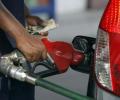
Petrol and diesel prices, which have been on a freeze for the past four months in view of assembly elections in states like Uttar Pradesh, need to be increased by over Rs 12 per litre by March 16 for fuel retailers to break even. International crude oil prices shot above $120 a barrel for the first time in nine years on Thursday before retreating a little to $111 on Friday, but the gulf between cost and retail rates has only widened. With international oil prices - on which domestic fuel retails are directly benchmarked - spiking in the last two months, state-owned fuel retailers "need a massive price hike of Rs 12.1 per litre on or before March 16, 2022, just to breakeven and a price hike of Rs 15.1 is required" after including margins for oil firms, ICICI Securities said in a report.

2018 has been a disappointing and highly volatile year for equity investors.

Equity benchmark indices Sensex and Nifty on Friday reversed their six-session losing streak and rebounded more than 1 per cent on value buying in auto, IT, financial and energy stocks. Better than expected quarterly financial results of corporates also boosted investor sentiments even as uncertainties persisted over the escalating tensions in the Middle East, according to analysts. In a largely range-bound trade, the 30-share BSE Sensex rose 634.65 points or 1.01 per cent to settle at 63,782.80 points.

Indian market has been plagued by negative sentiment and triggers

At 15.05 PM, the 30-share Sensex was up 281 points at 28,238 and the 50-share Nifty gained 86 points at 8,577

The Sensex has slid 18.5 per cent from its January 2015 peak.

Cairn has slashed its planned capital expenditure (capex) by 60 per cent to $500 million against the earlier $1.2 billion.

Christopher Wood, global head of equity strategy at Jefferies reiterate his bullish view on Indian equities on the back of a steady fall in Covid cases coupled with a sharp economic recovery in India, reports Puneet Wadhwa.

The immediate concern for the rupee is the sharp spike in oil prices
