
Anybody who is saying that in five years the Sensex will go to 60,000 is only saying that in the next five, years the Sensex will generate a CAGR of around 19 per cent, says U R Bhat, managing director of Dalton Capital Advisors.

Only 10 per cent of stocks account for 93 per cent of investments.

In the past four months, $7.5 billion has flowed back into domestic stocks, helping the benchmark indices bounce back more than 40 per cent from their 2020 lows.

In three of the past four years, 10-year returns have been 10 per cent or lower, making equity unattractive, compared to other asset classes.

India's macro finances are getting into good shape.

They have been on an unbroken selling streak since the Union Budget, spooked by increase in income-tax surcharge, taxes on buybacks, and lack of stimulus to prop up the economy.

The Sensex is on course to ending calendar year (CY) 2019 at a price-earnings (P/E) multiple of 29x, the highest in 25 years. Current valuations are, however, lower than those seen in the early 1990s. The Sensex has risen close to 14 per cent in the last 12 months, while the index underlying EPS dropped 6.7 per cent during the period.

Indian equities are no longer cheap vis-a-vis global markets, and only a short distance away from being the most expensive they have ever been.

Experts say foreign investor sentiment was bolstered by the US Federal Reserve's decision to go slow with interest rate hikes and hopes of political stability.

While three of the top five FPIs - Capital, Government of Singapore, and Vanguard - have seen their investment value more than triple, India's benchmark indices have risen just 70%.

Equity investors should thank cash-rich biggies such as TCS, ITC, HUL, Nestl, and Bajaj Auto for this.

The Karnataka election is being seen as the semi-final to the 2019 general elections and appears to be heading towards a close fight

MF investors may not be able to support markets fall if selling intensifies

"The shift is gradually happening more on account of favourable risk-reward for stocks in these sectors and the shift would be more pronounced as investors roll over their targets to 2017," the head of research at a foreign brokerage said.

'The news about the new virus strain in the UK provided them with an opportunity to take money off the table.'
Turnover on exchanges dips to pre-Modi levels

A tally around 150 in Gujarat can see the index hit 10,700 levels going ahead

Participants will keenly watch fate of GST Bill in Parliament.

'Unless India Inc's earnings offer promise in March 2017 quarter, sentiment may not reverse in a hurry.'

On Wednesday, FIIs sold shares worth Rs 1,573 crore.

Experts say the stock market correction in recent times increases the risk-reward in favour of large-cap stocks.

Analysts say markets to be impacted by monsoon, inflation trajectory.

There is a near consensus that at least a 25 basis points cut, if not 50, can be expected in the June policy.

FIIs pump in $1.4 billion in March, after pulling out $2.9 billion in Jan-Feb.

Avoid fresh investments, as there might be more opportunities in the coming months, market experts tell Joydeep Ghosh

Since 2005, in 8 out of 10 years (except in CY11 and CY14) the benchmark indices have given positive returns in December.

Demonetisation, Donald Trump's surprise victory in the US presidential elections, and the fear that US Fed may hike rates in the upcoming policy review in December have dented market sentiments, report Puneet Wadhwa & Deepak Korgaonkar.

Since its peak, the S&P BSE Sensex has dropped nearly 3,000 points.

The sentiment around Indian equities remains positive and unchanged.

While selling started in April, it has intensified this month, with FPIs pulling out $1.1 billion and $2.5 billion from equities and debt market, respectively

A total of 183 stocks rallied 10 per cent, of which 32 stocks saw price appreciation of 20 per cent each.

CBDT circular issued last month had raised multiple taxation concerns.

There have been demands from a section of stakeholders that the long-term capital gains tax on equities be reimposed.

The adjustment orders for AY2012, are expected between January and March 2016.

It won't be an easy ride for the markets, reckon experts, considering the multiple state elections in 2018 and general elections next year.

Only six sectors are likely to report good set of numbers in Q4 FY15.

Given the developments, analysts do not foresee a quick recovery.

The year 2014 has been one of the best for investors in the equity markets.
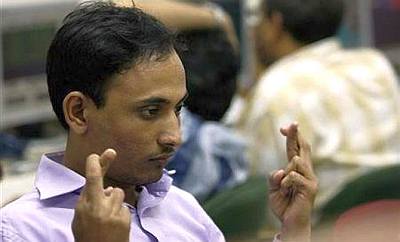
Sharp swings likely in equity, forex and bond markets.

The market direction will be guided by corporate earnings, especially the oil & gas companies, since they were responsible for earnings disappointment in the past quarter as well.
 © 2026 Rediff.com - Investor Information - Advertise with us - Disclaimer - Privacy Policy - Sitemap - Feedback - About us - Terms of use - Grievances