
Delhi's air quality plunged into the 'severe' category for the first time this season on Friday morning, with the average Air Quality Index (AQI) hitting 403. Several monitoring stations reported even higher levels, prompting the invocation of Stage III of the Graded Response Action Plan (GRAP) to curb pollution.

Delhi's air quality slipped into the 'very poor' category for the first time this season on Monday, with an AQI of 312. This triggers Stage 2 of the Graded Response Action Plan (GRAP), leading to stricter measures to control pollution. Minimum temperatures were also noted.

A thick layer of smog enveloped parts of North India, including Delhi, Haryana, Punjab, and Western Uttar Pradesh, a day after Diwali celebrations. Air Quality Index (AQI) levels soared to 'very poor' and 'severe' categories, with Delhi recording its most polluted Diwali in five years. Residents reported severe health issues, prompting calls for urgent government intervention.

New Delhi experienced its worst air quality in 287 days on Tuesday, with the Air Quality Index (AQI) reaching 350 and several monitoring stations reporting 'severe' pollution levels. PM2.5 was identified as the dominant pollutant, posing significant health risks. The city has been placed under Stage II of the Graded Response Action Plan, with stubble burning and transport emissions being major contributors to the deteriorating air quality.

Delhi's air quality slightly deteriorated on Wednesday, moving into the 'poor' category with an AQI of 232, and is forecast to worsen to 'very poor' by Friday due to unfavourable meteorological conditions. PM2.5 remains the dominant pollutant, with vehicular emissions and biomass burning identified as major contributors. The city also experienced its coldest morning of the season.

A report by Envirocatalysts reveals that Delhi was the most polluted among 24 state and Union Territory capitals between Diwali 2025 and Diwali 2026, with annual average PM2.5 concentrations more than double the national standard. The analysis highlights that Diwali-day pollution contributes minimally to the overall annual exposure, with other sources like vehicles, dust, and industrial emissions being the primary culprits. The report calls for year-round clean-air action plans.

Delhi experienced its most polluted Diwali in five years with an average Air Quality Index (AQI) of 376, and the day after the festival saw only a marginal improvement, remaining in the 'very poor' category at 371, accompanied by a thick blanket of smog and fog.

The Supreme Court has expressed serious concerns over the non-implementation of Solid Waste Management rules, stating that despite India's economic growth, its sanitation performance remains poor. The court highlighted the need for unwavering implementation by authorities and adherence by citizens, noting that existing laws and rules are falling short of their objectives. It has tasked district collectors with reinventing strategies and assisting in the implementation of SWM rules, while also pointing out deficiencies in addressing unorganised sectors and leveraging public-private partnerships.

The Supreme Court has mandated urgent action from Delhi and three neighbouring states (Uttar Pradesh, Rajasthan, Haryana) to tackle the sharp increase in vehicular emissions contributing to air pollution in the National Capital Region. The court has sought detailed responses on measures to prevent over-age vehicles, enforce emission standards, and improve inter-state coordination, highlighting the critical need for intervention despite a decline in stubble burning.

A new analysis by the Centre for Science and Environment (CSE) reveals that Delhi-NCR's early-winter air pollution has reached a three-year high in the week preceding Diwali. The average PM2.5 concentration significantly increased compared to previous years, driven primarily by vehicular emissions and regional pollution inflow. The report highlights the failure of year-round pollution control measures, with Diwali firecrackers exacerbating an already deteriorating situation, and notes the emergence of new pollution hotspots and the ineffectiveness of emergency traffic restrictions.

Delhi experienced its most polluted Diwali in five years, but the official air quality figures are under scrutiny. Several monitoring stations reportedly went offline during the peak firecracker period on Sunday night, leading to discrepancies between government and private agency data. Experts and opposition leaders have raised concerns about the reliability of the AQI tracking, with allegations of "data fraud" and calls for greater transparency and accountability.

The Supreme Court has permitted the bursting of green firecrackers in Delhi-NCR for Diwali on November 7 and 8, 2026, with specific time restrictions. The court emphasized that the right to engage in practices with religious colour is qualified and cannot override constitutional restrictions on environmental pollution. It also issued detailed guidelines for manufacturers, traders, and authorities to ensure compliance and monitor air quality.

Delhi is experiencing heavy rainfall and strong winds, prompting the India Meteorological Department (IMD) to issue a red alert, which is impacting ongoing preparations for the crucial BRICS Summit.

Uttar Pradesh Chief Minister Yogi Adityanath asserted that Uttar Pradesh enjoys a clean environment, unlike Delhi, which he likened to a 'gas chamber' due to its pollution levels.

On the weather front, dense fog led to a sharp drop in visibility, with Palam recording 50 metres visibility under dense fog conditions with west-southwesterly winds at 5 kmph at 8 am, while Safdarjung reported 100 metres visibility with calm winds at the same time.

Delhi experienced a foggy morning with a dip in temperature and improved air quality following recent rainfall. The air quality index (AQI) reached 'satisfactory' levels for the first time in five months.
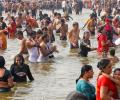
A new report by the Central Pollution Control Board (CPCB) submitted to the National Green Tribunal has said that the water quality during the recently concluded Maha Kumbh in Prayagraj was fit for bathing, despite earlier reports indicating otherwise. The report, based on statistical analysis of water samples collected during the Kumbh, found that the median values for key parameters like pH, dissolved oxygen, biochemical oxygen demand, and fecal coliform count were within permissible limits. However, the report acknowledges significant variability in data due to factors like upstream activities and sampling conditions. The matter is set for hearing on April 7.

Delhi's air quality deteriorated to the 'severe' category, prompting the implementation of Stage-IV GRAP measures and hybrid classes for schools.

Delhi choked under a thick blanket of smog on Monday, with the Air Quality Index (AQI) settling at 498, which falls in the higher spectrum of 'severe' category.

The India Meteorological Department (IMD) reports that ash clouds from volcanic activity in Ethiopia, which impacted flight operations in India, are drifting towards China and will move away from India by 7.30 pm on Tuesday.

10 stocks from the Nifty 200 index that offer good growth potential and scope to deliver decent returns from current levels, based on brokerage estimates.
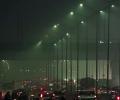
Delhi government mandates 50% work from home for offices and private establishments under GRAP stage three due to severe air pollution. Essential services are exempted.

Delhi experiences a biting chill with 'cold day' conditions and dense fog, coupled with 'very poor' air quality. The IMD forecasts continued cold weather and potential light rain.

A recent survey reveals that a significant number of households in Delhi-NCR are experiencing health problems due to the worsening air quality, with residents reporting symptoms like sore throat, cough, and burning eyes.

With the Air Quality Index remaining in the severe category, the government has directed schools to switch to online mode for these grades until further notice.
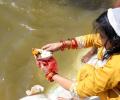
Uttar Pradesh Chief Minister Yogi Adityanath on Wednesday dismissed concerns regarding faecal contamination in the waters at Triveni Sangam, stating that continuous monitoring and purification processes ensure its quality.

The Supreme Court on Wednesday asked the Commission for Air Quality Management (CAQM) to consider directing schools in Delhi-NCR to postpone open air sports competitions planned in November and December to 'safer months' keeping in mind air pollution levels.

The CPCB said reduction in PM10 and PM2.5 levels primarily indicate depletion in combustion and industrial sources of pollution which are common to both fractions of particulate matter.

A thick layer of toxic smog enveloped the national capital on Saturday as air quality deteriorated sharply, prompting the Commission for Air Quality Management (CAQM) to invoke the strictest curbs under Stage IV of the Graded Response Action Plan (GRAP) across Delhi-NCR.

The clinics are expected to operate for at least two hours daily, particularly between September and March -- the period when air pollution levels are typically high.
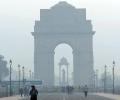
'Most pollution boards across the country have unused funds. There is practically no reason why pollution should not be a political priority.'

The Central Pollution Control Board on Monday reviewed the air quality in Delhi-NCR observing that the contribution of stubble burning may rise in the next five days with the AQI fluctuating between 'very poor' and 'severe' categories.

Delhi recorded its coldest January morning in three years with the minimum temperature dropping to 3 degrees Celsius. Cold wave conditions are expected to persist, and air quality has deteriorated to the 'very poor' category.
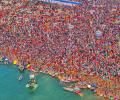
The Indian government has stated that the water in the Ganga river at Triveni Sangam in Prayagraj was fit for bathing during the recently concluded Maha Kumbh, citing a new report from the Central Pollution Control Board (CPCB). The report, however, contradicts an earlier CPCB report that found high faecal coliform levels at several locations in Prayagraj during the Maha Kumbh. The government also highlighted measures taken to ensure water quality during the event, including the installation of sewage treatment plants and the use of advanced oxidation techniques to treat wastewater.

The Delhi Pollution Control Committee (DPCC) reports improved air quality in Delhi compared to the same period last year, attributing it to coordinated efforts by government departments. Officials aim to avoid implementing GRAP Stage III restrictions through proactive measures and public participation.

Heavy rains lashed Delhi, leading to a red alert, traffic snarls, and waterlogging. The IMD predicts continued rainfall.

The order will be effective till March next year for the festivals that require immersion of idols of deities, including those made of Plaster of Paris (PoP).

Delhi's air quality deteriorates to 'very poor' levels, sparking a blame game between AAP and BJP over the causes and responsibility for the pollution.
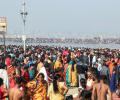
The National Green Tribunal on Wednesday slammed the Uttar Pradesh Pollution Control Board, asking whether it disputed the Central Pollution Control Board's finding on high levels of faecal coliform being found in the water at various locations in Prayagraj during the ongoing Mahakumbh.
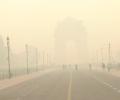
Delhi residents woke up on Tuesday to heavy grey haze darkening the city skies, reduced visibility and the air quality in the 'red zone' after many celebrated Diwali last night by bursting firecrackers beyond the two-hour limit set by the Supreme Court.
