
The Indo-Japanese nuclear deal may not come easy considering India's Civil Nuclear Liability Act provisions which had earlier put off suppliers like General Electric, says Debalina Ghoshal.
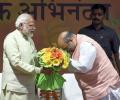
The Bharatiya Janata Party's landslide victory in state polls has "implications" for the Sino-India ties as it could further embolden Prime Minister Narendra Modi's "hard-line attitude" and pose difficulties for "compromises" in rows with countries like China, official Chinese media commented on Thursday.

Japan could soon be the second country after the US with which India has a logistics support agreement. Besides the LSA, India and Japan may also sign a maritime domain awareness agreement which would enable the two navies to share information. For example, if a Japanese P-1 maritime patrol aircraft detects a Chinese submarine in the Indian Ocean, it would pass on the information to the Indian Navy, reveals Ajai Shukla.
Against the backdrop of growing Chinese assertion in the Asia-Pacific region, India on Thursday said it supports the "freedom of navigation" in international waters noting that any disputes or differences in the region must be resolved diplomatically.

A journey that can teach us all a thing or two about resilience.
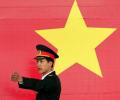
Modi's Vietnam visit is timely and crucial for several reasons. First, Vietnam lies at the heart of India's vision for Southeast Asia as also its 'Act East' policy. India also wants to boost its defence exports to friendly countries. And it is looking to increase trade between the two countries will now is only $7.83 billion, says Dr Rahul Mishra.

Chinese military has identified a host of problems after conducting massive military exercises for the first time to sharpen the troops' fighting capability which if not rectified will hinder its ability to win wars.

Parrikar also released the revised strategic guidance document in view of the prevalent geo-economic and geo-strategic scenarios.
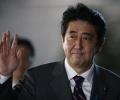
Prime Minister of Japan Shinzo Abe will pay a three-day official visit to India from January 25 during which he will attend the Republic Day Parade as Chief Guest and hold talks on key issues with his Indian counterpart Manmohan Singh for the bilateral annual summit.

The expulsion is likely to cloud India-China ties as Narendra Modi visits China for the G-20 Leaders Summit on September 4-5 and Xi Jinping is scheduled to be in Goa for the BRICS meeting on October 15-16.
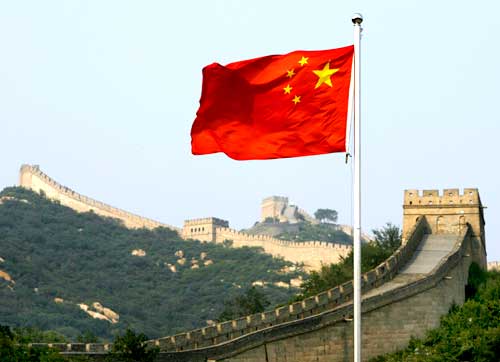
With Modi's visit, New Delhi hopes there will be breakthroughs in many aspects, especially business and trade, security cooperation and nuclear issues.

Modi said India will continue its support to ASEAN for a rules-based security architecture for the region.

Modi assured Trump that India will try to 'live up to the expectations' of the US and the world and also thanked the US President for speaking 'highly' about India during his trips.

In a speech outlining his foreign policy, Trump did not mention about India, and said that his administration would seek to improve ties with Russia and China.

Obama joked comfortably with the eccentric founder and executive chairman of Alibaba Group.
With an eye on beefing up maritime security, India is negotiating a deal with 24 countries for exchange of neutral merchant shipping data as it rolls out a national hub to tackle all aspects of coastal security to prevent another 26/11-like attack.

The United States and China have agreed to expand military exchanges and exercises as part of efforts to build more stable bilateral ties amid tensions over cyber security.
India and the United States discussed a host of issues, including the security situation in South Asia, East China Sea, anti-piracy operations and America's help in developing two new commands -- space and cyber, during a recent visit of Air Chief Marshal N A K Browne in Washington.

Hopes of anguished relatives of 239 people on board the missing Malaysian plane were dashed after a tech expert dismissed the Theory of the Phantom calls, saying ringing phones does not lead to any conclusion.

The United States is committed to ensuring India's entry into the Nuclear Suppliers Group, a top American diplomat said on Wednesday, expressing "regret" that his government was unsuccessful in making it a member of the grouping at its pleanary in Seoul last week.
The India-Japan 2+2 dialogue added strategic heft to the special relationship in the wake of growing Chinese assertiveness on regional affairs, points out Dr Rajaram Panda.

'While economic ties are making incremental progress, it is in the security and strategic domains that the India-Japan synergy is more compelling,' says Dr Rajaram Panda.
Prime Minister Narendra Modi's remarks in Japan of an "expansionist" mindset of some countries have riled the Chinese official media which said the Indian leader is more "intimate with Tokyo emotionally".

'If you say I won't talk to them at all, does terrorism stop?' 'Even if they say they will give up terrorism, "I will fight terrorism along with you," but even then you say I still won't talk to you until you do the following things, then that is a political call.'

Defence, security, science and technology, trade and culture are some of the issues on the plate for the talks.
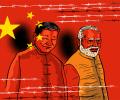
'Given the sharp increase in oil prices, a mounting problem for the 2nd and 4th largest importers like China and India -- the Qingdao meeting is likely to push for the large energy producers (Russia and the Central Asian Republics) and energy consumers (China and India) to arrive at some understanding for mutually beneficial outcomes,' notes Srikanth Kondapalli.

A former Australian defence official, who headed the search for the missing Malaysian jet MH370 in the Indian Ocean, will lead Australia's MH17 plane investigation and recovery operation in Ukraine.

Besides being the President, 62-year-old Xi is already General Secretary of the ruling Communist Party and Chairman of the Central Military Commission.
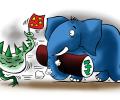
'The Chinese have taken to telling their Indian interlocutors to bear in mind the 5:1 disparity in the sizes of the two economies.' 'The message from Beijing, says T N Ninan, is clear: Acknowledge superior Chinese power, and behave accordingly.'

The issues that figured prominently in these discussions included terrorism, Afghanistan and the situation in the Asia Pacific region.
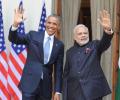
Modi and Obama surely put India-US ties in fast-forward mode. But 5 things deserve careful attention.

Beijing now fears that the fallout of the NSG outcome could have an impact on a crucial verdict expected soon from the Permanent Court of Arbitration in The Hague in a case brought by the Philippines concerning China's territorial reclamation activities in the South China Sea.
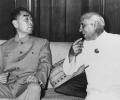
'Unquestionably, the spirit behind the Panchsheel agreement and the 'Hindi Chini bhai bhai' slogan were thrown overboard by the Chinese, and a trust deficit was injected between the two nations.' A revealing excerpt from General J J Singh's The McMahon Line: A Century Of Discord.

'China's latest defence White Paper has been issued against the backdrop of the upgraded Sino-Pakistan strategic relationship which has impinged on India's sovereignty and territorial integrity, and Beijing's continuing intransigence on tackling the issue of the disputed border or intrusion by PLA troops,' says Jayadeva Ranade.
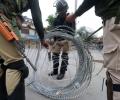
'If Islamic extremists regain power in Afghanistan, Pakistan will lead them to Kashmir as a fighting arena again. India needs to fortify Kashmir and prepare against these Islamic extremists before they come again.'

Mattis said there can be 'no tolerance to terrorism safe havens'.
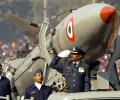
While we have to hiss loudly and do the lunging bit to keep our foes on their toes, that's only a tactical matter. What is the strategic goal? What is the end game? In my opinion, there is only one possible end game: the unwinding of Pakistan into several pieces: Balochistan, Sind, Balawaristan (Gilgit, Baltistan, the rest of PoK), the Pashtun area Khyber Pakhtunwa which will merge with Afghanistan, and the rump Punjab, says Rajeev Srinivasan.

Modi is scheduled to meet over 50 CEOs of Fortune 500 companies over dinner hosted in New York on September 24.

China on Tuesday ruled out involvement of its nationals on board the missing aircraft in a hijack attempt, but launched search operation on its own territory in Tibet and Xinjiang after inputs that the Malaysian plane might have flown to Central Asia through the northern corridor.

'Only when India's adversaries are convinced that India has both the necessary political and military will and the hardware to respond to a nuclear strike with punitive retaliation that will inflict unacceptable loss of human life and unprecedented material damage, will they be deterred,' says Brigadier Gurmeet Kanwal (retd).
 © 2026 Rediff.com - Investor Information - Advertise with us - Disclaimer - Privacy Policy - Sitemap - Feedback - About us - Terms of use - Grievances