
Finance Minister Nirmala Sitharaman stated that the Reserve Bank of India (RBI) will persist in its efforts to prevent excessive volatility in the rupee, which has significantly depreciated against the US dollar due to global uncertainties, despite India's strong macro-economic fundamentals.

The Finance Ministry is set to commence its pre-budget meetings on October 12, initiating preparations for the Union Budget 2027-28, which will be the fourth budget of the Modi 3.0 government and the tenth for Finance Minister Nirmala Sitharaman.

The Centre has spent 28 per cent of its FY27 capital expenditure budget of Rs 12.21 trillion in the first three months against around 24.5 per cent during the corresponding period a year ago.

India has exhausted 58.04 per cent of its FY27 fertiliser subsidy budget in under five months, primarily due to a significant surge in global urea prices following the conflict in West Asia, necessitating potential additional government expenditure.

Choose a car loan that fits your budget, keeps EMIs manageable and saves you money on interest, not just one with attractive festive offers.

Indian states' capital expenditure (capex) utilisation for April-August FY27 fell to 21.21 per cent, slightly below the 21.73 per cent recorded in the same period of FY26, according to a CAG analysis. Despite the dip, this figure remains the third highest in the past six years, with significant variations observed across states.

The Haryana Congress has strongly criticised the BJP government's two-year tenure in the state, alleging widespread misgovernance, unfulfilled election promises, a surge in crime, and rampant corruption. Senior Congress leaders, including Bhupinder Singh Hooda and Kumari Selja, highlighted issues faced by farmers, traders, and youth, demanding accountability and a white paper on the government's performance.

India's sedan market is experiencing a notable divergence: affordable entry-level sedans are gaining market share, while midsize sedans are seeing a significant decline as buyers increasingly opt for SUVs in higher price brackets.

French Prime Minister Sbastien Lecornu said police arrested 1,200 protesters on Saturday, and 150 personnel were injured as demonstrations across the country over the rising cost of living turned violent.

Around 40 pilots of SpiceJet's Q400 aircraft fleet refused to fly till the airline cleared their salary dues, a stance that has been supported by pilots' grouping ALPA India, according to sources.

From playing the quietly determined Lata Mehra in Mira Nair's A Suitable Boy to stepping into the supernatural world of Tooth Pari: When Love Bites, Tanya Maniktala has built a career around characters that are anything but alike.

Focus on clarity. Avoid keyword stuffing, advises Sarieka S Vaze, head of HR and administration at Montran Corporation.

'Nana left Mumbai, its luxuries and all the roles he could have played, and moved to Pune, where he lived like a farmer.'

rediffGURU Komal Jethmalani, a nutritionist with over three decades of experience, explains why premium, seedless fruits may not necessarily provide better nutrition benefits.

India's leading IT companies are anticipated to report subdued revenue growth and largely stable margins for the July-September quarter, as clients maintain tight discretionary budgets, with analysts closely watching the conversion of strong bookings into revenue and the impact of AI on traditional services.

Zoho Corporation has paused annual pay hikes and reduced marketing expenditure, citing a four-fold increase in server prices for AI infrastructure and an uncertain software sector outlook, according to founder Sridhar Vembu.

Here are nine lessons, one for each night of the Navratri festival, that can help any household think about protection clearly.

Chief Minister C Joseph Vijay-led Tamilaga Vettri Kazhagam government on Wednesday allotted over Rs 1,000 crore to provide gifts of gold coin, ring and milch cows to beneficiaries to fulfill the election promise made by the party ahead of the assembly election this year.

Indian Asian Games medallists expressed boosted confidence after meeting Prime Minister Narendra Modi, who encouraged them to aim for bigger goals at the 2028 Los Angeles Olympics. Athletes like Lovlina Borgohain, Nethra Kumanan, and Vithya Ramraj highlighted Modi's vision for Indian sports, including hosting major events, and the positive impact of improved facilities and support.

'Stardom is relative and script is the star. It is not one size fits all.'

The scenes are same; placards, viral videos, riot, police but the grievances could hardly be more different, notes Abhay Jere, ex-Vice Chairman, AICTE.

Indian golfer Anirban Lahiri described his recent season as his 'weakest' and addressed the ongoing speculation surrounding LIV Golf. He stated that his future decisions regarding where he plays will be based on the best interests of his family and himself, urging patience as the situation is dynamic. Lahiri also shared insights into his break from golf, focusing on fitness and mental well-being, and expressed excitement about returning to play at the Delhi Golf Course.

ServiceNow has launched AI Workflow Factory and Autonomous Engineer, new solutions designed to help enterprises integrate and scale AI workflows, closing execution gaps caused by legacy infrastructure. These tools aim to accelerate business operations, with Indian partners already adopting them, reflecting India's faster AI operationalisation compared to the global average.

Rower Satnam Singh, who clinched a historic bronze medal in the men's double sculls at the 2026 Asian Games, stated the achievement belonged not just to him but to India's 1.4 billion people, marking the country's first medal in the event since 1951.

Across all 10 schemes from FY24 to FY26, print media captured 58.8 per cent of the total ad spending, followed by electronic media at 19.5 per cent, digital media at 14.6 per cent, and outdoor media at 7.2 per cent.
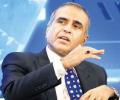
'The Rs 35,000 crore of capex every year, I don't get to sign 35 paise out of this.'

'Separate needs from wants and minimise discretionary spending.'

From Mithun Chakraborty and Vidya Balan to S J Suryah and Hrithik Roshan, Jailer 2 boasts an eclectic new cast. Here's a look at the fresh faces joining Rajinikanth's Tiger Muthuvel Pandian and the films you know them from.
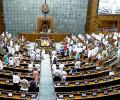
India's Monsoon session of Parliament remains formally unprorogued 40 days after adjournment, setting a new record. This unusual delay fuels speculation that the government intends to introduce a key legislation, possibly an amendment to the women's reservation law, without convening a new session. The proposed amendment aims for a 50 per cent seat expansion to address concerns over delimitation.

The ongoing US conflict with Iran has cost the Trump administration an estimated $45.1 billion, according to a Pentagon estimate provided to the US Congress on Friday, CNN reported, citing two sources familiar with the matter.

The Reserve Bank of India's 25-basis point increase in the repo rate to 5.5 per cent is expected to exert pressure on housing affordability and buyer sentiment, particularly affecting interest rate-sensitive segments and potentially moderating sales during the crucial festival season.

'I had narrated a script to Nana Patekar, and four days before the end, he told me that once he returned from Goa, he would take the project forward. I still can't believe he is never coming back. He was always so fit, proudly flexing his muscles and urging me to work out.'

Thirteen-year-old Yu Zidi's three golds and MVP award provided a golden highlight as the Aichi-Nagoya Asian Games closed after a fortnight of logistical problems.

'It is not about a place with fewer incidents of violence but a city where women have real agency in planning their daily lives.'
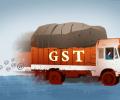
India's Goods and Services Tax (GST) receipts, after accounting for refunds, surged by 18.1 per cent annually to approximately 1.77 trillion in September, marking its fastest growth in six months. This increase was primarily driven by a significant rise in tax revenue from imports, which grew 26 per cent annually.

'1991 was an exceptional period in Indian history.' 'A big 400-volt shock was administered to the system, which was required. Today, we are in a much, much better position.'

'...because of the character, how it was to be portrayed, the speech, the scenes.' 'There was a physicality involved because he was a TB patient who eventually had cancer and passed away.'

Meesho, a value-commerce platform targeting middle- and lower-income geographies, is poised for significant growth driven by its asset-light model and low fulfilment costs, but faces intense competition from e-commerce giants and high valuations.

India's net direct tax collection has surged by 13 per cent to over Rs 12.12 lakh crore by September 17 in the current fiscal year, driven by a significant increase in advance tax payments from corporates, according to CBDT data.

It had always been my dream to reach the Balkans someday and for a few days in hot August my wishes were granted.
