EC on Monday asked the government to defer notifying doubling of price of the fuel produced by companies such as Reliance Industries till general elections are completed.
Reliance Industries on Friday dubbed as a "canard" allegations that the near-doubling of natural gas prices will lead to a similar hike in domestic cooking gas (LPG) and inflation in food item rates.

The near-doubling of gas prices to $8 per million British thermal units that will kick in from next month will accrue to all producers in the country.

The withdrawal of the arbitration will now entitle the two companies to marketing and pricing freedom on the natural gas they produce from newer fields in the deep sea at an investment of Rs 40,000 crore by 2022.

Credit Suisse said $5.6 may work for Reliance Industries' R-Series gas field in the KG-D6 block but the economics for its satellite fields and NEC-25 block are uncertain.

Barclays said the refinery would, however, now need to find new sources for the energy for its internal uses.

Gas production from Krishna Godavari basin block has dropped to just over 12 mmscmd and RIL is carrying out workover on main Dhirubhai-1 and 3 gas fields.

The government has formed a four-member panel of secretaries to suggest a new gas pricing mechanism.

While markets are upbeat over the government decision to nearly double the price of domestically produced natural gas, industry wants it to clearly lay the roadmap for free market pricing regime.

Narendra Modi's landslide victory gives him the mandate to deregulate diesel prices as well as raise natural gas rates with a clear road map towards free pricing to cut subsidies and shrink the budget deficit.
The Election Commission asked the government to defer announcement of the new price till completion of the polls and so RIL was asked to continue selling the gas at old rates.

Last week, RIL and urea companies failed to settle the key terms of gas supply from April 1 upon expiry of the five-year contracts that priced gas from the eastern offshore KG-D6 fields at $4.205 per million British thermal units.

After grappling with the issue for two years, the Ministry of Petroleum and Natural Gas had on November 21 ordered that the margin to be charged, over and above the gas sale price, should be fixed between the seller and buyers in all sectors other than urea and LPG.
Oil Minister M Veerappa Moily approved continuation of the existing rate of $4.2 per million British thermal units until the new government, which will be in place in May, decides on implementation of the new price formula.

Moody's said it expects exposure to low oil prices to shave off 0.8 per cent from real GDP growth on average across oil exporting countries in 2016.
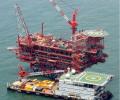
RIL and its partners BP plc of UK and Canada's Niko Resources plan to produce about 13 million standard cubic metres per day of gas for 13 years from D-34 discovery, known as R-Cluster, in the KG-DWN-98/3 or KG-D6 block by 2017-18.

The Standing Committee on Petroleum and Natural Gas in a report tabled in Parliament said the proposed formula is a simple average of two methodologies -- price of imports of LNG into India by different suppliers, and weighted average of prices of natural gas prevailing at Henry Hub in USA, National Balancing Point in London and netback import price at the well head of suppliers into Japan.

CNG prices in Mumbai may have to be hiked by about Rs 16 per kg and piped cooking gas by Rs 10 after government decided to divert some of its cheaper domestic gas to Gujarat.
The government will now examine the report and decide on how and to what extend should ONGC be compensated for its gas being produced by RIL.

As the government began consultations with stakeholders on raising gas prices, gas producers and consumers met a committee of secretaries separately with their pleas on the issue.

RIL-BP currently produce gas from Dhirubhai-1 and 3 field and oil and gas from MA field, three of the over one-and-half dozen discoveries made in KG-D6 block

Days after the Cabinet approved doubling of natural gas price from April next year, the Finance Ministry has written to Oil Ministry suggesting setting of a ceiling or an upper limit for the rates.
The Cabinet Committee on Economic Affairs may this week decide to price all domestically produced natural gas as per a formula suggested by a panel headed by Prime Minister's economic advisor C Rangarajan.
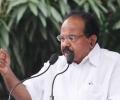
Launching a fresh broadside at Oil Minister M Veerappa Moily, CPI leader and MP Gurudas Dasgupta on Tuesday said no action has been taken against Reliance Industries for deliberately keeping natural gas output low and is instead being rewarded by a steep hike in prices.

The Cabinet Committee on Economic Affairs had first on June 27, 2013, and then on December 19, 2013, decided to price all domestically produced natural gas, including unconventional fuels such as coal-bed methane and shale gas, at an average of international hub rates and the cost of importing liquefied natural gas.
In the January, 2013 Cabinet note on revision of prices of all domestically produced natural gas, the ministry had proposed immediate implementation of the formula suggested by a panel, headed by Prime Minister's Economic Advisory Council Chairman C Rangarajan, for all producers except in cases where the current rate is valid for a certain period.

In its third video uploaded on YouTube, RIL said the Cabinet had decided on June 27, 2013, to revise natural gas prices for public and private producers from April 1 and notified the decision on January 10, about two months before the schedule for general elections was announced on March 5.

Reliance Industries has made drastic changes in gas supply contracts that will jack up its KG-D6 gas price by 10 per cent over and above the new rate of $8.3 coming into effect from next month.
Sources said the Cabinet had in December last year stipulated that the new gas rate will apply to all producers excepting eastern offshore KG-D6 block where the contractor, which is fighting government against levying penalties for output shortfall, will have to give bank guarantees equivalent to the incremental revenue it would get from the new rates.

The Centre will soon write to the states to bring uniformity in the Value Added Tax on oil products so that benefits of price cuts filter down to the masses.
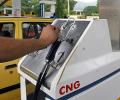
The cost of CNG, which will be reduced by up to Rs 15 per kg in the next few days following a rejig in natural gas allocation, will go up by Rs 10.6 a kg in April, when domestic gas prices almost double.

Hike would have led to higher cost of fertiliser, electricity and even CNG.

The bank guarantee, which will be equivalent to the incremental revenue that RIL will get from the new gas price, will be encashed if it is proved that the company hoarded gas or deliberately suppressed production at the main D1&D3 fields in the eastern offshore KG-D6 block since 2010-11.

The projected output will come from satellite fields in the eastern offshore KG-D6 block as well as North East Coast block NEC-25, off the West Bengal coast.

The move is likely to force the government to take a faster decision.
The Union Cabinet in June decided to price all domestically produced natural gas at an average of the price prevailing at international gas trading hubs and the actual cost of importing liquid gas.

Government had proposed a revised investment plan for the main gas fields in the KG-D6 block.
Mukesh Ambani's Reliance Industries (RIL) might be denied a higher gas price from its D1 and D3 fields until the arbitration process with the government is over and a third-party expert report on the fall in output at the KG-D6 block is out.

The government on Thursday decided to join the arbitration initiated by Reliance Industries and its partners over delay in revision of natural gas prices, and named former Supreme Court judge G S Singhvi as its arbitrator.
Reliance Industries Ltd (RIL) has refuted the allegation in the Supreme Court that it is deliberately reducing production of gas in KG basin in anticipation of a higher gas price and said it has taken all steps for arbitration proceedings with Centre to sort out all disputes.
 © 2026 Rediff.com - Investor Information - Advertise with us - Disclaimer - Privacy Policy - Sitemap - Feedback - About us - Terms of use - Grievances