
GAIL on Wednesday said it is in talks with Reliance for laying a Rs 6,725 crore pipeline from Kakinada in Andhra Pradesh to Uran to pipe natural gas from RIL's gas fields in Bay of Bengal to consumption centres in West and North.
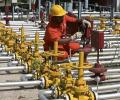
The government on Thursday hiked by 62 per cent the price of natural gas that is used to produce electricity, make fertilisers and turned into CNG to use as fuel in automobiles and cooking gas for household kitchens. This is the first increase in rates since April 2019 and comes on back of firming benchmark international prices but does not reflect the spurt in spot or current price of liquefied natural gas (LNG) witnessed during the last couple of weeks. The oil ministry's Petroleum Planning and Analysis Cell (PPAC) said the rates paid for gas produced from fields given to state-owned Oil and Natural Gas Corporation (ONGC) and Oil India Ltd (OIL) will be $2.90 per million British thermal unit for the six-month period beginning April 1.
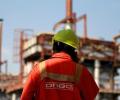
At a time when crude oil and natural gas prices are sky-high, public sector behemoth ONGC's haphazard planning and mismanagement in developing showpiece deep-sea KG-D5 block is costing the nation over Rs 18,000 crores due to the delayed output of oil and gas, government officials said. ONGC was originally to start gas production from the Cluster-II fields in block KG-DWN-98/2 (KG-D5) in June 2019 and the first oil was to flow in March 2020. But these targets were quietly shifted to end-2021 because of deferments in awarding the fragmented work packages of the project, two officials with direct knowledge of the matter said on condition of anonymity.
Electricity from Dabhol power project in Maharashtra, which is likely to restart from July 2006, will cost Rs 2.50 to Rs 2.75 a unit, 20 per cent more than previous estimates as natural gas prices have firmed up.
Iran has sought a 20 per cent increase in price for the additional 2.5 million tonnes per annum of liquefied natural gas that India wants to buy, over and above the five million tonnes contracted earlier this week.
RasGas of Qatar is likely to sell liquefied natural gas to public sector Petronet LNG at a fixed price instead of a price indexed to crude oil.

Oil Ministry is likely to announce the new rates sometime this week.
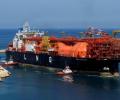
Majority of PLL's long-term deals are linked to crude, which faces price challenge from other fuels. Spot LNG is moving away from this linkage, which puts a question mark on crude linked contracts.
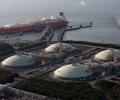
Around 15 years ago, when Reliance Industries (RIL) struck natural gas in the Krishna-Godavari (KG) basin off the east coast, the government made plans to supply that fuel cheaply to scores of generators that sprang up in India triggered by the discovery. Most of the plants, which account for 6 per cent of India's total generation capacity, operate sparsely after the KG-D6 area first failed to meet production targets, and then finally shut shop. Affordable domestic gas was why those thermal plants came up and the rate of the fuel today is why those generators hardly operate. Record liquefied natural gas (LNG) rates may yet again unravel India's ambitions to expand use of gas in industries, households and vehicles. Rates, while volatile, may stay strong this decade as developed nations with higher purchasing power embrace gas as the transition fuel.
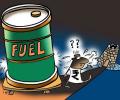
A swift recovery in oil demand in India is not only helping the stability of the global market, it is giving huge fiscal headroom to the government in terms of additional excise duty.

The new government on June 25 decided to defer the implementation till September-end to hold wider consultations.
RIL has been selling gas from KG-D6 at the same price since it started production in April 2009.

UB group chairman Vijay Mallya on Tuesday said that Delhi Chief Minister Arvind Kejriwal was pursuing "unconventional methods" to attain his objectives while asserting that there should be no "witch-hunt" against industrialists.
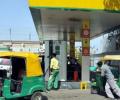
Prices of natural gas, which is used to produce fertiliser and generate electricity and is also converted into CNG for use in automobiles as fuel and cooking gas for households, are set every six months -- on April 1 and October 1 each year.

A bench headed by Chief Justice P Sathasivam sought response from the Centre and RIL on a PIL filed by Communist Party of India Member of Parliament Gurudas Dasgupta who alleged that no due diligence was done by the government while increasing the price of natural gas.

Moily said several gas fields of both RIL and state-owned Oil and Natural Gas Corp were economically unviable to produce at current rate of $4.2 per million British thermal unit.
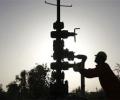
The OilMin is likely to announce the price for next six months soon.

Global rating agency Standard & Poor's said the government's decision to increase domestic gas prices is likely to benefit two major gas producers Oil and Natural Gas Corp (ONGC) and Reliance Industries Ltd (RIL).

Media has raised the issues that new pricing to benefit Reliance Industries.

The rates, on net calorific value (NCV) basis, dropped to $ 5.05 per mmBtu for six month period beginning April 1, 2015.
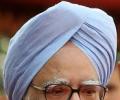
Speaking at the 8th Asia Gas Partnership Summit in New Delhi, he said India, which currently is world's seventh largest energy producer, 'needs to increase its energy supply by 3 to 4 times within next two decades.'

State-owned Oil and Natural Gas Corp (ONGC) will add about Rs 8,000 crore (Rs 80 billion) to its profits annually from near doubling of natural gas prices from next fiscal.

Ministry returns guarantee saying new price has not been notified and RIL would have to submit surety as and when it is announced.
Could get $8.4 per mmBtu from April 2014 by furnishing bank guarantee that would be encashed if D1, D3 gas hoarding proved

The department has proposed to pool prices of imported and domestically produced natural gas.

The reduction in natural gas prices would mean lower raw material cost for compressed natural gas (CNG) and natural gas piped to households (PNG).

A four-member panel of secretaries is likely to submit its report on a new gas pricing mechanism to the government by Wednesday.

The oil ministry is rejecting the monetisation of new discoveries as their production will not be viable at the present price of $4.2 per mmbtu

While a new formula for pricing of all domestically produced natural gas was notified on January 10 and published in Gazettee on January 17, the Election Commission last month asked the government to defer its implementation till general elections are completed.
Experts say finding a solution within the high court-mandated timeline of six months may be tough.
Analysts cut upstream firms' FY15 earnings estimates, while raising those for GAIL and Gujarat Gas.

The new rates, which are likely to be at $8-8.4 against the current price of $4.2 per million British thermal unit, are based on the recommendations of a committee that was appointed by Prime Minister Manmohan Singh at the request of Moily's predecessor, S Jaipal Reddy.
RIL, which had made four consecutive gas discoveries with close to 500 billion cubic feet of in-place reserves in block, proposed immediate relinquishment, its minority partner Hardy Oil and Gas plc of UK said on Wednesday.

$10 billion TAPI pipeline unlikely before 2020
The current price is among the lowest in Asia Pacific.

Imported Ethane will substitute its current propane imports and a portion of naphtha used for ethylene production.

In the run up to the general election, Aam Aadmi Party had alleged that RIL's partner Niko Resources was selling KG-D6 gas in Bangladesh for half the $4.2 per million British thermal unit rate that India pays them.

An expert panel approved policy for development of gas fields.
 © 2026 Rediff.com - Investor Information - Advertise with us - Disclaimer - Privacy Policy - Sitemap - Feedback - About us - Terms of use - Grievances