
The Balochistan Liberation Army (BLA) has released videos and images highlighting the involvement of female fighters in its ongoing campaign in Balochistan.

Pakistan's Punjab government has warned citizens against providing charity to banned organizations such as Jaish-e-Mohammad (JeM) and Lashkar-e-Taiba (LeT), stating that those who do so will face terrorism charges.

A female suicide bomber of the banned Balochistan Liberation Army (BLA) blew herself up at the entrance of the headquarters of a paramilitary force in Pakistan's restive Balochistan province, triggering a prolonged gunfight in which six militants were killed, security officials said on Tuesday.
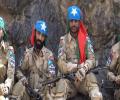
The action, it said, "demonstrates the Trump administration's commitment to countering terrorism".

In his address, Sharif praised US President Donald Trump, saying his "efforts for peace helped avert a ... war in South Asia".
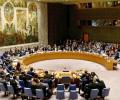
Pakistan and China have submitted a joint bid at the UN Security Council to designate the Balochistan Liberation Army (BLA) and its suicide wing - Majeed Brigade - as a terrorist entity under the Council's 1267 Al Qaeda Sanctions Committee.
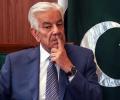
The entry of other Arab countries in the mutual defence deal between Pakistan and Saudi Arabia is not ruled out, Defence Minister Khawaja Asif has said, adding that 'doors are not closed' for such developments.

'For the region and for the world, the US working with both those nations is good news.'

A UN Security Council report states that The Resistance Front (TRF) claimed responsibility for the Pahalgam terror attack and published a photograph of the attack site. The report also cites assertions that the attack could not have happened without the support of Pakistan-based Lashkar-e-Tayyiba (LeT).
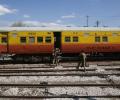
India has strongly rejected Pakistan's allegations of backing terrorism against that country following the Balochistan train attack. India said Islamabad should look inwards before shifting the blame on others for its "failures " and that the whole world knows "where the epicentre of global terrorism lies ". Pakistan, on the other hand, has accused India of "sponsoring terrorism " without directly implicating it in the Balochistan train attack that killed 21 passengers.
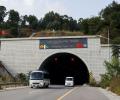
The announcement on expansion of CPEC was made following a meeting among Chinese Foreign Minister Wang Yi, his Pakistani counterpart Ishaq Dar and Afghanistan's Acting Foreign Minister Amir Khan Muttaqi in Beijing, according to a Pakistani readout.
The Balochistan Liberation Army (BLA) has undergone a significant transformation, evolving from hit-and-run attacks to carrying out sophisticated operations with tactical precision. The group's tactics and targets have become increasingly audacious, targeting security forces, Chinese nationals, and innocent civilians. Experts attribute the BLA's evolution to various factors, including the leadership of Bashir Zeb, the group's growing intelligence network, and its exploitation of the grievances of the Baloch people. The BLA's actions are a cause for concern, as the group's sophisticated attacks pose a major challenge to security forces.
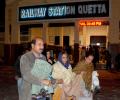
'They started checking the identity cards of some people and separated some of them. Three militants were guarding the doors of our coach. They told the people that they would not say anything to civilians, women, old people and Baloch people'
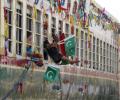
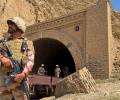
Insurgents opened fire on a passenger train in Pakistan's Balochistan province, injuring the driver and prompting security guards aboard the train to fire back. The attack occurred in the Bolan district on the Jaffar Express from Quetta to Peshawar. The train was stopped by armed men in Tunnel No 8, and efforts are being made to contact the passengers and staff. The Balochistan government has ordered emergency measures and all institutions remain active.
'Neither are Baloch insurgents capable of breaking up Pakistan, nor has Pakistan learned any lessons from the 1971 debacle that led to the country's dismemberment.'

Pakistan military Thursday said it used multiple weapons, including killer drones, to carry out effective strikes against hideouts inside Iran used by militants of two leading Baloch terrorist groups responsible for recent attacks in the country.

The banned Baloch Liberation Army (BLA) claimed responsibility for the attack, saying the blast was a suicide attack targeting a convoy of Chinese engineers and investors leaving the Jinnah International Airport.

'It has been 14 years since I began living in exile and it's shocking that the situation in Balochistan has only worsened rather than improved.'

'The struggle of insurgents and pro-independence political activists is fuelled by a deep conviction that not only is a free Balochistan possible, but they also believe that Pakistan will inevitably break apart, leading to Balochistan's independence.'

The visit comes two days after Pakistan officials shared with the Chinese embassy the preliminary findings of their investigation into the attack.

The recent incident has eroded trust and Chinese social media reflects growing anxiety, with calls for stricter security measures to protect Chinese lives.

Pakistan on Thursday said that the country's air force struck terrorist hideouts in Iran's Siestan-Balochistan province, a day after Islamabad recalled its ambassador from Tehran in the wake of Iranian missile and drone strikes in Balochistan.
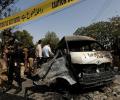
China's charge d'affaires Pang Chunxue met Interior Minister Rana Sanaullah to discuss various issues, including the security of the Chinese nationals in Pakistan in the wake of the suicide bombing.

The husband of the woman who blew herself up at Karachi University in Pakistan on Tuesday said her "selfless act" has left him speechless but he is proud of what she did.
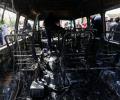
The order was issued a day after Shehbaz held a telephonic conversation with Chinese Premier Li Keqiang and among other issues also discussed the issue of security of Chinese in Pakistan.
Chinese nationals teaching Mandarin in different parts of Pakistan have left for home after being called back by Beijing following the recent deadly attacks targeting them, an official of the Karachi University said on Monday.
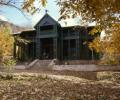
Militants from the restive province of Balochistan on Saturday attacked a historic 121-year-old building in southwestern Pakistan that was used by the country's founder Muhammad Ali Jinnah in his last days. The militants of the Balochistan Liberation Army targeted the Quaid-e-Azam Residency in Ziarat, a holiday resort located nearly 120 km from the provincial capital of Quetta, at 1.15 am.
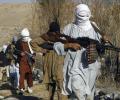
Afghanistan and the US have criticised Pakistan in the past for allowing Taliban fighters to cross into Pakistan where they are provided safe havens and also receive medical treatment.

Pak PM Imran Khan said the terror strike was an effort to 'sabotage' the country's economic projects

The victims in the shooting which took place before midnight on Thursday included one policeman and two civilians.
China demanded that the Pakistan should apprehend and punish the perpetrators to the full extent of the law.

United States officials have identified Pakistan as a base of operations or target for numerous armed and non state militant groups, some of which have existed since the 1980s, the independent Congressional Research Service said in the report.
The diplomatic crisis between Pakistan and Afghanistan deepened on Sunday after Kabul announced that it will withdraw its ambassador and other senior staff from Islamabad after the abduction and torture of the daughter of its envoy to Pakistan.
Chinese companies have large interests and investments in the Pakistan Stock Exchange.

IS, especially active in northern Sindh and Balochistan, was also behind the abduction and killing of two Chinese nationals last year.

'We were scared about what would happen if these terrorists managed to enter the building.'

'The separatist resurgence in Balochistan is thwarting Pakistan's plans to build CPEC projects to optimally utilise Balochistan's energy reserves,' points out Brigadier Gurmeet Kanwal (retd).

The perpetrators of the 2008 Mumbai attack, who shot dead 166 people, had confessed to details that should have been enough to hang him, but Pakistan enjoyed his anti-India rhetoric and let him spread his tentacles. A revealing excerpt from Khaled Ahmed's Pakistan's Terror Conundrum.
 © 2026 Rediff.com - Investor Information - Advertise with us - Disclaimer - Privacy Policy - Sitemap - Feedback - About us - Terms of use - Grievances