The Karnataka government has tabled a Bill in the Legislative Assembly to introduce a 4 per cent reservation for Muslims in public contracts. The Bill aims to address unemployment among backward classes and promote their participation in government construction projects. The BJP has called the move an "unconstitutional misadventure" and vowed to oppose it.

President Droupadi Murmu's address to the nation on the eve of the 79th Independence Day.
The Karnataka Legislative Assembly passed a Bill providing 4% reservation for Muslims in public contracts, sparking protests from the opposition BJP. The Bill, which amends the Karnataka Transparency in Public Procurements (KTPP) Act, aims to increase Muslim participation in government contracts valued up to Rs 2 crore for civil works and Rs 1 crore for goods and services. The BJP criticized the move as unconstitutional and vowed to challenge it in court.

While naming him as the NDA candidate for the Vice President's post, the BJP had described him as 'Kisan putra', a move seen in the political circles aimed at reaching out to the politically significant Jat community which had participated in huge numbers in the year-long farmers' protests against agriculture reform measures unveiled in June 2020.
'Prashant Kishor is a businessman before he is a politician, and given that the expected average turnout for JSP candidates is 5,000 to 6,000 votes and since Bihar has a significant number of seats where the margin between the winner and runner-up falls within that range he will capitalise on exactly that to showcase his presence.'
'As we read and assess what is going on around us in the India of 2025, it is instructive to do this through the lens of 75 years ago and the events that led to the formation of the BJP as we know it,' recalls Aakar Patel.
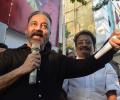
Karnataka Film Chamber of Commerce (KFCC) said on Thursday that it will not allow the release of Kamal Haasan's film Thug Life in Karnataka unless he issues a public apology by May 30 for his controversial remark about the Kannada language.
Now it's all jibes about his chameleon-like politics and fading grip on the administration. But there was a time Nitish had the BJP trembling in the state, points out Aditi Phadnis.

'It will split people and create caste clashes. Unity of people will be affected for the time being.'
The Bahujan Samaj Party (BSP) in Uttar Pradesh is reviving its 'brotherhood committees', a strategy used successfully in the 2007 elections, to bolster its support among Other Backward Castes (OBCs) ahead of the 2027 state assembly elections. These committees, to be formed in all 403 constituencies, aim to connect with 100 people from OBC communities in each village, acting as ambassadors of the party at the booth level. The BSP sees these committees as a counter to the Samajwadi Party's PDA pitch and a means to consolidate its scattered rural vote bank. The party is also highlighting the 'anti-Dalit' and 'anti-OBC' tactics of the Congress, BJP and SP, hoping to capitalize on perceived grievances and reposition itself as a champion of marginalized communities.
Leaders of several INDIA bloc parties met the Election Commission over the Special Intensive Revision of electoral rolls in Bihar and raised concerns over its timing, alleging that over two crore voters of the state may be disenfranchised by this mammoth exercise being done just ahead of assembly elections.

Khedkar is accused of misrepresenting information in her application for the 2022 UPSC civil services examination for availing reservation benefits. She has refuted all the allegations against her.
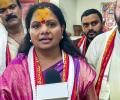
A handwritten feedback letter purportedly written by BRS leader K Kavitha to her father and former Chief Minister K Chandrasekhar Rao, highlighting both the negative and positive aspects of the party's recent meeting, has sparked discussions in Telangana's political circles. While the authenticity of the letter has not been confirmed, Kavitha's letter suggests that the party might be aligning with the BJP. She also criticized KCR for his silence on key issues such as 42 per cent reservation for backward classes, Scheduled Castes categorisation, and omission of Urdu from his address at the BRS Silver Jubilee event.
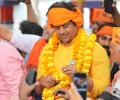
BJP MP and actor Ravi Kishan has been awarded the Sansad Ratna for his outstanding performance in the Lok Sabha, becoming the first actor-turned-politician to receive the honour.

Delhi University has condemned Congress leader Rahul Gandhi's unannounced visit to its North Campus, calling it a breach of institutional protocol and a disruption of student governance operations. Gandhi, who is also the leader of the opposition in the Lok Sabha, interacted with students from Scheduled Castes (SCs), Scheduled Tribes (STs) and Other Backward Classes (OBCs) at the DU's North Campus, focusing on issues of representation, equality and academic justice. The university criticised the visit for disrupting the functioning of a key student body, the Delhi University Students' Union (DUSU). The RSS-affiliated Akhil Bharatiya Vidyarthi Parishad (ABVP), which holds several posts in the DUSU, also issued a statement criticising Gandhi's visit.

Congress leader Rahul Gandhi on Thursday claimed that Prime Minister Narendra Modi had agreed to hold a caste census 'out of fear' of the country's deprived population, to which the opposition was lending its voice.
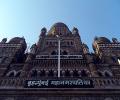
The Supreme Court has directed the Maharashtra state election commission to notify local body elections in the state within four weeks. The court also ruled that the contentious issue of OBC reservation in local body polls will be as it existed prior to the 2022 Banthia Commission report. The court accepted the commission's report, which recommended a census to fix exact data on OBCs and reserve 27 per cent seats for the category in local body polls in Maharashtra. The bench on Tuesday fixed a timeline for concluding the local body polls and asked the state panel to conclude it in four months. The outcome of Maharashtra local body elections would be subject to decisions in pending petitions before the apex court.
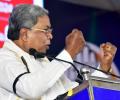
A special cabinet meeting in Karnataka convened to discuss the contentious Social and Educational Survey report, popularly known as 'caste census', ended without a decision. The cabinet will reconvene on May 2 to discuss the report further and make a final decision.
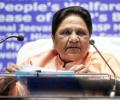
Bahujan Samaj Party (BSP) chief Mayawati paid tribute to the party founder, late Kanshi Ram, on his 91st birth anniversary. She emphasized the BSP's commitment to action over words, highlighting the party's focus on the upliftment of backward classes. Mayawati also referred to herself as the "iron lady" and emphasized the importance of understanding the power of one's vote.
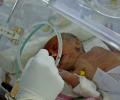
A class 10 student gave birth to a baby at the hostel of a state-run residential school in Odisha's Malkangiri district, prompting an inquiry. The girl delivered a baby girl on Monday after returning to the hostel following board exams. The headmaster of the school, run by the ST & SC Development, Minorities & Backward Class Welfare Department, said that men are not allowed in the girl's hostel and that the incident suggests a lapse in health worker duties. Both the child and mother are stable. The girl's parents have questioned the school authorities about the pregnancy remaining undetected until labor. A departmental inquiry has been initiated, and a man suspected to be involved has been detained by the police.
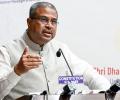
The Bharatiya Janata Party on Thursday said the Centre's decision to include caste enumeration in the next census has exposed the difference between the Modi government's 'true intentions' and the 'empty sloganeering' of the Congress.
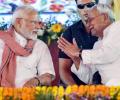
The BJP's surprise announcement of a caste census in the next census has sparked political debate, particularly in Bihar where the issue of backward empowerment holds significant electoral weight. The move is seen as a strategic maneuver by the ruling party to counter opposition efforts to mobilize support among disadvantaged sections of society. The decision is also viewed as a recognition of the growing influence of OBC politics in India.

Anindita Mitra, an engineer whose overall ranking was eighth, topped among women. Out of the top 20 candidates, eight were women.
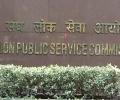
Shakti Dubey has topped the civil services examination 2024, with Harshita Goyal and Dongre Archit Parag getting the second and third ranks, the Union Public Service Commission (UPSC) announced on Tuesday. The top five successful candidates comprise three women and two men. The civil services examination is conducted annually in three stages -- preliminary, main and interview -- by the UPSC to select officers of the Indian Administrative Service (IAS), Indian Foreign Service (IFS) and Indian Police Service (IPS) among others. A total of 1,009 candidates -- 725 men and 284 women -- have been recommended by the UPSC for appointment to various services.
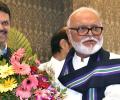
Bhujbal said he had an elaborate discussion with the CM on the prevailing political and social atmosphere in the state.

Caste census politics took centre stage on Thursday with the Congress terming the government's decision as a 'diversionary tactic' and a move for headlines management and the Bharatiya Janata Party saying it has exposed the difference between the Centre's 'true intentions' and the 'empty sloganeering' of the opposition party.
'There were deep discussions within the Sangh Parivar before this decision was made.' 'They were convinced, and only then did the Modi government proceed with the caste census.'

In a significant move, the Centre on Wednesday announced that caste enumeration will be part of the next population census, with the inclusion of caste details for the first time since independence hailed by the Bharatiya Janata Party and its allies as a historic step to help design truly equitable and focused policies.
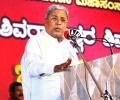
Opposition to the Karnataka government's proposed implementation of a caste census has intensified with dominant communities raising concerns about the survey's findings. The report, which has not been publicly released, is said to contradict traditional perceptions regarding the numerical strength of various castes, particularly Veerashaiva-Lingayats and Vokkaligas. These communities, along with political parties, including sections of the ruling Congress, have criticized the survey as "unscientific" and demanded a fresh assessment. The Vokkaligara Sangha and the All India Veerashaiva Mahasabha have expressed strong opposition, alleging that the report misrepresents their populations and demanding a fresh survey. Meanwhile, Dalit and OBC groups have defended the survey and its recommendations, including an increase in reservation for OBCs to 51%. The controversy has fueled political tensions in Karnataka, with opposition parties accusing the Congress government of using the caste census for political gain.
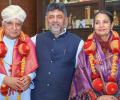
Karnataka Deputy Chief Minister D K Shivakumar denied on Monday making any comments regarding changing the Constitution to accommodate four per cent reservation for Muslims in the state. He claimed he was "misquoted" and warned of moving a breach of privilege motion. Shivakumar's remarks came after the BJP forced repeated adjournments in the Lok Sabha over his alleged comments on the matter. The BJP has accused Shivakumar of seeking to change the Constitution for political gain, highlighting the ongoing controversy surrounding reservation policies in India.

The bill aims to include all the Muslims sects in the Waqf board, Rijiju said.
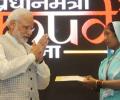
By democratising access to finance, empowering women and marginalised groups, and adapting to India's diverse regional landscapes, PMMY has helped fortify the country's grassroots growth engines, says Chief Economic Advisor to the Government of India, V Anantha Nageswaran.
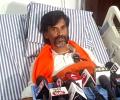
Jarange on Tuesday launched a fresh indefinite fast, sixth in a span of over a year, to press the demand of reservations for the Marathas under the Other Backward Classes category.
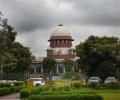
The Supreme Court of India has upheld a Bombay High Court order reinstating a woman as the sarpanch of a Maharashtra village, stating that bureaucrats cannot be allowed to "frustrate grassroot democracy." The court criticized instances of bureaucrats misbehaving with elected representatives and attempting to disqualify them by reopening old cases. The case involved Kalavati Rajendra Kokale, whose resignation from the sarpanch's post was withdrawn, but the Raigad district collector declared a vacancy and conducted a fresh election. The court found the collector's actions illegal and upheld Kokale's reinstatement, highlighting the importance of respecting the democratic process and elected representatives at the grassroots level.

The government has to specify what it intends to do with caste census data. It will be closely tracked if the government would simultaneously move towards removing the present 50% bar on reservations using means which are permitted in law. If this is not done, the entire exercise will become meaningless and could boomerang on the BJP, observes Nilanjan Mukhopadhyay.

While data can empower communities, it reinforces identities, making local politics more caste-centric, with decisions increasingly contested on the grounds of representation.
Such dynamics could lead to shifting alliances and, in the worst case, local governance getting paralysed as each group demands proportional power-sharing, explain Amitabh Kundu and Mehebub Rahaman.
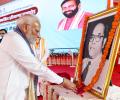
The birth anniversary of Dr Bhimrao Ramji Ambedkar, whose political influence has surged with the passage of time, on Monday was marked by bitter trading of charges between the ruling BJP and opposition parties as they fought for his legacy.
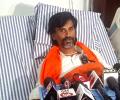
Maratha activist Manoj Jarange ended his five-day indefinite fast after government representatives assured him that several of his demands, including the reactivation of the Shinde Committee, would be fulfilled. Jarange, who has been demanding reservation for the Maratha community in government jobs and education, warned that members of the community would march to Mumbai if the demands were not met. The government has assured that all cases against Maratha protesters would be withdrawn, while separate sections would be set up for issuing "Kunbi " certificates for the community members. The Economically Backward Section provisions for Marathas would also be implemented, while compensation would be released for those community members who lost their lives during the quota agitation.

Maharashtra Congress president Nana Patole has stirred controversy after he questioned OBC voters in Akola district if they would vote for the BJP, which he alleged calls them "kutta" (dog). Patole, while addressing a public meeting in Akola, accused the BJP of arrogance and said it was time to make them "kutta" (dog). The statement has drawn criticism from the BJP and sparked a political row in the state.

The passage of this major legislation comes ahead of the general election due early next year.
 © 2026 Rediff.com - Investor Information - Advertise with us - Disclaimer - Privacy Policy - Sitemap - Feedback - About us - Terms of use - Grievances