
The Mumbai police on Saturday arrested Abu Jundal for his alleged complicity in the 26/11 terror attack case and produced him before a court which remanded him in police custody till July 31.
Initial reports had claimed that the suspect arrested by the police was Abu Hamza who orchestrated the Mumbai terror attacks sitting in Pakistan. However, some reports now claim that the suspect in police custody is Abu Jundal and the he had been deported to India following his arrest in Saudi Arabia

The court accepted prosecution's case that the aim of the convicted accused was to create terror in the minds of people and to eliminate public leaders like then Gujarat Chief Minister Narendra Modi and Hindu leader Pravin Togadia.

'He is the key to unravel the 26/11 conspiracy.'
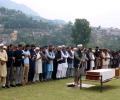
Sources have revealed that at least five hardcore terrorists affiliated with banned terror outfits Lashkar-e-Taiba (LeT) and Jaish-e-Mohammed (JeM) were killed in Indian strikes in Pakistan on May 7th. The strikes targeted nine terror sites in Pakistan and Pakistan-occupied Kashmir. Among the dead were Mudassar Khadian Khas, a LeT leader, and Hafiz Muhammed Jameel, the brother of JeM founder Maulana Masood Azhar. Other notable casualties included Mohammad Yusuf Azhar, a brother-in-law of Masood Azhar, and Khalid alias Abu Akasha, a LeT operative. The Pakistani military and government officials were present at the funerals of the slain terrorists.
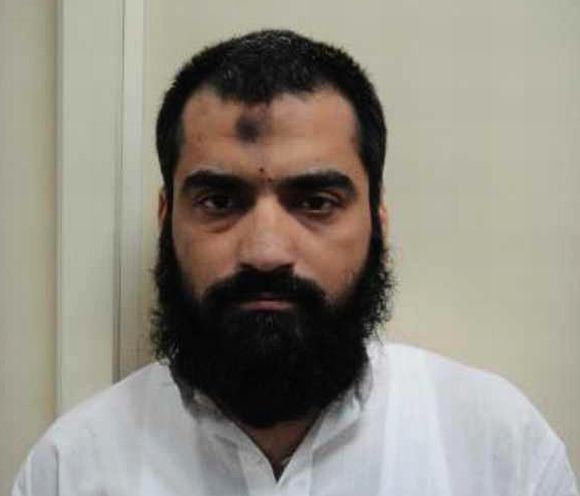
Key 26/11 plotter Sayed Zabiuddin Ansari alias Abu Jundal's lawyer on Monday informed a Mumbai court that he wanted to cross-examine Pakistani-American terrorist David Coleman Headley for four days.

The Congress party has claimed credit for the extradition of Tahawwur Rana, an accused in the 2008 Mumbai terror attacks, from the US, saying the Modi government did not initiate the process and merely benefited from the "mature, consistent and strategic diplomacy" begun under the UPA. Former Home Minister P Chidambaram said the government did not secure any breakthrough to make the extradition possible, nor is it the result of any grandstanding. He added that it was a testament to what the Indian state can achieve when diplomacy, law enforcement and international cooperation are pursued sincerely and without any kind of chest-thumping. Chidambaram detailed the UPA government's efforts in securing Rana's extradition, citing the registration of a case against him in 2009, diplomatic pressure on Canada and the US, and continued efforts despite legal setbacks. He highlighted the role of the UPA in securing Rana's conviction for other terrorism-related offences and the cooperation between the US and Indian agencies in gathering evidence and securing his extradition. The Congress leader further stated that it was the UPA's groundwork that paved the way for Rana's extradition, even after the change in government in 2014.
Tahawwur Hussain Rana, a Pakistan-born Canadian national and close associate of David Coleman Headley, could be extradited to India in connection with the 26/11 Mumbai terror attacks. Rana's travel history in parts of north and south India before the attacks in 2008 is expected to provide crucial leads for the investigation. His extradition would mark the third person to be tried in India for the attacks, after Ajmal Kasab and Zabiuddin Ansari alias Abu Jundal.
Five other convicts were also granted varying jail terms by a special MCOCA court.
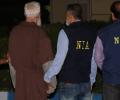
Tahawwur Hussain Rana, a key accused in the 26/11 Mumbai terror attacks, was brought to India on Thursday after being "successfully extradited " from the US, the National Investigation Agency (NIA) said. The 64-year-old Canadian citizen of Pakistani origin landed in Delhi in a special plane on Thursday evening, ending days of speculation of when and how he will be extradited, officials said. The NIA said in a statement that it had secured the successful extradition after years of sustained and concerted efforts to bring to justice the key conspirator behind the 2008 mayhem that claimed 166 lives. Rana is accused of conspiring with David Coleman Headley alias Daood Gilani, and operatives of designated terrorist organisations Lashkar-e-Taiba (LeT) and Harkat-ul-Jihadi Islami (HUJI) along with other Pakistan-based co-conspirators, to carry out the the three-day terror siege of India's financial capital.

Tahawwur Hussain Rana, a Canadian national convicted in the United States for his role in the 2008 Mumbai terror attacks, has been extradited to India. Rana, a close associate of Pakistani-American terrorist David Coleman Headley, was involved in the conspiracy from 2005 onwards and assisted Headley in obtaining a visa for India. He is the third person to be sent on trial in India for the 26/11 attacks after Ajmal Kasab and Zabiuddin Ansari alias Abu Jundal. Rana's extradition comes after US President Donald Trump approved the request.
Pakistan on Tuesday offered India counter-terrorism cooperation in the backdrop of the arrest of Abu Jundal, a LeT terrorist and key handler of attackers who struck Mumbai in 2008.
Four persons, including a Unani doctor, were detained by the National Investigation Agency in Beed district of Maharashtra for interrogation, police said on Friday.
Close on the heels of India announcing the arrest of a key handler of terrorists who struck Mumbai in 2008, Pakistan has said that it was trying to collect details from India on the matter.
No dossier, no amount of dramatic TV debates will help in countering Pakistan's use of terrorism against India. Only an effective and deniable deterrent power and in the form of our capability to carry out deniable covert actions against terrorists based in Pakistani territory can help.
The Maharashtra ATS's supplementary chargesheet against arrested LeT operative Abu Jundal brings out some of his chilling confessions over the dastardly 26/11 terror attacks, reports Vicky Nanjappa.
Opposition leader in the legislative council Vinod Tawde, alleged that the local hand in terrorism has been exposed after Abu Jundal's arrest.
Interrogation of terror accused Abu Jundal has so far revealed no new information that is not already in the public domain. Mystery surrounding several aspects of the Mumbai attack remain, reports Vicky Nanjappa.
The interrogation of terror operative Abu Jundal has shed more light on the LeT's plans and the IM's operations. Vicky Nanjappa reports
Zabiuddin Ansari alias Abu Jundal has been spilling the beans about how the entire 26/11 operation was executed from Karachi with the blessings of Lashkar-e-Tayiba founder Hafiz Mohammad Saeed. Rediff.com's Vicky Nanjappa gives details of his ongoing interrogation
Abu Jundal, one of the handlers of the 26/11 terrorists, on Friday expressed his desire before a metropolitan court to confess his complicity in the brazen attacks, a day after he was confronted with Ajmal Kasab, the lone surviving assassin in the case.
The Maharashtra ATS should wait for its turn as Jundal's arrest was coordinated by the Delhi police, RAW and the Intelligence Bureau, says Vicky Nanjappa
Does the deportation of 26/11 prime accused Abu Jundal/Abu Hamza/Zabiuddin Ansari by Saudi Arabia signal a tectonic shift in India's Middle-East policy? Colonel (retd) Anil Athale tries to explain.
India faces the daunting task of completing arrested LeT operative Abu Jundal's trial as soon as possible, says Vicky Nanjappa
Pakistan had exerted immense pressure on Saudi Arabia not to hand over Lashkar-e-Tayiba terrorist Abu Jundal to India at any cost as he was too prize a catch and an insider of the terror outfit who could expose the role of so-called 'state actors' in 26/11 attack.
"The person who goes by the pseudonym of Abu Jundal has been apprehended and has been remanded to the custody of law enforcement agencies", he told media persons in New Delhi.
One of the biggest headaches that investigators have concerning a terror suspect is getting his name right.
The execution of 26/11 gunman Ajmal Kasab and the arrest of 26/11 handler Abu Jundal came as a silver lining to the dark terror cloud in 2012, reports Vicky Nanjappa
The special Maharashtra Control of Organised Crime Act court on Friday framed charges against 26/11 handler Zabiuddin Ansari alias Abu Jundal in the 2006 Aurangabad arms haul case. The court filed charges against Jundal under sections of MCOCA, the Indian Penal Code, the Arms Act, the Explosive Substance Act and the Unlawful Activities Prevention Act.
Alleged Laskkar-e-Tayiba operative Sayed Zabiuddin Ansari, alias Abu Jundal, wanted to take part in the 2008 Mumbai terror attack by landing in the city along with others, according to his confession.
On the first day of talks between the foreign secretaries of India and Pakistan, focus was on terrorism, especially revelations by recently-arrested Lashkar-e-Tayiba operative Abu Jundal on Pakistan's involvement in Mumbai terror attacks, and Jammu and Kashmir.

India and Saudi Arabia have decided to further strengthen and deepen their counter-terrorism cooperation, nearly a year after Riyadh deported Abu Jundal, wanted in the 26/11 Mumbai terrorist attack.

Sayed Zabiuddin Ansari alias Abu Jundal, a 26/11 mastermind and prime accused in a conspiracy case of attack on Maharashtra Police Academy in Nashik, has complained to a local court that he was tortured with electric shocks by police, a charge denied by the prosecution.
Kagzi, who is wanted by the Indian agencies in connection with the Aurangabad arms haul case of 2006, is reportedly an important player in the overseas operations of the Indian Mujahideen.
Fayaz Kagzai and Raju Bhai have risen to prominence in the terror outfit since their role in 13/7 Mumbai attacks. Vicky Nanjappa reports
A local court has granted permission to start trial against alleged LeT operative and Mumbai terror attack accused Sayed Zabiuddin Ansari alias Abu Jundal's in a special district and sessions court in the case of conspiracy to attack Maharashtra Police Academy
Suspected Indian Mujahideen operative Fasih Mahmood, who was deported from Saudi Arabia last year, was on Saturday chargesheeted for terror acts in connection with the 2010 Jama Masjid attack.
The Mumbai Crime Branch, which probed the 26/11 terror attack case, on Wednesday termed as an "important milestone" the Supreme Court verdict upholding death sentence of Pakistani gunman Ajmal Kasab.
The Anti-Terrorism Squad of the Maharashtra police on Wednesday told the special Maharashtra Control of Organised Crime Act court in Mumbai that the Lashkar-e-Tayiba operative and a key 26/11 handler Sayed Zabiuddin Ansari alias Abu Jundal was involved in terror activities since as far back as 1996.
"Forensic experts would be called soon to conduct Jundal's voice measurement through audio spectrometer. Besides his interrogation, his voice sample collection is one of our top priorities during the custody period," a Crime Branch official said.
