
The subtext here is that nobody else really matters to America today; only China, because nobody else can truly hurt them, points out Mihir S Sharma.

Chinese President Xi Jinping began his second state visit to the US, meeting President Donald Trump at the White House. Both leaders expressed a desire for a better future for their nations, with Xi emphasising cooperation over confrontation and the avoidance of the "Thucydides Trap." Discussions also touched upon artificial intelligence governance and the extension of a trade truce. The visit was notably marked by a media boycott of White House coverage due to a dispute over press access.

A foreign brokerage predicts that private investments in Indian AI startups are rapidly growing, with potential listings adding up to USD 100 billion to India's market capitalisation over the next two to five years. Goldman Sachs reported a tripling of PE investment in Indian AI startups in 2025 and highlighted India's rising global rank in AI funding and new AI companies.

'All these reports and announcements by the US seem like attempts to gain a lever in trade deal negotiations with India.'

Chinese President Xi Jinping's arrival in Washington marks a pivotal moment for global diplomacy, as he advocates for a "partners, not rivals" approach to US-China relations amidst high-stakes discussions on trade, technology, and international stability.

External Affairs Minister S Jaishankar has publicly acknowledged India's intensified diplomatic efforts to resolve the Ukraine conflict, engaging directly with both Kyiv and Moscow. India is focusing on critical issues like Black Sea shipping safety, grain exports, and energy supplies, moving beyond its previous advocacy role. Jaishankar also highlighted India's historical ties with Russia and discussed the evolving global geopolitical landscape, including the repositioning of the US and the rise of China.

India has initiated anti-dumping investigations into imports of Glycine from China, following a complaint by Avid Organics, alleging material injury to domestic manufacturers. Concurrently, a separate anti-circumvention probe has begun concerning CPVC resin from China and South Korea, suspected of being routed through Malaysia, Japan, and Thailand to avoid existing duties.

Chinese President Xi Jinping is set to visit the United States from September 23 to 25 for summit talks with US President Donald Trump, with discussions expected to cover critical economic and trade issues, including AI, and the recently signed US sanctions law targeting countries buying Russian oil and gas.

Zoho cofounder Sridhar Vembu dismisses exaggerated fears about AI's catastrophic potential and global development pauses. He advocates for India to adopt an independent AI strategy, fostering partnerships while avoiding entanglement in US-China tech rivalry. Vembu stresses extensive investment in foundational R&D across sectors, distinguishing it from costly frontier AI model development. He also highlights concerns about AI's impact on human judgment, skill erosion, and job disruption, particularly in software engineering, while remaining optimistic about new economic opportunities.
Zoho co-founder Sridhar Vembu argues that predictions of AI's catastrophic outcomes are overstated and a global pause in AI development is improbable. He urges India to adopt an independent AI strategy, focusing on extensive foundational R&D across sectors, while remaining wary of market monopolisation attempts by major tech players. Vembu also highlights concerns about AI's impact on human judgment, skill development, and job markets, particularly for junior professionals.

The Beijing summit may have reduced immediate diplomatic uncertainty, but it did not resolve the deeper structural contest between the United States and China. That contest appears likely to define the coming decade, notes Varun Arya.

US President Donald Trump concluded his Beijing summit with Chinese President Xi Jinping, describing it as 'incredible' and highlighting 'fantastic trade deals' and a 'very strong' relationship between the two leaders.
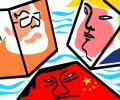
The challenge for India lies in navigating complex landscape to its best advantage. The BRICS Summit will test its navigation skills, asserts former foreign secretary Shyam Saran.

For the foreseeable future, the most likely outcome remains continuation of the status quo. Taiwan will remain self-governing without formally declaring independence, while China continues to apply sustained pressure short of war, predict Krishnan Srinivasan and Manoj Mohanka.

The death toll from devastating flash floods in Nepal has tragically risen to 903, with 4,247 people still reported missing, including security personnel and foreigners. India has dispatched an 18-member team of forensic experts to assist with DNA analysis and identification of victims.

'China wants to control and divert rivers.'

The death toll from flash floods in central Nepal has surged to 734, with nearly 2,500 people still missing. India has intensified its rescue and relief efforts, sending additional aid, technical teams, and forensic experts, while also working to locate and rescue over 275 missing Indian nationals.

Tech giant Apple reported a record June quarter revenue of USD 109.4 billion, a 16 per cent year-on-year increase, with significant double-digit growth in emerging markets like India. However, the company anticipates business risks in the coming quarters due to rising memory chip prices and ongoing supply constraints.
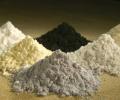
A new study reveals that despite China's significant control over global rare earth mining and processing, its dominance has a critical weakness: the US and Japan hold the majority of core patents for advanced rare earth functional material technologies. This technological gap means China lags in higher-value applications, impacting its strategic advantage in the industry.

Gwadar is viewed as a critical pearl in China's maritime strategy as it would give a permanent logistical footprint near an important choke point - the Strait of Hormuz and the oil rich Persian Gulf, explains Commodore Venugopal Menon (retd).

India has launched anti-dumping investigations into imports of thermal paper, Biaxially Oriented Polyamide (BOPA) Film, and certain antioxidants from China, following complaints from domestic manufacturers alleging material injury due to cheap imports.

Delhi must now purge the delusional hopes of being a 'counterweight' to China in the US calculus, argues Ambassador M K Bhadrakumar.

'It's very important for India to retain its sovereignty. India should not sign any agreement which compromises its sovereignty.'

India would confront a more entrenched China, a less dependable United States, and a regional order increasingly shaped by great-power bargaining over which it exercises limited influence, notes Amberish K Diwanji.

The US-China rapprochement, however tenuous, is not without implications for India. Both China and Pakistan have become closer to the US, notes Ambassador T P Sreenivasan.

Indian benchmark equity indices, Sensex and Nifty, saw gains in early trade, driven by strong performance in banking shares and positive sentiment from Asian markets, alongside optimism surrounding the ongoing US-China Summit.

US President Donald Trump and Chinese President Xi Jinping met in Beijing to discuss a range of issues, including trade frictions and the war in Iran.

A new report from the Stockholm International Peace Research Institute (SIPRI) indicates that India has expanded its nuclear arsenal and is developing long-range weapons capable of reaching targets across China, while also maintaining focus on its rivalry with Pakistan.
US President Donald Trump met with Chinese President Xi Jinping in Beijing to discuss trade, technology, Taiwan, and the Iran war. Xi Jinping said that 2026 will be a 'historic, landmark year' for China-US relations.

The US has seized an oil tanker, 'Skywave', linked to Iran in the Indian Ocean, as part of efforts to disrupt Iran's oil shipments and enforce sanctions. The vessel was part of a network transporting sanctioned Iranian crude oil, with the seizure occurring amid heightened tensions between Washington and Tehran.

A new report suggests China's maritime vulnerability lies in the Strait of Hormuz, not Malacca, creating strategic competition in the Indian Ocean.

If Iran and Oman choose to charge a fee for rendering services to vessels using their territorial waters, so be it. The US is indulging in an irrationally self-destructive act, notes Ambassador M K Bhadrakumar.

US President Donald Trump received a red carpet welcome in Beijing for talks with Chinese President Xi Jinping on trade, the Iran war, and other key issues. The visit underscores the importance both nations place on their relationship amid ongoing tensions.

Russian President Vladimir Putin is set to visit China for talks with Chinese leader Xi Jinping, shortly after US President Donald Trump's visit to Beijing. The visit underscores the close strategic ties between China and Russia amid global tensions.

Chinese President Xi Jinping warned US President Donald Trump that mishandling the Taiwan issue could trigger conflicts between the two countries during wide-ranging talks on trade, Iran, and energy security.

Donald Trump says several issues were settled during the final day of talks with Xi Jinping covering trade, tariffs, and diplomacy.
US President Donald Trump and Chinese President Xi Jinping began a crucial two-day summit in Beijing on Thursday, with both leaders signalling a desire to stabilise relations between the world's two biggest economies despite deep disagreements on trade, Taiwan, technology and security issues.
Chinese leaders, including its generals, will have to weigh whether they can win a war if they ever attack Taiwan and if at all, can they sustain the subsequent devastation, notes Rup Narayan Das.
Amid US-China trade tensions and economic vulnerabilities, India must seize the 'China +1' opportunity, deepen reforms, secure FTAs, and globalise its firms for long-term growth, suggests Ajay Shah.

China has called on Iran to reopen the Strait of Hormuz and expressed appreciation for Tehran's commitment not to develop nuclear weapons, a key demand of the US to end the conflict.
