
A report by Envirocatalysts reveals that Delhi was the most polluted among 24 state and Union Territory capitals between Diwali 2025 and Diwali 2026, with annual average PM2.5 concentrations more than double the national standard. The analysis highlights that Diwali-day pollution contributes minimally to the overall annual exposure, with other sources like vehicles, dust, and industrial emissions being the primary culprits. The report calls for year-round clean-air action plans.

A new analysis by the Centre for Science and Environment (CSE) reveals that Delhi-NCR's early-winter air pollution has reached a three-year high in the week preceding Diwali. The average PM2.5 concentration significantly increased compared to previous years, driven primarily by vehicular emissions and regional pollution inflow. The report highlights the failure of year-round pollution control measures, with Diwali firecrackers exacerbating an already deteriorating situation, and notes the emergence of new pollution hotspots and the ineffectiveness of emergency traffic restrictions.

Delhi's air quality slightly deteriorated on Wednesday, moving into the 'poor' category with an AQI of 232, and is forecast to worsen to 'very poor' by Friday due to unfavourable meteorological conditions. PM2.5 remains the dominant pollutant, with vehicular emissions and biomass burning identified as major contributors. The city also experienced its coldest morning of the season.

A thick layer of smog enveloped parts of North India, including Delhi, Haryana, Punjab, and Western Uttar Pradesh, a day after Diwali celebrations. Air Quality Index (AQI) levels soared to 'very poor' and 'severe' categories, with Delhi recording its most polluted Diwali in five years. Residents reported severe health issues, prompting calls for urgent government intervention.

New Delhi experienced its worst air quality in 287 days on Tuesday, with the Air Quality Index (AQI) reaching 350 and several monitoring stations reporting 'severe' pollution levels. PM2.5 was identified as the dominant pollutant, posing significant health risks. The city has been placed under Stage II of the Graded Response Action Plan, with stubble burning and transport emissions being major contributors to the deteriorating air quality.

Delhi experienced its most polluted Diwali in five years with an average Air Quality Index (AQI) of 376, and the day after the festival saw only a marginal improvement, remaining in the 'very poor' category at 371, accompanied by a thick blanket of smog and fog.

Doctors have advised Delhi residents to take precautions like wearing N95 masks, avoiding outdoor walks, shifting exercise indoors, and installing air purifiers at home due to high pollution levels. Vulnerable groups, including children and the elderly, are particularly cautioned. Experts explain the seasonal rise in pollution and the impact of various factors on air quality.

Delhi experienced its most polluted Diwali in five years, but the official air quality figures are under scrutiny. Several monitoring stations reportedly went offline during the peak firecracker period on Sunday night, leading to discrepancies between government and private agency data. Experts and opposition leaders have raised concerns about the reliability of the AQI tracking, with allegations of "data fraud" and calls for greater transparency and accountability.
The Delhi government has approved real-time monitoring of PM2.5 and PM10 sources in collaboration with IIT-Delhi and the procurement of 30 EV-based mechanical road sweepers to combat winter air pollution. These measures aim to strengthen ground-level dust removal and scientifically identify pollution sources throughout the year.

A new study reveals that approximately 70 per cent of the year-to-year variation in winter air pollution across northern India can be explained by the frequency of western disturbances. These storm systems, originating from the Mediterranean, help clear pollution through precipitation and ventilation. The findings suggest that predicting the frequency of these disturbances could provide advance warning of severe pollution, allowing for better preparedness and implementation of control measures.

Delhi Chief Minister Rekha Gupta announced a complete ban on construction activities from December 10 to January 20 to combat severe winter air pollution. The government will use its AI-powered Dust Portal 2.0 and AI-enabled cameras to monitor construction sites over 500 square metres in real-time, issuing alerts and fines for violations. Citizens are encouraged to report non-compliance.
The Delhi government has approved an ambitious electric vehicle policy that eliminates registration fees and road taxes for EVs priced up to Rs 30 lakh, offers a Rs 1 lakh incentive for purchasing new EVs while scrapping old vehicles, and mandates that only electric two-wheelers can be registered starting April 2028.

Gujarat's Director General of Police, G S Malik, has issued a state-wide order requiring police officers to dedicate two hours daily to public grievance redressal. The directive also sets strict timelines for resolving complaints, aiming to make policing more citizen-centric and accessible.

The 8th World Air Quality report reveals Pakistan as the most polluted country, with India ranking sixth. The report analyses air quality data from over 9,446 cities across 143 countries, highlighting the severe impact of pollution on global health, especially for children.

Discover the top 5-star rated 2-tonne inverter air conditioners designed for lower electricity demand and efficient cooling in rooms sized 250-350 sq ft, even in intense heat conditions.

These countries demonstrate how clean energy adoption, strong environmental policies and favourable geographical conditions can keep air pollution impressively low. According to the IQAir World Air Quality Report (2024), they consistently maintain annual average PM2.5 levels at or below the World Health Organization's stringent guideline of 5 g/m.

Noida, Bahadurgarh, Delhi, Hapur, Greater Noida, Baghpat, Sonipat, Meerut and Rohtak joined Ghaziabad among the 10 most polluted cities, the report by think tank Centre for Research on Energy and Clean Air said.

Ravi Kaushik has sold 70,000 units of air filters through his start-up Airth and aims to sell 10 lakh units in the next five years.

Residential areas now exist cheek by jowl with smokestacks, while convoys of heavy trucks rumble through narrow roads day and night, throwing up clouds of dust.

Delhi choked under a thick blanket of smog on Monday, with the Air Quality Index (AQI) settling at 498, which falls in the higher spectrum of 'severe' category.

As we go deeper into winter and air quality grows increasingly troubling, people are now relying on N95 coverings to shield their lungs from toxins and irritants. A sleek, wearable air purifier is a smart alternative.
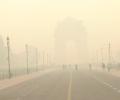
Delhi residents woke up on Tuesday to heavy grey haze darkening the city skies, reduced visibility and the air quality in the 'red zone' after many celebrated Diwali last night by bursting firecrackers beyond the two-hour limit set by the Supreme Court.
Lahore, Pakistan, has once again been ranked as the world's most polluted city, with hazardous smog levels far exceeding WHO guidelines. The city is battling a toxic mix of vehicular emissions, industrial pollution, and crop residue burning.

A Lancet report reveals a significant increase in deaths attributable to PM2.5 pollution in India, with fossil fuels being a major contributing factor. The report highlights the economic and health consequences of air pollution and the urgent need for a transition to cleaner energy sources.

A recent survey reveals that a significant number of households in Delhi-NCR are experiencing health problems due to the worsening air quality, with residents reporting symptoms like sore throat, cough, and burning eyes.

A cloud-seeding trial scheduled for Wednesday in Delhi has been put on hold due to insufficient moisture in the clouds, the Indian Institute of Technology-Kanpur said in a statement.

Delhi's air quality deteriorated to the 'severe' category, prompting the implementation of Stage-IV GRAP measures and hybrid classes for schools.
Experts warn that air pollution in India is a major public health crisis, leading to a surge in undiagnosed airway diseases and cardiovascular issues. They urge for urgent action, early detection, and treatment.
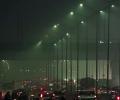
Delhi government mandates 50% work from home for offices and private establishments under GRAP stage three due to severe air pollution. Essential services are exempted.
IIT-Kanpur Director Manindra Agrawal discusses the cloud seeding trial in Delhi, its costs, and the information gained despite the lack of rain.

Delhi's air quality deteriorates to 'very poor' levels, sparking a blame game between AAP and BJP over the causes and responsibility for the pollution.

The first cloud-seeding trial has been conducted in parts of Delhi, including Burari and Karol Bagh areas, aimed at inducing artificial rain to tackle air pollution.

In terms of safety, the Victoris has scored 5 stars in both GNCAP and BNCAP tests and that's a first for Maruti, observes Somnath Chatterjee.

'After tobacco, the next most common cause for oral cancer is alcohol.'
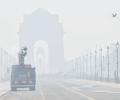
Four cities in neighbouring Pakistan and one in China are among the world's top 20 polluted cities.

The report Air Quality and Health in Cities combined ground-based air quality data with satellites and models to produce air quality estimates for cities around the world.

The city's 24-hour Air Quality Index, recorded at 4 pm every day, stood at 418, up from 334 the previous day, and it may trigger stringent restrictions under the third stage of the graded response action plan to mitigate hazardous conditions.

Delhi's air quality improved for the second consecutive day on Thursday, with the Air Quality Index (AQI) recorded in the "moderate" category at 165. This marks a significant improvement from the "poor" category recorded on Tuesday. Several restrictions imposed under Stage 4 of the Graded Response Action Plan (GRAP) were lifted, but some restrictions under Stage 2 remain in place. The Decision Support System (DSS) has not been updated since Friday, with technical difficulties hindering the update of data for the last six days.
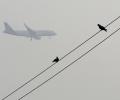
Delhi's air quality plummeted to alarming levels on Tuesday after 24 days, with many areas witnessing a significant spike in pollution despite the strictest measures, including a ban on construction activities and the entry of trucks into the city, coming into force.

'Everyone with a low BMI will not get Type 5 diabetes.'
