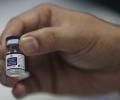
'AdFalciVax may offer advantages such as broader protection and a lower risk of immune evasion compared to existing single-stage malaria vaccines.'
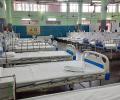
The Union health ministry has deputed a high-level multi-disciplinary team to Pune to aid state authorities in instituting interventions and managing the spurt in suspected and confirmed cases of Guillain Barre Syndrome (GBS) in the city.
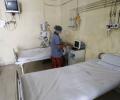
Pune, India, has reported 59 suspected cases of Guillain-Barr syndrome (GBS), an immunological nerve disorder. The sudden rise in cases has prompted the state health department to form a team to investigate. GBS is a rare condition that causes sudden numbness and muscle weakness. Most suspected patients are within the age group of 30 years. Authorities are investigating the cause of the outbreak and have collected samples for testing. Doctors have assured the public that GBS is not contagious and most patients recover fully with treatment.
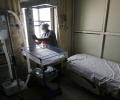
The Pune Municipal Corporation (PMC) has detected 22 suspected cases of Guillain-Barr syndrome (GBS), an immunological nerve disorder, in the city. Samples from the affected patients have been sent to ICMR-NIV for testing. Most of the cases were detected in the Sinhgad Road area. According to doctors, GBS is a rare condition that causes sudden numbness and muscle weakness. While the condition is prevalent in both pediatric and young age groups, it does not lead to an epidemic or pandemic. The PMC has constituted a committee of experts to investigate the outbreak and conduct detailed surveillance of the patients. The civic health department has assured that there is no need for panic as of now.

Covid is growing milder with time but an occasional surge in cases is expected because the virus that causes it is now endemic and constantly evolving, say scientists while assuring that there is no cause for concern.
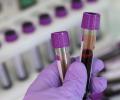
Maharashtra Health Minister Prakash Abitkar has linked 80% of suspected Guillain-Barr Syndrome (GBS) cases in Pune to water contamination around a well in Nanded village. The state health department and the Pune Municipal Corporation (PMC) are taking measures to address the issue. The well is a source of water for surrounding villages, and officials suspect contamination is leading to the spike in GBS cases. The minister emphasized that GBS affects individuals with weak immunity, and campylobacter jejuni bacteria, usually causing stomach infection, can trigger the disease. The PMC has conducted water sample tests, with some showing evidence of norovirus and campylobacter jejuni. Clean drinking water is being provided through tankers to affected areas.
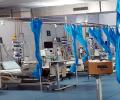
A woman is suspected to have died of Guillain-Barr syndrome (GBS) in Maharashtra on Wednesday, while 16 new cases of the rare nerve disorder were reported in the state, health officials said.
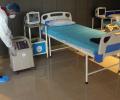
A man suspected to have contracted Guillain-Barre syndrome (GBS) has died in Maharashtra's Solapur district, while the number of cases of the immunological nerve disorder in Pune rose to 110, health officials said on Monday.
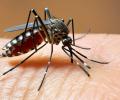
Dengue has become a major public health concern in India with 289,235 cases reported last year. This year there were 19,447 cases of dengue which resulted in 19 deaths till April 2024.
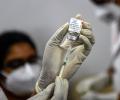
The NIH said results of two studies of blood serum from people who had received Covaxin suggest that the vaccine generates antibodies that effectively neutralise the B.1.1.7 (Alpha) and B.1.617 (Delta) variants of SARS-CoV-2, first identified in the United Kingdom and India, respectively.

National Institute of Immunology invites applications for its PhD programme for the academic year 2007-2008.
The Nagarkattis became interested in investigating the plant products for their anti-inflammatory properties because of their exposure to Ayurvedic medicine, which has argued that several plant products are effective against arthritis and other autoimmune diseases. The team plans to collaborate with scientists from India to test a large number of plant extracts for their anti-inflammatory properties and study their mode of action.

The production of Covaxin will increase from the current 10 million doses per month to 60 million-70 million by July-August.
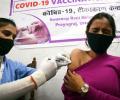
'Scientific data has proven that masks can reduce COVID-91 transmission by 53 per cent...A booster dose of vaccine, even if it works, is just a temporary fix'

Bharat Biotech, Serum Institute, Zydus Cadila, Panacea Biotec, Indian Immunologicals, Mynvax and Biological E are among the domestic pharma firms working on the coronavirus vaccines in India.

Lumpy Skin Disease has spread in more than a dozen states including Gujarat, Rajasthan, Punjab and Haryana.
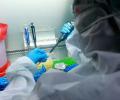
Doses of the vaccine were given to 1,077 healthy adults aged between 18 and 55 in five United Kingdom hospitals in April and May as part of the phase one clinical trial.
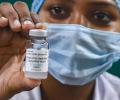
The decline in the effectiveness of Covaxin, India's indigenous COVID-19 vaccine, from 77.8 per cent to 50 per cent during a Delta-driven case surge in April and May this year is neither bad nor surprising, say scientists.

As India holds its breath for the Covid vaccination to be begin, Sudhir Bisht provides a quick checklist of what you must know about the vaccines that will be administered to citizens.

The Indian government and private firms have stepped up efforts to develop a vaccine to halt the spread of COVID-19 which has claimed over 3,700 lives with more than 1,25,000 cases in the country.
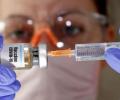
There are a number of vaccine candidates already in clinical trial and a few out of those candidates have completed phase 1/2 status, he said, adding that there are trials that will be going into phase three sometime at the end of July and then others will follow in the months of August, September and October.

'I was amazed at how tasty it was.' 'They did a good job with millets and lentils, which Mr Modi liked.'
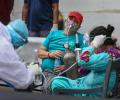
As the Omicron strain spreads across the globe and questions on vaccine inequity dominate discussions, scientists are still scrambling to learn more about emerging variants of the deadly virus that has claimed millions of lives and crippled economies.

'There is no emergency of a third wave that we are rushing for booster doses.'
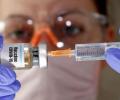
The United Kingdom on Wednesday became the first country to approve the Pfizer/BioNTech vaccine against COVID-19, paving the way for mass vaccinations against the deadly novel coronavirus.
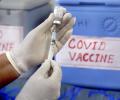
As India prepares to launch its vaccine drive on January 16, here is a look at the options:
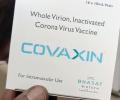
To address the shortage of COVID-19 jabs in the country, the government is exploring the possibility of boosting production of vaccines, including identifying manufacturing sites for indigenously developed Covaxin outside India, sources said.

'There is no data to show this virus is more deadlier.'

In September, Bharat Biotech aimed to supply 35 million doses, and take this up to 55 million by October. This is still less than what the Indian government expects from the company.

The NTAGI has also stated that those having laboratory test proven SARS-CoV-2 illness should defer COVID-19 vaccination for six months after recovery, the sources said.

The assurance comes as India's Covid graph dips -- on Friday 1,109 new coronavirus infections were reported -- and also one case of a new Covid strain in Mumbai.
More than 2 million people have been diagnosed with coronavirus across the world, and the pharmaceutical industry is pulling out all stops to find potential treatments and vaccines for the global pandemic. According to the World Health Organization, there are now more than 70 potential vaccines under evelopment, with some already in clinical trials.
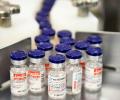
India is expecting 156 million doses of the vaccine from August to September, reports Ruchika Chitravanshi.
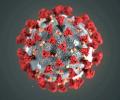
'Wearing masks, washing our hands, all those things are barriers to transmissibility, or contagion, but as the virus becomes more contagious it statistically is better at getting around those barriers'

'We must not compromise with the standard, the quality. We don't need to be the first to launch a drug but what we need is a Made in India vaccine that the entire world can rely on'

Scientists around the world, including in India, suggest it hasn't been tested properly given the time constraint and there may not be enough evidence to prove its efficacy.
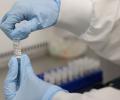
According to the World Health Organisation, 10 candidate vaccines for COVID-19 are in the clinical evaluation and 126 are in the pre-clinical stage.

The Omicron variant carries 'concerning' mutations that may make it more transmissible and allow it to evade immunity, scientists said on Monday, stressing that the one certainty in the uncertainty of the many things unknown is this -- COVID is not a short-term crisis and vaccines are still a critical tool.
Some vaccine frontrunners are in advanced stages of trial and could hit the market by early next year, making the task of securing "last mile connectivity" and ensuring that nothing goes wrong before the shot is administered more urgent.
The approval comes a day after Sinopharm said its vaccine showed 79.34 per cent efficacy and a 99.52 per cent antibody-positive conversion rate in the interim results of the Phase III clinical trials.
 © 2026 Rediff.com - Advertise with us - Disclaimer - Privacy Policy - Sitemap - Feedback - About us - Terms of use - Grievances