
A Delhi court has granted default bail to US national Matthew Aaron Van Dyke, who was arrested in connection with an NIA case involving a drone warfare training camp linked to ethnic armed groups in Myanmar. The bail was granted on a personal bond of Rs 1 lakh, with conditions to remain in Delhi and cooperate with the investigation. The NIA's chargesheet did not invoke UAPA provisions, instead citing the Immigration and Foreigners Act, leading to the default bail.
The Supreme Court has directed the Centre, states, and Union Territories to swiftly establish dedicated courts to handle the "alarming rise" in cases under the Narcotic Drugs and Psychotropic Substances (NDPS) Act. The directive aims to set up all 449 required NDPS courts within six weeks. Additionally, the court noted progress in establishing special courts for cases probed by the National Investigation Agency (NIA), with several states committing to expedite their operationalisation.

The National Investigation Agency (NIA) has filed a chargesheet against seven foreign nationals, including a US citizen and six Ukrainians, for illegal entry and alleged terror conspiracy with ethnic armed groups, though the stringent UAPA anti-terror law was not invoked at this stage.

A Delhi court has granted default bail to US national Matthew Aaron Van Dyke, who was arrested in a terror-conspiracy case being probed by the National Investigation Agency, amidst ongoing investigations into potential UAPA offences.

A special NIA court in Chhattisgarh's Bastar district has sentenced all 10 convicts in the 2013 Jhiram Valley Maoist attack to death. The attack, which occurred on May 25, 2013, resulted in the deaths of 29 people, including prominent Congress leaders.

A special NIA court in Jammu has issued a non-bailable warrant against Hafiz Saeed, the Pakistan-based chief of Lashkar-e-Taiba, in connection with the ongoing investigation into the Pahalgam terror attack. This action follows a supplementary chargesheet filed by the NIA, which also links Saeed to the 2008 Mumbai attacks.

A special NIA court in Mumbai has denied Elgar Parishad-Maoist links case accused Hany Babu permission to visit Kerala, citing previous similar rejections and readily available medical facilities in Mumbai.
The National Investigation Agency (NIA) has confirmed that terror charges under the Unlawful Activities (Prevention) Act (UAPA) against seven foreign nationals, including one American and six Ukrainians, have not been dropped and the probe is ongoing. The agency filed a chargesheet under the Immigration and Foreigners Act (IFA) to prevent the accused from becoming eligible for default bail, while explicitly stating that the UAPA investigation continues. The foreign nationals were arrested for allegedly entering India illegally from Myanmar.

The Ministry of External Affairs stated that India's participation in the 2027 SAF Games in Pakistan will be guided by the sports ministry's policy, which permits Indian athletes to compete in events with Pakistani participants and vice-versa. Separately, the MEA also commented on the ongoing legal proceedings for seven foreign nationals, including a US citizen and six Ukrainians, who were recently chargesheeted by the NIA for illegal entry and movement, though not under UAPA at this stage.

A special NIA court in Chhattisgarh's Bastar district has convicted all 10 accused, including two women, in the 2013 Jhiram Valley Maoist attack case. The attack resulted in the deaths of 29 people, including senior Congress leaders, and was one of the deadliest incidents of Left Wing Extremism. The quantum of punishment will be announced on September 16.

A special NIA court in Jammu has rejected the bail plea of Insha Jan alias Insha Tariq, an accused in the 2019 Pulwama suicide attack that killed 40 Central Reserve Police Force personnel, observing that sufficient material existed on record to presume that the accusations against her were prima facie true.

The NIA alleged that the accused were in touch with ethnic armed groups in Myanmar and supported proscribed Indian insurgent outfits by supplying weapons, drones and providing training.
The high court of Jammu and Kashmir and Ladakh has set aside the discharge of an accused in a UAPA case stating that secessionist sloganeering in a mob in the presence of the head of a banned separatist organisation prima facie falls under the definition of unlawful activity.

A special NIA court in Ahmedabad has sentenced six Pakistani nationals to eight years of rigorous imprisonment for their involvement in the 2019 mid-sea seizure of 330 kg of 'brown heroin' off Gujarat's Jakhau coast. An Indian man, allegedly the intended recipient, was acquitted due to benefit of doubt. The National Investigation Agency had probed the case, alleging funds from the smuggling were intended for a terror organisation.
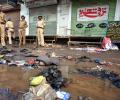
The Bombay High Court has discharged four accused in the 2006 Malegaon blasts case, criticising the NIA for ignoring evidence collected by the previous investigating agency. The court's decision leaves the question of responsibility for the blasts, which killed 31 people, unanswered.
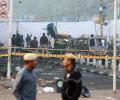
A Delhi court has granted permission to the National Investigating Agency (NIA) to cremate or dispose of the remains of 11 victims and the suicide bomber from the Red Fort car bomb explosion last November. The court emphasised dignified disposal respecting religious beliefs and sought a compliance report.
It is alleged that they came to India on a visa and then entered Mizoram, which is a protected area. Thereafter, they entered Myanmar and contacted ethnic war groups.

A special NIA court in Mumbai has denied poet-activist Varavara Rao's request to permanently relocate to Hyderabad, citing a lack of authority to modify bail conditions set by the Supreme Court in the Elgar Parishad-Maoist links case.
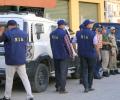
A special NIA court in Lucknow sentenced three operatives of Al Qaeda affiliate Ansar Ghazwatul Hind to life imprisonment for conspiring to wage war against the Indian government and planning terror attacks in Uttar Pradesh.
The National Investigation Agency (NIA) is investigating a US citizen and six Ukrainians for a terror conspiracy involving suspected links to ethnic rebel groups in India and Myanmar, including allegations of providing drone training.
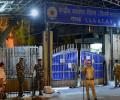
A Delhi court is considering a plea from US citizen Matthew Aaron Van Dyke, an alleged mercenary accused in a terror conspiracy case, who is seeking an "American diet" in Tihar prison due to his inability to tolerate the standard spicy Indian prison food. He reportedly undertook a 50-day hunger strike, consuming only liquids.

The victims of the 2008 Malegaon blast case have written to the chief justice and registrar of Bombay high court requesting them to extend the tenure of special NIA judge PR Sitre, who has been presiding over the trial since August 2020.
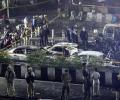
A Delhi court has granted the National Investigation Agency (NIA) a 45-day extension to complete its investigation into the blast near the Red Fort on November 10 of last year. The court also extended the judicial custody of several accused individuals.
A special court, in its acquittal order in the 2008 Malegaon blast case, has highlighted a running battle between the Maharashtra Anti-Terrorism Squad (ATS) and the National Investigation Agency (NIA), pointing out stark contradictions in their probe.
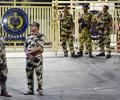
Security has been heightened outside the National Investigation Agency (NIA) headquarters in New Delhi, where Tahawwur Rana, the mastermind of the 2008 Mumbai terror attacks, is being held following his extradition from the United States. Rana was brought to India after the US Supreme Court dismissed his review plea against extradition. The NIA secured an 18-day custody of Rana after he was produced before a special court in Delhi. Additional police and paramilitary forces have been deployed to ensure law and order. The extradition of Rana, a close associate of David Coleman Headley, the main conspirator of the Mumbai attacks, is a significant development in the investigation into the 2008 attacks.
A special court in Kochi will complete proceedings for framing charges against the prime accused in the 2010 hand-chopping case involving professor T J Joseph. PFI activists are accused of attacking him at Muvattupuzha.

A Delhi court on Monday extended by 12 more days the NIA custody of 26/11 Mumbai attack accused Tahawwur Hussain Rana.

The Supreme Court has expressed serious concern over the 'hostage' situation involving seven judicial officials in West Bengal's Malda district, demanding explanations from state officials and authorising the Election Commission to seek a CBI or NIA probe.
A special court has granted the Enforcement Directorate (ED) permission to record statements of 19 alleged ISIS members and sympathizers held in various prisons across India.
The Bombay High Court has discharged four accused in the 2006 Malegaon blasts case, criticising the NIA for ignoring crucial evidence. The court highlighted contradictions in the NIA's investigation compared to the initial probe by the ATS, leaving the question of responsibility for the blasts unanswered.

The National Investigation Agency (NIA) has filed a supplementary chargesheet against Areeb Majeed, adding a charge of raising funds for terrorist activities in connection with the 2014 ISIS link case.

The National Investigation Agency (NIA) has arrested Yasir Ahmad Dar, a close associate of Red Fort area blast perpetrator Umar-un-Nabi, bringing the total number of arrests in the case to nine. Dar is accused of active involvement in the conspiracy behind the car bomb blast near Delhi's Red Fort on November 10.
The Bombay High Court has extended the tenure of special NIA judge A K Lahoti, who is conducting trial in the 2008 Malegaon blast case, till August 31. Lahoti's name featured in the annual transfer list of judges, issued earlier by the registrar general of the high court. The transfer order was to come into effect after the reopening of courts on June 9 following summer vacation. However, a fresh notification mentioned that Lahoti's tenure has been stayed till August 31, enabling him to pass the verdict in the case that is in the final stage of trial.
The 2008 Malegaon bomb blast case, spanning nearly 17 years, was marked by changes in investigating agencies and five different judges, contributing to significant delays, according to victims and accused.
The accused, identified as Dr Bilal Naseer Malla, a resident of Jammu and Kashmir's Baramulla, was nabbed by an NIA team from Delhi.
The National Investigation Agency (NIA) has alleged that key conspirator Tahawwur Rana, who has been remanded to 18-day NIA custody, devised terror plots similar to the 26/11 Mumbai attacks that were meant to target multiple Indian cities. The NIA believes that the tactics used in the Mumbai attacks were intended for execution in other cities as well, and that similar plots were developed elsewhere. Rana will be questioned in detail in order to unravel the complete conspiracy behind the deadly 2008 attacks, which saw 166 persons being killed and over 238 sustaining wounds.

The National Investigation Agency (NIA) has told a Delhi court that the Popular Front of India (PFI) was attempting to acquire arms from neighboring countries and provide weapons training to its members. The NIA also alleges links to ISIS and plans to target BJP, RSS, and VHP leaders.

The National Investigation Agency (NIA) on Thursday took custody of three doctors and a preacher who were arrested in connection with the November 10 car blast outside the Red Fort in which 15 people were killed.
The Supreme Court has reaffirmed that bail is the general rule, even in cases registered under the Unlawful Activities (Prevention) Act (UAPA), while granting bail to an accused in a narco-terror case.
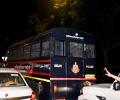
Tahawwur Hussain Rana, a key figure in the 2008 Mumbai terror attacks, has been extradited from the US to India and produced before a Delhi court. Rana, a close associate of David Coleman Headley, was brought to India after the US Supreme Court dismissed his review plea against extradition. The National Investigation Agency (NIA) has sought 20 days of custody to interrogate Rana, citing clinching evidence, including emails. The agency believes that Rana's interrogation is critical to understanding the larger conspiracy behind the attacks and his role in planning them.
