
Education finance is a complex and dynamic sector. There are too many variables -- the course, the calibre of students, the universities, and the job prospects once the course is over, notes Tamal Bandyopadhyay.

Linking businesses with account aggregator (AA) network -- a financial data sharing platform -- will help small entrepreneurs get easy access to credit and create millions of jobs, Infosys Technologies co-founder and chairman Nandan Nilekani said on Tuesday. He made the remarks during a session at the 'GSV + Emeritus India Summit' event in Gurugram. In the Budget for FY24, the government said that the GST system could join the account aggregator network, which means that every company in the GST system can ask for its data back which includes their tax filings and invoices, Nilekani said.

Credit to priority sectors as well as small and medium industries will be discussed to find ways to accelerate economic growth.

The report said resilience of the banks has increased with a sharp improvement in the provision coverage ratio to 60.6 per cent in March 2019 from 52.4 per cent in September 2018 and 48.3 per cent in March 2018.

'The RBI's clarification on non-performing advances accounting is likely to increase NPAs by around one-third for non-banking finance companies,' domestic rating agency India Ratings and Research said in a report on Friday.

Insurance coverage for deposits in non-banking finance companies is unlikely to be provided as Reserve Bank of India has expressed reservations over the move.
Canara Bank Ltds Canbank Financial Services Ltd plans to discontinue non-banking finance company activities.

After a sharp outperformance in the mid-and small-cap segments in the first half of calendar year 2023 (H1-CY23), analysts are now turning cautious on these two market segments and suggest investors stay selective and look for valuation comfort and earnings visibility before investing. The S&P BSE Midcap index has surged 13.7 per cent in H1-CY23, and the S&P BSE Small-cap index gained 12.7 per cent during this period, data shows. The S&P BSE Sensex, in comparison, has moved up 6.4 per cent.
The stressed asset business will be a mix of an ARC and a distressed asset fund. Ambit has already started insurance brokerage and equity research and sales businesses this year. It closed a $100-million private equity fund called Ambit Pragma Ventures recently. It is also keen on starting proprietary trading.
"SIICL, which is one of the group companies belonging to Sahara group, as such cannot transact the business of non- banking financial institutions," RBI said on Friday.

Prashant A Bhonsle lists 5 major points you need to keep in mind before applying for a student loan.

'As long as economic growth remains steady, creating jobs and generating stable incomes, the rise in home loans should not create problems.' 'If the growth trajectory changes course over the medium term and interest rates rise along with inflation, the expanding trend in home loans may not sustain.'
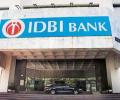
The government and Life Insurance Corporation's (LIC's) strategic stake sale in IDBI Bank is expected to move to the second stage by the first quarter of FY24, said two people in the know. They added that considering the progress of the ongoing deal, financial bids are expected to come in by June this year. The proposed IDBI Bank stake sale is divided into two sequential stages.

Only when we are part of the same family, which will happen down the line, then, of course, we will give them (PMC depositors) all the assurance and the comfort.'

While weather forecasters remain divided on how the monsoons will play out in India over the next few months, analysts believe the news at the current juncture - at best - can trigger a knee-jerk reaction in the markets. They believe it is too early to say whether the sub-par monsoon on account of El Nino can seriously dent the market sentiment in the short-to-medium term. "These are just initial forecasts and we will have another round / status update from the weather forecasters a month down the line.

Under the co-lending model, banks have to take their share of the individual loans on a back-to-back basis on their books while NBFCs are required to retain a minimum of 20 per cent share of the individual loans on their books.

New norms are in place to strengthen regulations for this set of lenders which has been playing a critical role in Asia's third largest economy, notes Tamal Bandyopadhyay.
As part of its efforts to strengthen customer protection, Reserve Bank is considering setting up a fraud registry to create a database of fraudulent websites, phones and various modus operandi used for digital fraud. Such a database will help prevent these fraudsters from repeating the fraud as the websites or phone numbers would be blacklisted, RBI executive director Anil Kumar Sharma said on Monday. "There is no definite timeline for setting up of the fraud registry.

Despite rising interest rates, and high inflation, the banking sector is doing well, on the back of a recovering economy. The last couple of quarters indicate credit demand is picking up and Return on Assets (RoA) is more than acceptable at the moment. The PSU bank pack may be more interesting at the moment simply due to being valued at far lower multiples than the private banks.

IDBI Bank had to sell its MF arm after being acquired by state-owned insurance behemoth Life Insurance Corporation since LIC already had an AMC.
After investing $150 million this year, HSBC is willing to step up investments in India as it expects the economy to sustain over 7 per cent growth in the coming years.

Regulator wants to change NPA classification and hike capital requirement.

A strong business update for the April-June quarter of the 2023-24 financial year Q1FY24 has led to a big jump of over 7 per cent in the share price of Bajaj Finance on Tuesday (July 4). The non-banking financial company's (NBFC's) new loan book grew 34 per cent with 9.9 million new loans booked in Q1FY24 from 7.2 million loans booked in Q1FY23. The company's total customer franchise rose to 72.98 million (as on June 30, 2023), compared to 60.30 million year-on-year (YoY) with the highest-ever quarterly increase of 3.84 million in Q1FY24. Assets under management (AUM) grew by 32 per cent to about Rs. 270,050 crore in Q1FY24 from Rs. 204,018 crore in Q1FY23.

The Reserve Bank of India is likely to take a call on the relaxations sought by HDFC Bank in relation to the merger, as the date of merger draws closer, sources said. The HDFC twins, which announced their decision to merge in April last year, received National Company Law Tribunal's (NCLT's) approval recently - a key milestone to close the deal in due time. The management of both the entities had said that it will take 15-18 months for the merger.
While public sector banks have managed to maintain a growth of over 25 per cent during the year up to February, private and foreign banks have seen their growth in loan books shrink to single-digit rates on a year-on-year basis, as against over 20 per cent at the end of September, when the credit crisis intensified.
The Reserve Bank of India said on Monday it will lower the maximum rate that non-banking finance companies can offer on retail deposits by 150 basis points to 11 per cent just days after it cut key rates.\n\n\n\n

Capital markets regulator Sebi on Tuesday barred five brokerage houses for up to six months from making fresh applications seeking registration as commodity brokers as they failed to meet 'fit and proper' criteria in the NSEL case. The affected brokerage houses include India Infoline Commodities, Anand Rathi Commodities and Geofin Comtrade (banned for 6 months each), and Phillip Commodities and Motilal Oswal Commodities Broker (for 3 months each). "There were enough red flags for a reasonable person to come to conclude that what was being offered as paired contracts on NSEL were not spot contract in commodities," Sebi said in five separate orders.

As per RBI, the CRO shall be a senior official in the hierarchy of an NBFC and shall possess adequate professional qualification/ experience in the area of risk management.

'The real estate sector has been badly bruised because it has become too reliant on funding from NBFCs, including housing finance companies. 'When the NBFC industry was rocked late last year by a large default, the real estate sector was hit hard. 'An intricate web of links between rural incomes, construction activity and shadow banks are fuelling the economic slowdown', says Pranjul Bhandari.

'We are all in a tizzy about NBFCs in the aftermath of the IL&FS default.' 'We tend to jump to the notion that an NBFC is like a bank. But banks make a promise that deposits are liquid and have an assured return.' 'NBFCs make no such promises,' points out Ajay Shah.

This payment of Rs 962 crore is inclusive of the Rs 500 crore DHFL received from exiting its entire stake in subsidiary firm Aadhar Housing Finance Ltd.

NBFCs with a proven track record, supported by the brand values of reputed corporate, can play a key role in bringing the benefits of banking and economy to the underserved and newer segments of India.
By lowering interest rates Non-Banking Finance Companies (NBFCs) are slowly positioning themselves to become viable alternatives to traditional banks for procuring loans.

The Reserve Bank of India on Tuesday banned chartered accountant firm Haribhakti & Co LLP from undertaking any type of audit assignments for regulated entities for a period of two years starting April 1, 2022.

The RBI on Thursday filed an application for initiation of Corporate Insolvency Resolution Process (CIRP) against debt-ridden Reliance Capital at the Mumbai bench of the National Company Law Tribunal. The Reserve Bank had on November 29 superseded the board of Anil Ambani-promoted Reliance Capital Ltd (RCL) in view of payment defaults and serious governance issues. The central bank had also appointed Nageswar Rao Y (former executive director, Bank of Maharashtra) as the administrator of the company.
The Reserve Bank of India is expected to come out with comprehensive guidelines on the non-banking finance companies that are not involved in taking public deposits.
'Anything you buy from any Future outlet should have financing options by us'
