
Investigation reveals Al Falah University's potential links to terror operatives, including a former student involved in multiple blasts and doctors arrested in connection with a recent terror plot.

A special NIA court in Jammu and Kashmir has ordered the immediate attachment of land belonging to Ghulam Nabi Fai, a US-based Kashmiri lobbyist and convicted agent of Pakistan's Inter-Services Intelligence (ISI).
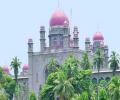
The Telangana High Court upheld a trial court's verdict handing out death penalty to five senior operatives of banned terror outfit, Indian Mujahideen, involved in a bomb blast that left 18 people killed in 2013. The court dismissed the criminal revision appeal filed by the IM operatives while upholding the NIA court's judgment. The five members, including IM co-founder Mohd Ahmed Sidibapa alias Yasin Bhatkal, Pakistani national Zia-ur-Rahman alias Waqas, Asadullah Akhtar alias Haddi, Tahaseen Akhtar alias Monu and Ajaz Shaikh, were convicted in 2016. The special court for NIA cases here awarded capital punishment to five convicts treating it as a rarest of the rare case. The high court, after conducting a detailed hearing in the appeals filed by the convicts, confirmed the death sentence of the five IM operatives.

Indrani Mukerjea, in pure white, sporting dancing pearl jhumkas, bobbed about the accused box, occasionally floating up front to whisper urgent suggestions to her lawyer Ranjeet Sangle as retired cop and prosecution witness Dinesh Kadam gave her a long look. Vaihayasi Pande Daniel returns to cover the Sheena Bora murder trial after 18 months.

Officials said the digital ban was intended to disrupt ideological channels that facilitate cross-border radicalisation, particularly in areas where socio-economic vulnerabilities are exploited by extremist networks.
The Special Cell of the Delhi Police has uncovered a fresh lead in the Red Fort car blast investigation, linking it to fugitive Indian Mujahideen operative Mirza Shadab Baig, an ex-student of Al-Falah University.
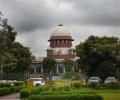
The Supreme Court has stayed the execution of an alleged Indian Mujahideen operative sentenced to death in connection with the 2013 Dilsukhnagar blasts.
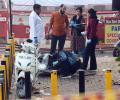
Security agencies are investigating how a terror module acquired and stored a large quantity of Ammonium Nitrate, suspected to be used in a recent deadly blast. The investigation focuses on the logistics and procurement network of the busted inter-state terror cell and highlights the ease with which restricted chemicals can be weaponized.

Former Rajya Sabha MP Sabir Ali, who was expelled from the JD-U 11 years ago for praising Prime Minister Narendra Modi, was on Saturday named the party's candidate from Amour assembly seat in Bihar.
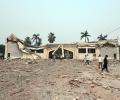
Months after India's precision strikes on nine terror camps across Pakistan and Pakistan-occupied Kashmir (PoK), a viral video of Lashkar-e-Taiba (LeT) commander Qaasim has surfaced.

Priyanka Kakkar wondered if "Mujahideen" or "Shehzad" meant "terrorist" and hit back at Poonawala for referring to a chief minister as "Jihadi."
Records stretching back to 1947 suggest a consistent strategy by Pakistan's military and intelligence apparatus, the Inter Services Intelligence (ISI), of using terrorism as a state policy against India.

Pakistan-based terror groups Jaish-e-Mohammed (JeM) and Hizbul Mujahideen (HM) have begun relocating their bases to Khyber Pakhtunkhwa (KPK) province from Pakistan-Occupied Kashmir in the wake of India's Operation Sindoor, sources said.

The high court, however, directed the trial court concerned to conclude its trial in the case by taking up hearing at least twice a week, noting that the accused have been behind bars since 2008.

On Tuesday, August 5, 2025, on the 6th anniversary of the abrogation of Article 370 and Article 35A, Jammu and Kashmir Lieutenant Governor Manoj Sinha along with J&K Police Director General Nalin Prabhat and Chief Secretary Atal Dulloo handed over government job appointment letters to family members of terror victims in Srinagar.
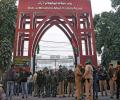
Jamia Millia Islamia (JMI) has issued a show cause notice to a PhD scholar, accusing him of "repeated unlawful acts" and inciting students on religious lines during a Batla House encounter protest march on September 19. The scholar denies the allegations.

Over 75 government employees with terror links have been dismissed so far by the LG administration.

Ahead of the Asia Cup, former Indian cricketer Surinder Khanna shared his views on whether the India-Pakistan clash should be played

The sons of Hizb-ul-Mujahideen chief Syed Salahuddin, Syed Ahmad Shakeel and Syed Shahid Yusuf, have challenged a rule in the Delhi Prison Rules that bars those accused of offences against the state, terrorist activities, and other heinous crimes from using telephonic and electronic communication facilities. The two prisoners, currently lodged in different Delhi jails, are seeking restoration of their phone call facilities, alleging that the restrictions are arbitrary and unreasonable. The Delhi High Court has posted the matter for further hearing on May 22.

Manoj Tiwary shared his thoughts on whether the India-Pakistan clash should take place

Sonam Wangchuk is under tight surveillance within the three-tiered prison, with CCTV cameras monitored around the clock.
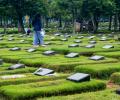
As many as 2,493 graves were identified as belonging to foreign terrorists who were killed in counter-insurgency operations.
These individuals often lacked identification to conceal their networks and maintain Pakistan's plausible deniability.

The Air Chief revealed information about India's damage to Pakistan's defence capabilities while addressing an event at the Hal Management Academy in Bengaluru on Saturday.

India recognised acts of gallantry by armed forces personnel and senior military officers involved in Operation Sindoor, along with other distinguished service awards, on the eve of the 79th Independence Day.
The nine targets struck under 'Operation Sindoor', four in Pakistan and five in Pakistan-occupied-Kashmir, were chosen by the IAF after receiving intelligence inputs about terror camps operating under the guise of health centres to evade detection at these sites, officials said on Wednesday.
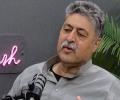
Former separatist leader Bilal Gani Lone has entered mainstream politics, aiming to represent his father's legacy and address the issues facing Kashmiri youth.

President Droupadi Murmu and Prime Minister Narendra Modi on Saturday led the nation in paying tributes to military personnel who fought valiantly in harsh conditions to hand Pakistan a crushing defeat in the 1999 Kargil conflict.

In a significant shift, Kashmiris from villages once considered strongholds of militancy have joined the condemnation of the recent massacre of 26 people in Pahalgam, raising slogans against terrorism and expressing solidarity with the victims. This unprecedented display of public sentiment across the valley marks a possible turning point in the region's fight against violence.

BCCI secretary Devajit Saikia said that an invitation has been extended to chiefs of all three Armed forces, top-ranked officers and soldiers for the IPL 2025 final on June 3.
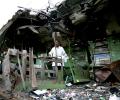
The investigation for 7/11 blast in which 189 people died was under question mark from the very first month after the Mumbai Anti-Terrorism Squad started arresting the accused from different parts of city. Within 10 days of blast by July 22, 2006, ATS arrested all the 13 terror accused in the case under the leadership of ATS chief, K P Raghuvanshi.
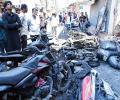
Shiv Sena leader Sanjay Nirupam has alleged the involvement of individuals with links to Bangladesh in the recent violence in Nagpur. Nirupam also claimed the violence was "pre-meditated" and was part of a larger conspiracy. He further expressed concerns about the broader implications of the stance of the Shiv Sena (UBT), suggesting the Uddhav Thackeray-led party has shifted to an "anti-Hindu" position. Chief Minister Devendra Fadnavis, however, said it was too early to comment on a foreign or Bangladeshi link to the Nagpur violence.
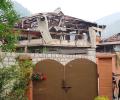
Markaz Taiba of Lashkar-e-Taiba (LeT) in Pakistan's Muridke, one of the nine terror camps struck by the Indian armed forces on Wednesday, is a site where terrorists including Ajmal Kasab involved in the 2008 Mumbai attack were trained, a senior military official said.
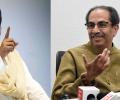
Shiv Sena-Uddhav Balasaheb Thackeray chief Uddhav Thackeray on Thursday accused the Bharatiya Janata Party of trying to scuttle the possibility of his party's alliance with the Maharashtra Navnirman Sena led by his estranged cousin Raj Thackeray ahead of civic polls.
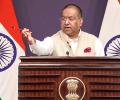
India expects Turkiye to strongly urge Pakistan to end its support to cross-border terrorism, said ministry of external affairs spokesperson, Randhir Jaiswal during the weekly briefing on Thursday.
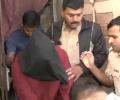
Javed Munshi, suspected to be a member of the outlawed 'Tehreek e Mujahideen' outfit in Kashmir Valley, was picked up from near Canning Hospital by a joint team of Jammu and Kashmir Police and West Bengal Police's Special Task Force, the officer said.
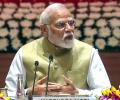
Prime Minister Narendra Modi hailed "Operation Sindoor" as a turning point in the global fight against terror, describing it as a symbol of India's growing strength and clarity of purpose. Addressing the nation through his monthly radio programme Mann Ki Baat, Modi said the operation reflects a changing and resolute India, and has inspired patriotism and self-reliance across the country.

Modi was severe in his criticism of the opposition amid the continuing logjam in Parliament and also sounded confident of the ruling dispensation retaining power at the Centre for a third term after the 2024 Lok Sabha polls.

India has carried out strikes against nine terrorist infrastructure in Pakistan and Pakistan-occupied Kashmir, Defence Minister Rajnath Singh said on Wednesday. The strikes were in retaliation to the Pahalgam terror attack in which 26 civilians were killed. Singh said the strikes were precise and destroyed the targets set under Operation Sindoor.

The Indian Army has released a booklet on Operation Sindoor, which was launched to avenge the April 22 ghastly Pahalgam attack in which Pakistan-backed terrorists brutally killed 26 civilians, mostly tourists, and left many injured.

This came after Pakistan People's Party chairman Bilawal Bhutto Zardari on Saturday stated that Pakistan's Prime Minister Shehbaz Sharif had tasked him to lead a delegation to present Pakistan's case on the recent escalations of tensions between the two nations.
