

The investigation into the July 11, 2006 Mumbai train bombings, referred to as the 7/11 blasts, has been under scrutiny almost from its inception, with doubts emerging over the Anti-Terrorism Squad's handling of the case.
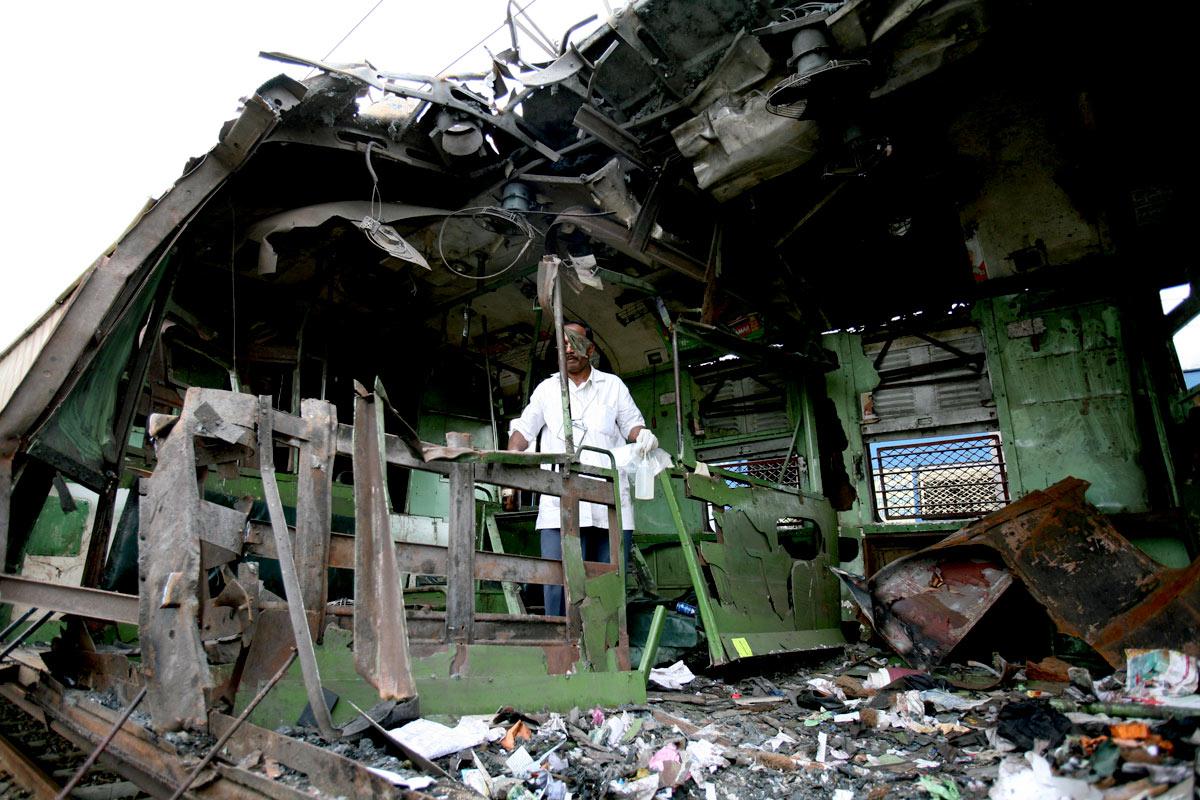
Within 10 days of the devastating blasts, which claimed 189 lives, the Mumbai ATS, under the leadership of then chief K P Raghuvanshi, announced the arrest of all 13 alleged terror accused.
However, questions soon began to surface regarding the integrity of the investigation, primarily because the entire case appeared to hinge on confessions and no concrete evidence.
These doubts were significantly amplified by the Bombay high court judgment acquitting all the 12 accused on Monday, July 21, 2025.
In their 671-page ruling, Justices Anil Kilor and Shyam Chandak stated unequivocally: 'The prosecution utterly failed to prove the case and it was hard to believe that the accused committed the crime.'
The judges further highlighted a critical failing, noting that the prosecution 'failed even to bring on record the type of bombs used in the crime.'
This high court verdict overturned the special MCOCA court's 2015 order, in which Judge Yatin D Shinde had sentenced five of the accused to death, seven to life imprisonment, and acquitted one.
One of the earliest red flags in the investigation appeared in August 2006, when Assistant Police Commissioner Vinod Bhat, a key investigator in the 7/11 case, tragically died by suicide by jumping in front of a train near the Dadar railway station.
Bhat, known as an upright officer, had been transferred from the Anti-Corruption Bureau to lead the 7/11 blast investigation, and his death sent shockwaves through the police department.
Rumours circulating within police circles at the time suggested that Bhat was pressured to file a chargesheet against all the accused.
At the time, ATS chief Raghuvanshi clarified (external link) that Bhat was not instructed to engage in any illegal activities, stating, 'The railway police are investigating this case and I do not want to say anything else.'
A second significant challenge to the prosecution's case came from the late defence lawyer Shahid Azmi, who vehemently dismissed the claims of arrest.
Azmi pointed out that despite all 13 arrests being made by July 22, till September 2006 the ATS made no public disclosure regarding the accused's link to the blast or how it was carried out.
Azmi was also the first to highlight that Ajmeri Shaikh, a key witness for the prosecution in the 7/11 case, had also been a witness in the 2002 Ghatkopar blast case.
In the high court judgment, the judges too made the observation that Ajmeri Sheikh was used as a witness in the Ghatkopar blast as well.
The high court judgment also did not rely on the prosecution's witnesses, noting their failure to substantiate their claims during cross-examination.
The prosecution's case suffered a third major setback when Sadiq Sheikh, an Indian Mujahideen accused arrested in a separate terror case, confessed that his team was responsible for the 7/11 blasts. The Indian Express even obtained a video (external link) of Sadiq stating, 'We planted the bombs.'
He reportedly informed investigators that Abu Rashi, Dr Shahnawaz, Sajid and Abu Asif executed the 7/11 blasts, and that the material, including pressure cookers, detonators, and explosives, were arranged by the notorious terrorist Yasin Bhatkal.
However, Sadiq Sheikh later retracted his confession when he was presented as a defence witness before MCOCA Judge Yatin Shinde in the 7/11 case.
In 2013, Sadiq told the MCOCA court that investigating officers had coerced him (external link) into making the confession, providing him with three pages containing a fabricated story that he was instructed to memorise.
The defence also raised questions about the narco-analysis conducted on the 7/11 serial blast convicts, arguing that it was not carried out by a professionally qualified doctor.
The doctor in question, Dr Malini, was found to have submitted forged documents to secure her position.
'Dr Malini had submitted forged documents (external link) and got the position. She has been prosecuted for forgery. She did narco analysis on accused without proper qualification,' defence counsel Dr Yug Mohit Chaudhry stated.
Dr Malini was subsequently dismissed from her job in 2009.
Abdul Wahid Sheikh, the sole accused acquitted by the MCOCA court in 2015, stated that when they could not catch hold of anyone, ATS officers wrote a script and arrested the 13 accused.
Following his release, Wahid told media-persons that the entire 7/11 accused story was a 'fiction' in which he was wrongly branded a terrorist.
The ATS had claimed Wahid provided shelter to a Pakistani terrorist who had illegally crossed the border and stayed at his place.
Wahid was incarcerated for over nine years before his acquittal in 2015.
He has consistently maintained the innocence of the other 12 accused in the case, and also ran a campaign called 'Innocence Network'.






 © 2026