The National Investigation Agency (NIA) has charge-sheeted eight more individuals in connection with a 2020 transnational narco-terror network case involving the smuggling of drugs from Pakistan to Gujarat, with the aim of financing the Lashkar-e-Taiba (LeT) terror group.

'I don't see any relationship between them and ex-army or ex-ISI as has been happening in the past,' says strategic analyst Shuja Nawaz, who is convinced the Pakistan army and its intelligence wing, the Inter-Services Intelligence, are not complicit in the Mumbai terror attacks.
Security agencies are concerned about the increasing use of drones by terror groups in Jammu and Kashmir for surveillance and logistics, replacing human networks.

The deadly attack on the Uri garrison on September 18 nine years ago marked the end of India's policy against crossing the Line of Control to target Pakistan-based terrorists. It paved the way for the Balakot Air Strikes in 2019 and Operation Sindoor.
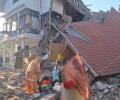
With this, the total number of houses of terrorists and their overground workers demolised since the Pahalgam attack has gone up to nine.
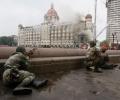
The Maharashtra government informed the Bombay High Court that Faheem Ansari, acquitted in the 26/11 terror attack case, was denied a police clearance certificate due to ongoing suspicion of being a member of a banned terror organization. Ansari sought the certificate to operate an autorickshaw.
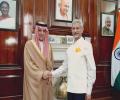
Saudi Arabia's Minister of State for Foreign Affairs Adel Aljubeir visited India on Thursday and held talks with External Affairs Minister S Jaishankar, focusing on de-escalating tensions between India and Pakistan. The visit comes as ties between India and Pakistan have further deteriorated following Indian military strikes on terror infrastructure in Pakistan. Iranian Foreign Minister Abbas Araghchi also arrived in New Delhi on a scheduled visit amidst the escalating tensions.
'We should not just react when a terror attack happens on our soil.' 'Our approach should be continuous and a launch pad should be destroyed the moment it comes up.'
India's National Security Advisor says that the US just can't to afford to ignore the Pakistan-based militant outfit.
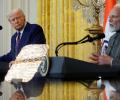
US President Donald Trump said on Friday that there has always been tension between India and Pakistan and the two countries will figure it out between themselves. Trump was asked about tensions between India and Pakistan in the wake of the Pahalgam terror attack, in which 26 civilians were killed, and if he would be talking to the leaders of the two nations. He said that he knows both leaders and that there is great tension between Pakistan and India, but there always has been.

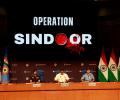
The Border Security Force (BSF) launched "Operation Sindoor" in retaliation to unprovoked firing and shelling by Pakistani Rangers along the International Border (IB) in Jammu. BSF troops destroyed three terrorist launch pads and targeted 76 Pakistani border outposts and 42 forward defence locations. The BSF action came after Pakistan launched heavy firing and shelling on 60 Indian posts and 49 forward positions, reportedly providing cover for an attempted infiltration by 40-50 terrorists.

The attack has "footprints and tracks" similar to previous attacks claimed by The Resistance Front, the ministry said in a presentation, adding the terror organisation is just another name of designated terror outfit Lashkar-e-Tayiba.

Former Indian Army chief General Shankar Roychowdhury (Retd) has blamed "intelligence failure" for the recent terror attack in Pahalgam, Jammu and Kashmir, which claimed the lives of 26 civilians. He demanded accountability at the highest levels, stating that there must be someone responsible for the negligence and they must be held accountable for the consequences.

The Air Chief revealed information about India's damage to Pakistan's defence capabilities while addressing an event at the Hal Management Academy in Bengaluru on Saturday.
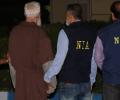
According to the chargesheet, Rana played a crucial role in supporting terrorist David Coleman Headley, a Pakistani-American operative linked to Lashkar-e-Taiba, by facilitating his reconnaissance missions across Mumbai.
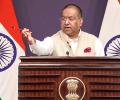
India expects Turkiye to strongly urge Pakistan to end its support to cross-border terrorism, said ministry of external affairs spokesperson, Randhir Jaiswal during the weekly briefing on Thursday.

US President Donald Trump claimed that "five jets were shot down" during the conflict between India and Pakistan in May and repeated his assertion that the fighting ended following his intervention. India has maintained that the two sides halted their military actions following direct talks between their militaries without any mediation by the US.

External Affairs Minister S Jaishankar discusses India's approach to cross-border terrorism following the Pahalgam attack, emphasizing a firm response and no compromise on nuclear blackmail.
'...and the country should be impoverished completely.' 'Once this is done, the political class would take over and then play a part in real democracy where the army is under the control of the government, not vice-versa.'
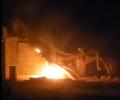
11, 13, 15 are not some random odd numbers but the number of days that Prime Minister Narendra Modi took to act against Pakistani terror strikes on Indian soil.
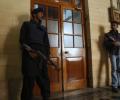
An armed guard of Qatal was also killed in the attack that took place on Saturday night.
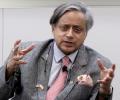
"I'm very glad you raised this, Ishaan. I didn't plant it. I promise you. This guy does this to his dad," Tharoor replied amid laughter from the audience.

President Pezeshkian on Saturday said that Iran unequivocally denounces such "inhumane acts", Iran's embassy in New Delhi said in a post on X.
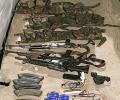
Security agencies have gathered evidence, including Pakistani government documents and biometric data, confirming that the terrorists involved in the Pahalgam attack were Pakistani nationals.

The highlight of Tuesday's debate on Operation Sindoor was the speech by Prime Minister Narendra Modi, with the rebuttal by Congress's Wayanad MP Priyanka Gandhi coming a close second.

This came after Pakistan People's Party chairman Bilawal Bhutto Zardari on Saturday stated that Pakistan's Prime Minister Shehbaz Sharif had tasked him to lead a delegation to present Pakistan's case on the recent escalations of tensions between the two nations.
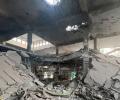
Pakistan claims it was a mosque and an educational complex that were hit in the strikes at Muridke, located at about 40 km from Lahore.

In a significant shift, Kashmiris from villages once considered strongholds of militancy have joined the condemnation of the recent massacre of 26 people in Pahalgam, raising slogans against terrorism and expressing solidarity with the victims. This unprecedented display of public sentiment across the valley marks a possible turning point in the region's fight against violence.
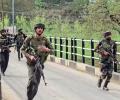
"More than 85,000 domiciles have been issued to non-locals, creating a pathway for demographic change in Jammu & Kashmir. These non-locals arrive posing as tourists, obtain domiciles, and then begin to act as if they own the land. Consequently, violence will be directed toward those attempting to settle illegally," TRF said in a statement which could not be independently verified by Rediff.

Tahawwur Hussain Rana, a key figure in the 2008 Mumbai terror attacks, has been extradited from the US to India and produced before a Delhi court. Rana, a close associate of David Coleman Headley, was brought to India after the US Supreme Court dismissed his review plea against extradition. The National Investigation Agency (NIA) has sought 20 days of custody to interrogate Rana, citing clinching evidence, including emails. The agency believes that Rana's interrogation is critical to understanding the larger conspiracy behind the attacks and his role in planning them.
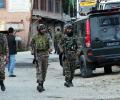
Security forces eliminated two terrorists in the Redwani Payeen area in Kashmir's Kulgam district on Tuesday, May 7, 2024.

The Bombay High Court acquitted all 12 accused in the 2006 Mumbai train blasts case, citing a failure by the prosecution to prove their guilt and raising serious concerns about the investigation and evidence presented.
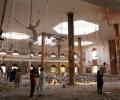
The Bahawalpur centre is notorious for hoarding arms and ammunition left behind by the NATO forces in Afghanistan, the officials said.

Tahawwur Hussain Rana, a Canadian national convicted in the United States for his role in the 2008 Mumbai terror attacks, has been extradited to India. Rana, a close associate of Pakistani-American terrorist David Coleman Headley, was involved in the conspiracy from 2005 onwards and assisted Headley in obtaining a visa for India. He is the third person to be sent on trial in India for the 26/11 attacks after Ajmal Kasab and Zabiuddin Ansari alias Abu Jundal. Rana's extradition comes after US President Donald Trump approved the request.

The central government has appointed advocate Narender Mann as special public prosecutor to conduct trials and other matters related to the National Investigation Agency case RC-04/2009/NIA/DLI against Tahawwur Hussain Rana and David Coleman Headley, who is in a US prison following a plea deal.
For Malegaon's Muslims, Rahul Gandhi's remarks were simply one more indication that the party they once supported no longer cares for them, notes Jyoti Punwani.
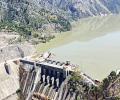
Pakistan has halted the construction of contentious canals in Punjab province after India suspended the Indus Waters Treaty following a deadly terrorist attack in Kashmir. The decision to suspend the canals project was made after Prime Minister Shehbaz Sharif met with PPP chairman Bilawal Bhutto-Zardari and agreed to address the concerns of Sindh province, where the project had sparked protests. The canals project, aimed at irrigating the desert region in Punjab, was seen as a threat to water resources in Sindh. Both sides have agreed to seek consensus on the issue in the Council of Common Interests (CCI), a high-powered inter-provincial body. Meanwhile, Pakistan has reiterated the importance of the Indus Water Treaty for its water security and economy, and condemned India's move to suspend it.
'It could be the Pakistan army's commercial interest, tactical or strategic interest or one of their leaders.' 'Even if you send a message that we have attempted to kill one of the Pakistani generals, that itself will serve the purpose.'
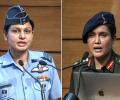
India conducted precision strikes on nine terror targets in Pakistan and Pakistan-Occupied Kashmir, targeting terrorist infrastructure to deter further attacks. The operation, codenamed 'Operation Sindoor', was detailed by two women military officers, Col Sofiya Qureshi and Wing Commander Vyomika Singh, at a press briefing in New Delhi. The officers highlighted the precise nature of the strikes, emphasizing the use of "niche technology weapons" to ensure no collateral damage. The briefing showcased India's military prowess and the growing role of women in the armed forces.
In the India-Pakistan situations, off-ramps have come either through foreign mediation (after months of kinetic warfare over Kargil, and a long stand-off with Op Parakram) or when a situation made it possible for both sides to claim a win, explains Shekhar Gupta.
