
Iranian Foreign Minister Abbas Araghchi is in India for a BRICS foreign ministers' meeting, where discussions will focus on the escalating crisis in West Asia and its impact on global energy supply chains.

External Affairs Minister S Jaishankar conveyed a strong message to his Polish counterpart Radoslaw Sikorski regarding terrorism and the Ukraine conflict, emphasizing the need for zero-tolerance towards terrorism and criticizing the selective targeting of India.

Prime Minister Narendra Modi, Union ministers and leaders of the National Democratic Alliance allies on Tuesday attended the ruling coalition's weekly meeting of parliamentarians, where the absence of three Nationalist Citizens Party of India (NCPI) MPs stood out amid signs of differences within the 20-member group of Trinamool Congress rebels over its association with the alliance.

Europe has overtaken Asia as India's biggest arms supplier, reflecting New Delhi's evolving defence procurement strategy.

Prime Minister Narendra Modi on Thursday discussed with a group of senior ministers the prevailing global security situation and how to maintain supply chain uninterrupted despite conflicts in different zones, including the Strait of Hormuz, the Black Sea, the Red Sea, and the Gulf of Aden.

Japan is deepening its defence relationship with India while simultaneously expanding its economic, infrastructure and security engagement with countries around India -- particularly Bangladesh. The result is an emerging Japanese conception of South Asia in which India remains the strategic anchor, but the geography surrounding India is becoming increasingly important, points out Varun Arya.

Prime Minister Narendra Modi has been conferred with Indonesia's highest honour, the 'Bintang Adipurna of the Republic of Indonesia' medal, by President Prabowo Subianto, recognising his leadership in strengthening bilateral relations and furthering Indonesia's unity, continuity, and prosperity.

It is for the first time that a senior minister has said that Iran requested permission for docking three of its ships in Indian ports.

The Indian government is unlikely to allow a parliamentary debate on the West Asia crisis, citing prior briefings by the External Affairs Minister. This decision comes amid opposition protests and a pending no-confidence motion against the Speaker.

External Affairs Minister S Jaishankar handed over a letter from Prime Minister Narendra Modi to BNP leader Tarique Rahman, conveying condolences after the death of former Prime Minister Khaleda Zia. Jaishankar's visit comes amid existing tensions between India and Bangladesh.
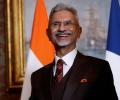
The US Department of State highlighted a mission-defining challenge during External Affairs Minister S Jaishankar's visit in November amid the US government shutdown, detailing the security measures taken to ensure his protection.

'They probably imagine any hue and cry in the event Sheikh Hasina is hanged will be shortlived as it happened when Bhutto was hanged in Pakistan in 1979.'

US Secretary of State Marco Rubio says relations between India and the US have not lost momentum and are set to strengthen, with hopes for a trade deal soon.

The US has warned India that any violation of its naval blockade in the Strait of Hormuz and illicit transport of Iranian oil will not be tolerated, a statement made amidst a diplomatic row over the deaths of Indian seafarers in US attacks on commercial vessels off the coast of Oman.

External Affairs Minister S Jaishankar and US Secretary of State Marco Rubio discussed cooperation in trade, critical minerals, nuclear energy, and defence, reaffirming commitment to a free and open Indo-Pacific.

Canada and the UAE have extended their condolences following a devastating fire in New Delhi that claimed 21 lives, including 12 foreign nationals. India's External Affairs Minister S Jaishankar confirmed that the Ministry is coordinating with concerned embassies to provide necessary assistance to those affected.
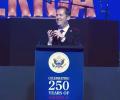
US President Donald Trump reiterated his strong support for India and Prime Minister Narendra Modi, declaring that 'India can count on me 100 per cent' during a celebratory event marking the 250th anniversary of American independence in New Delhi.

External Affairs Minister S Jaishankar on Tuesday said India is concerned about the recent developments in Venezuela, marking the first strong public statement after the latest United States actions in the South American country.

External Affairs Minister S Jaishankar asserts India's right to defend against terrorism from 'bad neighbours' while highlighting India's support for friendly nations.
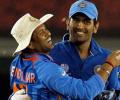
External Affairs Minister S Jaishankar highlighted the unifying role of cricket between India and Jamaica, dedicating a digital scoreboard gifted by India to Sabina Park in Kingston.

The harsh truth is that the US is no longer a reliable partner, cautions Ramesh Menon.
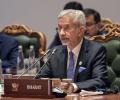
India has expressed serious concerns about the West Asia crisis and its potential impact on energy supplies and maritime stability, urging BRICS nations to find practical solutions to geopolitical challenges and unilateral sanctions.

The Congress on Sunday lashed out at Prime Minister Narendra Modi over the US' statements after three Indian sailors were killed in American attacks on ships, with party leader Rahul Gandhi saying the "compromised PM" listens "like an obedient servant" and "complies with the orders".

The funeral prayer for former Bangladesh Prime Minister Khaleda Zia will be held on Wednesday in Dhaka. Foreign dignitaries are expected to attend.

The economic fallout of the West Asia crisis, the prevailing security situation in the Indo-Pacific and ways to boost cooperation in critical minerals and technology are expected to top the agenda at a crucial meeting of the Quad foreign ministers on Tuesday.

External Affairs Minister S Jaishankar and Jamaican Prime Minister Andrew Holness dedicated a scoreboard gifted by India to Sabina Park, highlighting the strong cricket ties between the two nations.

'Our discussions focused on the India-Nepal development partnership and people-to-people ties.'

US Secretary of State Marco Rubio will visit India for four days to strengthen bilateral relations, holding talks with Indian leaders and attending the Quad foreign ministers' meeting.

The Nepalese foreign minister was speaking to the media a day after holding wide-ranging talks with his Indian counterpart S Jaishankar that focused on ways to further expand ties in diverse sectors, including trade, critical technology, connectivity and energy.

US Secretary of State Marco Rubio arrived in Kolkata for a four-day diplomatic tour to India, marking the first visit by a US secretary of state to the city in 14 years. His itinerary includes meetings with Indian officials, energy talks, and a Quad Foreign Ministers Meeting.

Earlier in the day, the ministry of external affairs "strongly advised" Indians to avoid travel to Iran until further notice, amid rising tensions and protests in the Islamic Republic.
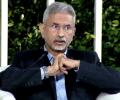
On President Putin's two-day trip to India, Jaishankar said for a "big" and "rising" country like India, it is important to maintain good cooperation with as many important players as possible in the world in line with freedom of choice.

External Affairs Minister S Jaishankar raised India's concerns with US Secretary of State Marco Rubio regarding changes to US visa and immigration policies, emphasising that legal mobility should not be negatively affected. Rubio acknowledged potential 'bumps' during the transition as the US aims to improve its immigration system.

Taking to Truth Social on Monday evening, Trump reposted Gor's original Sunday night dispatch alongside a video snippet from the grand celebrations marking the 250th anniversary of America's independence, hosted at the iconic Bharat Mandapam in the national capital.
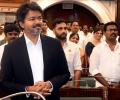
Tamil Nadu Chief Minister C Joseph Vijay has ordered the closure of 717 retail liquor outlets across the state, responding to public demand, particularly from women and political parties.

A readout by the US said the agreement marked a milestone in the strategic partnership between the two nations to ensure that the foundational elements required for advanced technology and energy are available within trusted networks.
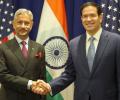
Rubio voiced "appreciation" for New Delhi's continued engagement on bilateral issues, including trade, defence and energy.

Prime Minister Narendra Modi and US President Donald Trump exchanged pleasantries and held a brief conversation at the G7 summit, their first in-person encounter in 16 months, setting the stage for high-stakes bilateral talks amidst continuing strain in India-US relations.

Prime Minister Narendra Modi and US President Donald Trump are set to hold comprehensive talks focusing on a bilateral trade deal, defence cooperation, and energy and critical minerals sectors during the G7 summit in Evian-les-Bains, France.

For India, much is at stake: Crucial energy supplies traversing the Strait of Hormuz, the fate of its 10 million citizens living and working in West Asia -- who send generous remittances home -- and its major trade links with the region.
