
In its weekly bulletin of December 27, released on Monday, the Indian SARS-CoV-2 Genomics Consortium (INSACOG) said global outbreaks of SARS-CoV-2 are increasingly shifting from Delta to Omicron.
The genomic consortium, citing global data, said there is now clear experimental and clinical data supporting very high immune escape potential of Omicron, which appears to be the major component of its growth advantage over Delta.
'Vaccination of all remaining unvaccinated at-risk people and consideration of a booster dose for those 40 years of age and over, first targeting the most high-risk / high-exposure may be considered,' the Indian SARS-CoV-2 Genomics Sequencing Consortium (INSACOG) said in its weekly bulletin dated November 29.
When a person gets an infection even after being vaccinated against it, it is called a breakthrough case.
'Delta continues to be the dominant lineage for new cases across all parts of India in recent samples and remains the most rapidly rising lineage globally that is responsible for multiple outbreaks, including across Southeast Asia, which shows the fastest growth in new cases globally,' the INSACOG said.

The Omicron variant of COVID-19 is in the community transmission stage in India and it has also become dominant in multiple metros, where new cases have been rising exponentially, said Indian SARS-CoV-2 Genomics Consortium.

As of May 2025, the World Health Organization (WHO) classifies LF.7 and NB.1.8 subvariants as Variants Under Monitoring, not as Variants of Concern or Variants of Interest. But these are the variants that are reportedly driving the rise in Covid cases in China and parts of Asia.

Scientists associated with Indian SARS-CoV-2 Consortium on Genomics (INSACOG), the government panel that conducts research on different variants of the coronavirus, said they were surprised at noted virologist Shahid Jameel's decision to quit the group and wondered whether he was disillusioned with the government's handling of the pandemic.
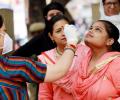
As many as 290 cases of KP.2 and 34 cases of KP.1, both sub-lineages of COVID-19 that are responsible for surge in cases in Singapore, have been found in India, according to official data.
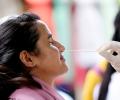
A total of 263 cases of COVID-19 sub-variant JN.1 have been detected in the country so far, with about half of them recorded in Kerala, according to the Indian SARS-CoV-2 Genomics Consortium (INSACOG)'s data updated on Tuesday.
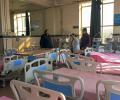
Several states have been reporting an uptick in the number of COVID cases over the last few weeks and nine states and Union territories have so far detected the presence of the JN.1 sub-variant of the virus.

COVID-19 sub-variant JN.1 has spread to 15 states and Union territories with a total of 923 cases of the infection reported so far, according to the Indian SARS-CoV-2 Genomics Consortium (INSACOG).

Of the seven cases, three were found in Gujarat and one each in Karnataka, Telangana, Chhattisgarh and Rajasthan, Indian SARS-CoV-2 Genomics Consortium (INSACOG) said.
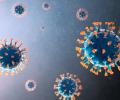
A case of COVID-19 sub-variant JN. 1 has been detected in Kerala as part of an ongoing routine surveillance activity of the Indian SARS-CoV-2 Genomics Consortium (INSACOG), a senior official from the Indian Council of Medical research (ICMR) said on Saturday.
It's expected that INSACOG will be once again releasing a bulletin from next week on updates about the types of variants present in India.
A total of 1,226 cases of COVID-19 sub-variant JN.1 have been reported in the country so far with Karnataka and Andhra Pradesh recording the highest number of cases till now, according to the Indian SARS-CoV-2 Genomics Consortium (INSACOG) on Thursday.

BA.4 and BA.5 are sub-variants of the highly-transmissible Omicron variant of the virus.

Ten states and Union Territories have so far detected the presence of the JN.1 sub-variant of the virus.
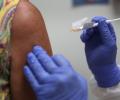
Breakthrough infections of coronavirus cases comprise a very high proportion of the Delta variant, the INSACOG, a genome sequencing government consortium of laboratories, has said.
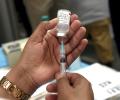
The ICMR-National Institute of Virology has been regularly undertaking studies to understand the protective efficacy of COVID-19 vaccines against emerging variants.

In a letter to states and UTs, Union Health Secretary Rajesh Bhushan said such an exercise will enable timely detection of newer variants, if any, circulating in the country and will facilitate undertaking of requisite public health measures.

INSACOG experts are conducting genomic analysis of a coronavirus case reported as that of the highly transmissible XE variant by Mumbai civic officials, though scientific evidence so far does not indicate it to be so, official sources said on Wednesday.

"The COVID-19 cases are rising, but hospitalization and deaths are still less," said sources.
The minister will review the COVID-19 situation at 11:30 am on Wednesday 'considering the international scenario', they said.

AY.12, a sub-lineage of Delta which is driving fresh cases in Israel, is being seen in many states in the country but the numbers need a closer examination, INSACOG, a genome sequencing consortium, has said in its latest bulletin.

The Union health ministry on Friday urged eight states and Union Territories to take up immediate containment measures including preventing crowds, conducting widespread testing as well as increasing vaccine coverage on a priority basis in districts where the Delta Plus variant of coronavirus has been detected.
A 29-year-old NRI who recently came to Vadodara in Gujarat from South Africa has been found infected with the BA.5 sub-variant of the highly-transmittable Omicron variant of coronavirus, a health official said on Tuesday.

Twenty-two cases of COVID-19 sub-variant JN.1 have been detected in the country till Thursday, with 21 cases being reported from Goa and another from Kerala, official sources said.
In the wake of the surge in respiratory diseases and new JN.1 sub-variant of COVID-19, the World Health Organisation (WHO) said that the virus is evolving and changing and urged the member states to continue with strong surveillance and sequence sharing.
These seven countries are South Africa, Bangladesh, Botswana, China, Mauritius, New Zealand and Zimbabwe.

22 cases of the Delta Plus variant of the coronavirus have been detected in India, with 16 of them being reported from Maharashtra and the remaining from Madhya Pradesh and Kerala, the government said.

The Indian SARS-CoV-2 Genomics Consortium is closely tracking the new variant of COVID-19 called B.1.1.529 and its presence has not been detected in the country yet, officials said on Friday.

As a proactive step, the government has already placed nations, where this VoC has been found, in the category of 'at risk' countries for additional follow-up measures of international travellers coming into lndia from these destinations, he said in a letter dated November 27.

The spike in the country's financial capital has got pronounced since December 20, when just 283 cases were reported. Tuesday had witnessed 1,377 cases in the metropolis, and Wednesday's figure was a jump by over 80 per cent, he pointed out.

During a virtual meeting with health ministers and senior officials of states in view of the recent surge in coronavirus cases in some parts of the world, he said, "The Centre and states need to work in tandem and in a collaborative spirit as was done during the previous surges for Covid prevention and management."
The Delta Plus variant have been detected sporadically in Maharashtra, Kerala and MP.
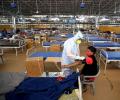
All these persons have been kept in single room isolation in designated health care facilities by respective state governments.
All these people have been kept in single room isolation in designated healthcare facilities by respective state governments and their close contacts have also been put under quarantine, the ministry said.

Most Indians have acquired hybrid immunity which means immunity developed through vaccines and also natural infection protecting them from different COVID-19 variants.
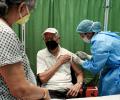
He also said that it was wrong to suggest that India stopped foreign made vaccines like that made by Moderna and Pfizer from coming to India.
