
Uncertainties like the bankruptcies bill, rising non-performing accounts at banks and political uncertainty are expected to drive gold demand higher in India.

Over the years, NHAI's expenses have spiraled due to sharp increase in land acquisition costs, while budgetary support has shrunk, leading it to fall back on internal resources and market borrowings

'Younger investors start their journey with very little capital so they are risking less while they have a lot of time to experiment and learn early on.'

The highest collection target has been given to Mumbai at Rs 4.39 trillion, followed by Delhi and Bengaluru.

India has agreed to allow import of pork and pork products from the US as a part of a bilateral trade deal which will facilitate export of Indian mangoes and pomegranate to the US. The development comes months after the two governments renewed the India US Trade Policy Forum (TPF), after which both nations agreed to iron out thorny issues that included market access issues pertaining to the agriculture sector.
At a time when banks are engaged in a fierce battle to gain market share in the credit card segment, Citibank India has been losing its share, both in terms of outstanding cards and spends in the last few years. Still, average spends on Citi cards are higher than any other Indian bank. Last year, the global banking behemoth announced exit from its consumer banking franchises in 13 markets across Europe, Middle East and Asia, including India, citing lack of scale.

Economy to grow by 7.2-7.5 per cent in second half of current fiscal, says FM.

Mihir Tanna, Associate Director, S K Patodia & Associates, will answer your personal income tax queries.

Mihir Tanna, Associate Director, S K Patodia & Associates, answers your personal income tax queries.

Banks are set to sell dud-loans worth Rs 90,000 crore of 22 firms in the first tranche to the National Asset Reconstruction Company (NARCL). It's reason for cheer given that such sales to asset reconstruction companies (ARCs) have been poor in recent times. In fiscal 2020, their assets under management (AUM) contracted by 4 per cent; and in fiscal 2021, it fell by another 100 basis points to Rs 1.07 trillion. So, why are we where we are?

The improved outlook on the Government of India announced by rating agency Moody's might need to be viewed with some scepticism. There is no doubt the performance of the Indian economy has sharply improved from the deep trough it hit last year. But the ability of the second largest global ratings agency to assess an upside and downside before events make everyone wise about India has been dismal for a long time, as the chart shows.

The lack of a strong diversity policy on the part of companies, a limited pool of women candidates as well as socio-cultural factors contribute to their low numbers.

Tata Sons, India's biggest promoter in the private sector, is expected to earn a record Rs 27,797 crore via equity dividend and proceeds through share buyback from its listed group companies for the financial year 2021-22. This amount is up 17.6 per cent from Rs 23,663 crore that it pocketed in FY21. Nearly two-thirds of these proceeds will show up in Tata Sons' financial results for FY22, thanks to the quarterly interim dividend by its cash cow Tata Consultancy Services (TCS).

Despite sanctioning the loans, bankers are worried whether to disburse the loan because of absence of an investment grade rating.

The biggest spender was Tata Motors, with Rs 4,224.6 crore assigned under the R&D head.

With the stock coming under pressure, the MF holding value could have dropped to Rs 50 billion, back-of-the-envelope calculations show.
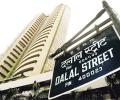
While growth metrics for Infosys was skewed to a single vertical and it is struggling to get a handle on costs, TCS has been able to manage growth and keep cost inflation under control.
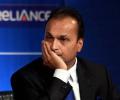
He said unwarranted rumour-mongering, speculation, and bear hammering of all Reliance Group companies shares over the last few weeks had caused grave damage to all our stakeholders.

Fund managers's compensation is largely tied to the assets they manage and scheme performance.

LVB had faced some serious flak in terms of bad loans, earnings and credit rating downgrades, since 2016.

The liquidity crisis at Dewan Housing Finance Corporation Limited (DHFL) has dented the fortunes of ace investor Rakesh Jhunjhunwala, who increased his stake in the troubled company in the March 2019 quarter (Q4FY19).

No expecting mother ever needs to travel for more than 30 minutes to reach one of their hospitals, believes the Cloudnine group.

The unexpected interest rate hike by the RBI on Wednesday will have the banking system on average making a 10-15 bps gains on the yields, with private banks making larger gains as 57 per cent of their loans are linked to external benchmark rate and 40 per cent to the marginal cost of lending rates, as per a report. Stating that lenders and borrowers will face volatile times with the Reserve Bank raising the repo rate by 40 bps to 4.40 per cent and the cash reserve ratio (CRR) by 50 bps on May 4 in an off-cycle policy move, India Ratings said the market rates had already been moving higher before the move. The 364-day T-bills have moved up 120 bps and 10-year G-sec by 140 bps since May 2020, when the repo rate was cut to a record 4 per cent, which led to an expectation of a faster and sharper rise in interest rates in the system but the central bank stayed the course to support the fragile economy battered by the pandemic.

For non-banks, the IL&FS crisis was nothing short of India's Lehman moment, which has for a foreseeable future reset the sector on multiple grounds.
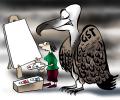
Experts said if the slowdown, and subsequent weakness in GST mobilisation, continued, it would curtail the Centre's resources to a considerable extent in the current financial year.

The economy segment of India's car market is unlikely to revive soon term as inflation and prices prompt buyers to defer purchases. The share of entry-level cars in the passenger vehicle market dropped to the lowest in seven years at the end of the Financial Year 2021-22 (FY22). A recovery in the segment will be largely driven by the overall economic growth, improvement in income levels, and easing of semiconductor shortage, say carmakers and analysts.
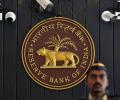
The Reserve Bank of India (RBI) is precariously balancing two opposing objectives - maintaining easy financial condition in the domestic market, while ensuring external stability - and economists have started taking note. They say India is going through the classic trilemma of the 'Impossible Trinity'. The RBI cannot have an independent monetary policy (setting domestic interest rates) in an environment of an open capital account and flexible exchange rates. What is even more complicated for the central bank now is that financial market stability overlays all the other three objectives.

CBDT feels 30% growth in income-tax not feasible.
About 300 employees would come under the ambit of voluntary decision.

Accenture -- considered as one of the top-most employers in India among the global technology services companies -- is believed to have over 150,000 workers in India, next to IBM.

Market sources said other brokerages are also looking to streamline their business models as market volatility, along with increasing competition, has taken a toll on earning yields.

The auto ancillary industry - one of the worst hit due to the labour exodus - will need at least three months to get its factories up and running.

The combined market capitalisation of the top 873 family-owned companies was down 26.3 per cent year-on-year (YoY) to Rs 61.8 trillion at the end of trading on Tuesday. It had grown 6 per cent in FY19 and nearly 20 per cent in FY18.

Infosys will focus on stabilisation in FY19 followed by building momentum the following year, and acceleration thereafter.

Currency played an important role in Q2, with US dollar, Japanese yen and euro appreciating vis-a-vis the Indian rupee, while the Brazilian real, South African rand and Russian ruble depreciating against rupee.

'His working style differs from his father as he is a quick decision-maker.'

The fuel delivery scheme mainly targets consumers that buy in bulk.

Exports of 13 APIs - including paracetamol, tinidazole, metronidazole, vitamin B1, vitamin B6, vitamin B12, acyclovir, progesterone - along with formulations made from these APIs, would be restricted.
YES Bank said that it has not paid any bonus to Kapoor for FY17 and FY18. He drew a salary of Rs 6.48 crore for the ten months he served as MD & CEO, before his tenure ended in January.

Multiple reasons accounted for the losses, including manpower crunch and lack of clarity on the merger of National, United and Oriental, reports Namrata Acharya.
