
A new study reveals that adults who experienced early childhood adversities may have increased mitochondrial respiratory capacity, a 'hypermetabolism' that, while initially a response to cellular stress, can be detrimental to long-term health. The research highlights how early life experiences translate into biological changes affecting physical and mental well-being.
A new study reveals that adults who experienced early childhood adversities may have increased mitochondrial respiratory capacity, a 'hypermetabolism' that, while initially a response to cellular stress, can be detrimental to long-term health. The research highlights how early life experiences translate into biological changes affecting physical and mental well-being.
Hyderabad-based SETL, a precision engineering company, has acquired a 51% majority stake in GScale Energy Private Limited, an AI Datacenter Engineering infrastructure specialist. This strategic move involves an initial investment of Rs 190 crore, with a total commitment of Rs 500 crore, marking SETL's expansion into the rapidly growing AI Datacenter sector and leveraging its expertise from pharmaceutical and chemical industries.

India's procurement of Venezuelan crude oil has picked up momentum since April and the South American nation has already emerged as the third largest oil supplier to the country.

Reliance Industries has delivered the first batch of solar modules from its green energy complex in Jamnagar, Gujarat, marking the operational rollout of its New Energy business. The company is developing an integrated clean energy manufacturing ecosystem, including solar modules, batteries, green hydrogen, and bio-energy infrastructure.

The closure of the Strait of Hormuz has disrupted some 20 per cent of the global flows but even if it opens, damages to production facilities in the region will take time to repair, points out Sunita Narain.

External Affairs Minister S Jaishankar and his Iranian counterpart Abbas Araghchi held talks focusing on the West Asia crisis and its impact on energy supplies and maritime stability.
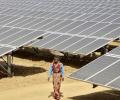
Researchers at the Central University of Jharkhand have developed an eco-friendly solar cell using dye extracted from the Mirabilis jalapa flower, demonstrating the potential of natural, non-toxic materials for solar energy applications.

Gautam Adani emphasised the importance of energy security and digital infrastructure in shaping geopolitical power, urging India to develop sovereign capabilities across the AI value chain.

JSW Motors, part of the JSW group, is set to enter India's passenger vehicle market with plans to launch 15 new-energy vehicles (NEVs) over the next four years, with deliveries commencing from December 2026.

US Secretary of State Marco Rubio has said that the US is ready to sell as much energy as India is willing to buy. He described India as a 'great partner' ahead of his visit to New Delhi.

Jobs in the clean-energy sector are projected to reach 905,000, while energy efficiency-related jobs are expected to surge to 428,700 by 2029-2030.

Prime Minister Narendra Modi has begun a six-day tour of the UAE, the Netherlands, Sweden, Norway and Italy to strengthen bilateral relations amid geopolitical challenges. The trip will focus on energy security, trade, and technological cooperation.
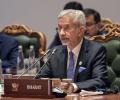
India has expressed serious concerns about the West Asia crisis and its potential impact on energy supplies and maritime stability, urging BRICS nations to find practical solutions to geopolitical challenges and unilateral sanctions.
The United Arab Emirates has announced its decision to withdraw from OPEC and the wider OPEC+ alliance, effective May 1, 2026, signalling a significant policy-driven evolution in its long-term energy strategy aimed at aligning with domestic economic goals and increased production investment.
The United Arab Emirates has announced its decision to withdraw from OPEC and the wider OPEC+ alliance, effective May 1, 2026, signalling a significant policy-driven evolution in its long-term energy strategy aimed at aligning with domestic economic goals and increased production investment.
NTPC Green Energy Limited (NGEL) and Nxtra Data have signed an agreement to explore renewable energy project opportunities for Nxtra's data centres across India.
Researchers at MIT World Peace University in Pune have developed an innovative thermal energy storage system using a phase change material (PCM)-based battery. This technology addresses the intermittent nature of solar energy by storing excess heat for use after sunset, potentially reducing reliance on conventional fuels for water heating and enhancing energy security.

S&P Global Ratings projects India's economic growth to slow to 6.6 per cent in FY27, down from 7.7 per cent in FY26, citing energy stress and a potential sub-par monsoon.
A top government official says that while India has made significant progress in renewable energy, technical issues are hindering large-scale implementation. The government is working on solutions such as grid flexibilisation and battery storage.

Adani Group Chairman Gautam Adani announced a capital expenditure programme of over 2 trillion for Adani Power, aiming for 45 gigawatts (Gw) capacity in five years, including a significant entry into nuclear power with a target of 10 Gw by 2035 through Adani Atomic Energy.

The planned India-Japan annual summit, featuring Japanese PM Sanae Takaichi and Indian PM Narendra Modi, has been moved from Guwahati to New Delhi due to logistical issues and Takaichi's tight schedule. The summit, scheduled for July 1-3, aims to boost bilateral ties with discussions on investment, supply chain deals, energy resilience, and strategic oil reserves, accompanied by a delegation of 50 Japanese companies.
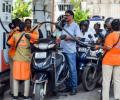
Global oil prices fell on Thursday to their lowest levels since before the outbreak of the Iran conflict, offering a significant economic tailwind for India, the world's third-largest crude importer, by easing inflation risks, reducing the import bill and improving the government's fiscal position.

Tata Motors Passenger Vehicles is gearing up for the next phase of electric vehicle adoption in India, targeting over 30% EV penetration by FY31. The company plans to launch four new products and over ten refreshes by FY31, expanding its portfolio to ten EV nameplates. This strategy aims to move beyond early adopters to engage the early and late majority consumers, focusing on enhanced range, faster charging, and improved battery technology.

The Indian government has dismissed concerns that the use of E20 fuel could affect the validity of vehicle insurance policies, stating that the ethanol blending programme remains safe, consumer-friendly, and economically beneficial.

'As re-industrialisation gathers pace across regions like Asia, Europe and the US, a wide range of products and inputs will see demand.'

Karan Johar discusses the success of 'alpha-driven' films like Animal and Dhurandhar, noting a shift in audience preference for 'front footed machismo' and 'alpha energy'. He also touches upon the appeal of emotional identification, particularly among male viewers, and expresses conflict over the cultural signals these films send.

Billionaire Mukesh Ambani announced that the transfer of day-to-day management responsibilities at Reliance Industries to his children, Akash, Isha, and Anant, is "almost complete," marking the final stages of a significant succession process for India's most valuable company.

If Diya from Cocktail 2 walked into a bar, she'd probably skip the cocktails and order a cute mocktail instead. That's exactly the vibe Rashmika Mandanna brings to the table with her sunshine, mischief and girl-next-door charm.

India's crude oil imports from Russia reached a record high of approximately 2.73 million barrels per day (mbpd) in June, driven by discounts of $2-5 a barrel. This surge comes as the West Asia crisis disrupted supplies from traditional sources and China reduced its own purchases, leading Russia to offer more favourable terms to India.
The Japanese PM's visit to Assam comes amid festering uneasiness in Tokyo about Beijing's assertiveness in the Indo-Pacific region.

'The biggest thing I've learnt is that this journey is not linear.' 'There will be films that work, films that don't, moments where you feel confident and moments where you question yourself.'

Beijing clearly intends to extend the China-Myanmar Economic Corridor to Bangladesh as part of its larger Maritime Belt and Road Initiative to boost its Indian Ocean presence.

India's electric vehicle market is experiencing an unprecedented boom with a 37 per cent increase in new entrants, driven by supportive policies and infrastructure.
A tripartite pact -- amid the promise of removing AFSPA from almost all of the North East -- revives hydrocarbon exploration along the Assam-Nagaland border after decades of dormancy.

Analysts predict that developments in US-Iran negotiations, fluctuations in crude oil prices, and key global economic data will be the primary drivers of gold and silver prices in the coming week, with a strong focus on talks in Switzerland.

An explosion at the Barzan local gas supply facility in Ras Laffan Industrial City, Qatar, resulted in the deaths of 13 people, including Indian and Pakistani nationals, and injured 66 others. The incident, attributed to a technical malfunction during start-up operations, prompted immediate response from Qatari authorities and an offer of assistance from the Indian Embassy.

From viral reels to millions of followers, Shreya Kalra has built a reputation for serving looks as effortlessly as she serves content.

Sports Minister Mansukh Mandaviya led the FIT India Cyclothon in Mumbai, advocating for cycling as a sustainable mode of transportation. The event, attended by Narsingh Yadav and Jackie Shroff, highlighted the importance of cycling for personal health, environmental sustainability, and energy conservation, especially amidst global fuel supply concerns.

'All of that combined makes a Hindustani film.'
