
Parliament on Tuesday passed a landmark education bill that gives children, including the disabled, the fundamental right to free and compulsory education.

In a major boost to education sector, the Union Cabinet has cleared the long-pending Right to Education Bill, which promises free and compulsory education for children between 6 and 14.
The National Commission for Women (NCW) has submitted a comprehensive set of recommendations to various central ministries, outlining a survivor-centric framework to enhance care, justice, and rehabilitation for acid-attack victims.
A bill was passed in the Rajya Sabha Tuesday to widen the beneficiary net for disabled children in Right to Education and provide those with severe disability the option of receiving education at home.
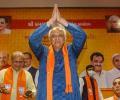
The Gujarat assembly on Tuesday unanimously passed a bill which makes teaching Gujarati language compulsory in all primary schools in the state, including those affiliated with CBSE, ICSE and IB boards.
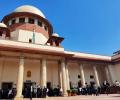
The National Judicial Commission Bill, 2022, was introduced after the majority of voice votes were in its favour.

India's bid to host the 2036 Olympics is not merely an attempt to make a statement internationally but also a well thought out plan to create world-class infrastructure, said Minister of State for Sports Raksha Khadse.
In emerging nations such as China and India, where a college education was a rarity just a generation ago, tens of thousands of students graduate each year from universities that are on par with the best in the world, says the Microsoft chairman.

The Monsoon Session of the Lok Sabha was adjourned sine die on Friday after 19 sittings that saw the passage of 14 legislation while Rajya Sabha came to an end after passing nine bills.
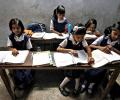
It will allow states to detain students in class 5 and class 8 if they fail in the year-end exam.
Suggestions have been invited from the public to improve the draft bill and July 19 is the last date for it.
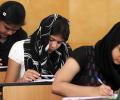
The All India Anna Dravida Munnetra Kazhagam on Monday opposed in Rajya Sabha the government move to put in place a single examination for medical and dental courses through National Eligibility cum Entrance Test

The session, which will continue till August 11, is likely to discuss issues like lynching incidents and vigilantism, the Kashmir situation and the border stand-off with China.

The contentious Land bill passed the Lok Sabha test after the government carried out nine amendments.

Cricket legend Sachin Tendulkar wanted to raise the issue of financial security for national level athletes in his maiden Rajya Sabha speech, which could not take place due to protests in the Upper House.

The changes in the labour law also provide for stricter punishment for employers for violation.

Amid protests and anger in some quarters against observing 'Hindi Diwas', Karnataka Chief Minister Basavaraj Bommai said on Wednesday his government is bringing in a legislation to make Kannada "mandatory" in the state.
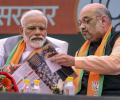
Rediff.com does a quick checklist on what the two manifestos have to say on hot-button issues of the day.

India could start some element of military training for its youth, especially in border areas, but compulsory training on the lines of Russia and other countries is ruled out.
Meet 64-year-old Dr Sekhar Raghavan, an extraordinary social entrepreneur who has made 'saving water' the mission of his life.
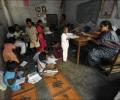
Given India's political scenario, where parties seek votes on the basis of caste and religion, the issue of using mother tongue in schools is more of a political vendetta, says Devanik Saha
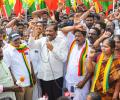
The ruling DMK in Tamil Nadu had begun seeing Governor Ravi's decisions and actions as a part of the state BJP's non-stop criticism of its government and directed from Delhi, a view strengthened by the governor's decision to return the NEET exemption bill, points out N Sathiya Moorthy.
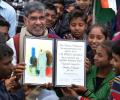
After receiving the Nobel Peace Prize on Wednesday and captivating the minds of people around the world for his simplicity and modesty, Kailash Satyarthi, the engineer-turned-child rights activist, returned home to India from Oslo on Saturday night.

True, Azam Khan is being targeted rather disproportionately and also because of his Muslim identity. That must be protested and resisted. But to say that he is a big messiah, and his profit-making educational enterprise is an issue concerning all Muslims of India, is absolutely unjustified, assert Mohammad Sajjad and Md Mohammad Zeeshan Ahmad.

The proposed changes to the child labour law to allow children and adolescents to work for their families would be most retrograde and regressive, say Shinzani Jain and Paranjoy Guha Thakurta.
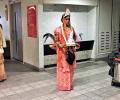
Lack of sanitation is leading to avoidable deaths of infants, and underweight and stunted children.

The Congress chief said if his party is elected to power, its government would spend 6 per cent of the GDP on education.

The apex court's five-judge Constitution bench headed by Chief Justice Dipak Misra said Aadhaar is meant to help benefits reach the marginalised sections of the society and takes into account the dignity of people not only from personal but also from community point of view.

Not only is your privacy stripped stark naked, says Mitali Saran, the system itself is illegal and vulnerable.
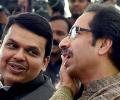
Ahead of BrihanMumbai Municipal Corporation polls, BJP is reminding Shiv Sena it is not the sole claimant of intellectual property rights for Marathi Manoos and Hindutva.

A K Bhattacharya digs into the yet-to-be-public report on ways to curb black money and finds out that Modi's next moves could include action on dabba trading, hawala, and education.

Most incidents of triple talaq are eloquent examples of the failure of Muslim society to instil in its men the teachings of the Quran; instead, they end up relying on the Quran's interpretation by local maulanas, says Ziya US Salam.

In a nation divided by many things, the 12-digit unique identity number is holding lives to ransom.

Many boards insist on "proven", "experienced" directors when it comes to appointing women.

While his father has often been quoted on tips for investing, Buffett junior's focus is on spreading the word about both self-improvement and ways in which to make a positive difference in the world - with a special focus on solving hunger.

'India is no longer the India of the '70s and the '80s.' 'It's a large country with the fastest growing economy.' 'In working with India, you just can't go and humiliate the nation publicly.' USIBC President Mukesh Aghi tells Aziz Haniffa/Rediff.com about how he advises American companies to do business with India, what he thinks of Modi's government and the way forward for the India-US relationship.
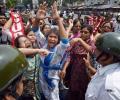
Ten trade unions with a combined membership of 15 crore workers in public and private sector, including banks and insurance companies, are on a nationwide strike to protest against changes in the labour laws.
