
Delhi Police have taken stringent measures to prevent the Cockroach Janta Party's 'Lehra Do Tiranga' march in Connaught Place, deploying thousands of personnel and citing prohibitory orders under Section 163 of the BNSS due to risks of traffic disruption, stampede, and threats to public safety.

Dedicated Ayush dispensaries increased from 26,130 in 2013-2014 to 37,804 in 2024-2025, while hospitals rose much more slowly, from 3,605 to 3,885.

CDSCO has warned consumers against using two unauthorised Pakistani whitening creams after finding excessive heavy metals and regulatory violations.

Prime Minister Narendra Modi and US President Donald Trump held a telephone conversation to review progress in bilateral ties, covering trade, defence, and energy, against the backdrop of heightened trade friction due to the 'Lindsey O. Graham Sanctioning Russia and Iran Act of 2026'.

The GST Council, chaired by Finance Minister Nirmala Sitharaman, has begun deliberations on significant reforms, including decriminalising nine offences, softening provisions for 24, and raising the threshold for criminal prosecution to Rs 5 crore. The proposed changes also include scrapping the arrest powers of GST officers and introducing an 'invoice matching system' to combat fake input tax credit claims, aiming for a trust-based taxation approach and enhanced ease of doing business.

A report by IIT Bombay suggests that the proposed Merchant Discount Rate (MDR) framework for Unified Payments Interface (UPI) transactions needs rationalisation before implementation to safeguard public trust in the digital payments system, highlighting that UPI's long-term economic benefits outweigh potential incremental income from merchant fees.

India on Tuesday reiterated the call for free and safe navigation in international waters and the unhindered flow of commerce through international waterways in the region after the Panama-flagged commercial vessel MT El Gaia came under attack off the coast of Oman, with 13 of the 14 Indian nationals on board rescued while search operations are underway for one missing seafarer.

Marco Rubio will visit Mumbai and Jamnagar to discuss energy cooperation as S Jaishankar says India-US trade talks are nearing a landing point, with a few issues unresolved.

The Trinamool Congress has lost the chairpersonship of two significant Parliamentary panels following a reconstitution by Rajya Sabha Chairman C P Radhakrishnan and Lok Sabha Speaker Om Birla. This development comes after a split in the TMC, with rebel MPs joining the Nationalist Citizen Party and supporting the NDA. The TMC has strongly criticised the move, alleging that Parliament is being turned into a 'deep, dark chamber' due to their exclusion from committee leadership.

Dark patterns are no longer just a consumer protection concern, but a broader macroeconomic challenge affecting the long-term sustainability of India's digital commerce ecosystem.

A report by IIT-Bombay professors recommends reducing the Merchant Discount Rate (MDR) on UPI transactions from 0.40 per cent to 0.08 per cent. It suggests that banks should fund the UPI ecosystem using their net interest margins from CASA deposits, rather than relying on MDR. The report also addresses transaction costs, credit card MDR, and ATM withdrawal allowances, aiming to ensure UPI's long-term sustainability and public trust by proposing remuneration only from large merchants.

The RSS-affiliated Bharatiya Kisan Sangh (BKS) is set to host its inaugural women's conclave in New Delhi, aiming to advocate for increased representation of women farmers in agricultural policymaking. The event will bring together 7,000 women farmers to discuss their significant contributions to farming, livestock, and fisheries, and to push for policy changes, including a shift from MSP to MRP for produce.

Finance Minister Nirmala Sitharaman stated that negotiations for the India-US trade agreement have reached a 'plateau', indicating limited scope for further concessions from either side, while also highlighting the US's aim to reduce its trade deficit with India.

Festival shoppers are increasingly turning to EMIs and other affordability options for high-value purchases, especially beyond metro cities.
Commerce Secretary Rajesh Agarwal highlighted the critical need for India to diversify its services exports beyond the dominant IT/ITeS and professional services sectors. Speaking at the Global Fintech Fest 2026, he emphasised the vast potential in the global financial services market, where India currently holds a small share, and stressed how fintech solutions, like UPI, can drive growth, reduce remittance costs, and support MSME trade finance, ultimately leading to sustainable economic expansion.

Telangana Chief Minister A Revanth Reddy has ignited a political and religious debate by claiming the BJP "stole Lord Ram" and contrasting northern and southern religious sentiments, drawing sharp criticism from a Union Minister.

Sports Minister Mansukh Mandaviya has announced the formation of a 10-member Task Force, chaired by Yugal Kishore Joshi, to explore the revival of Formula 1 in India. The committee will assess challenges, identify policy interventions, and develop a roadmap to potentially host a race by 2028, addressing issues that led to its discontinuation after 2013.

The chargesheet filed in the murder of DU student Muskan Sharma reveals that the accused, Imran Khan, allegedly pre-planned the attack, purchasing a knife two days prior. An accomplice, Digvijay Singh, is accused of helping Khan locate Sharma's house, waiting during the murder, and later harbouring him. Khan had allegedly threatened and stalked Sharma before the incident, and both accused are now in judicial custody.

Apple Pay has officially launched in India, integrating with CCAvenue and partnering with Axis Bank to bring secure and convenient mobile payment solutions to millions of iPhone, iPad, and Apple Watch users across a vast network of merchants.
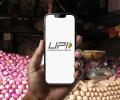
Trade and business associations across India are organising a 'No UPI Day' on October 2 to protest the upcoming 0.4 per cent merchant discount rate (MDR) on Unified Payments Interface (UPI) transactions exceeding 2,000, effective from October 15.

Before protesting against the State, the citizen should not have to ask: Sir, may I protest, please?, asserts Prem Panicker.

Compare premiums, claim settlement ratios, exclusions, waiting periods and surrender provisions.

Your credit card may have security controls you rarely use. Here are seven settings that can help prevent unwanted or fraudulent transactions.

Apple has officially launched its Apple Pay service in India, initially partnering with Axis Bank for Visa and Mastercard credit card users. The service allows secure, cashless transactions via iPhone, iPad, and Apple Watch using NFC technology, without requiring PINs or OTPs. This move is set to intensify competition in India's digital payments market, currently dominated by UPI and local players, with Apple planning to onboard more banks and expand merchant networks.

The FBI has placed gangster Satinderjeet Singh, known as Goldy Brar, on its Ten Most Wanted Fugitives list, offering a USD 1 million reward for his alleged involvement in the Lawrence Bishnoi Organized Crime Group's violent activities across North America.
India's Sports Minister Mansukh Mandaviya has announced the formation of a 10-member Task Force, chaired by Niti Aayog's Yugal Kishore Joshi, to assess the feasibility and challenges of reviving Formula 1 in the country. The committee aims to develop a roadmap for India to host a Grand Prix by 2028, focusing on sustainable growth, policy interventions, and addressing past issues like taxation. The Adani group, owners of the Buddh International Circuit, will also be involved.

Actress Bipasha Basu has raised concerns over food safety and the quality of packaged food after claiming that she found several tiny worms inside a newly opened food container, prompting her to seek intervention from Maharashtra FDA Commissioner Tukaram Mundhe.

The United Arab Emirates (UAE) has expressed intent to invest an additional $25 billion in India, with an ultimate goal of reaching $100 billion in investments, Union Minister Piyush Goyal announced. This comes as both nations plan to enhance cooperation in shipping, ports, energy, and emerging technologies, against a backdrop of expanding bilateral trade.
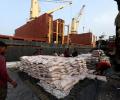
India's exports saw a significant increase of 26.12 per cent to USD 43.81 billion in August, leading to a narrowed trade deficit of USD 26.86 billion, driven by strong demand from key global markets and diverse sectors.

Seven of them posted losses, led by Air India, with their combined net loss widening to Rs 31,823 crore in FY26 from Rs 17,553 crore a year earlier and Rs 1,555 crore in FY20.
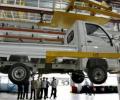
Rural commercial vehicle (CV) registrations have consistently outpaced urban sales from April to July 2026, driven by a significant diversification of the rural economy and the positive impact of GST-led consumption, according to experts and data from Fada.
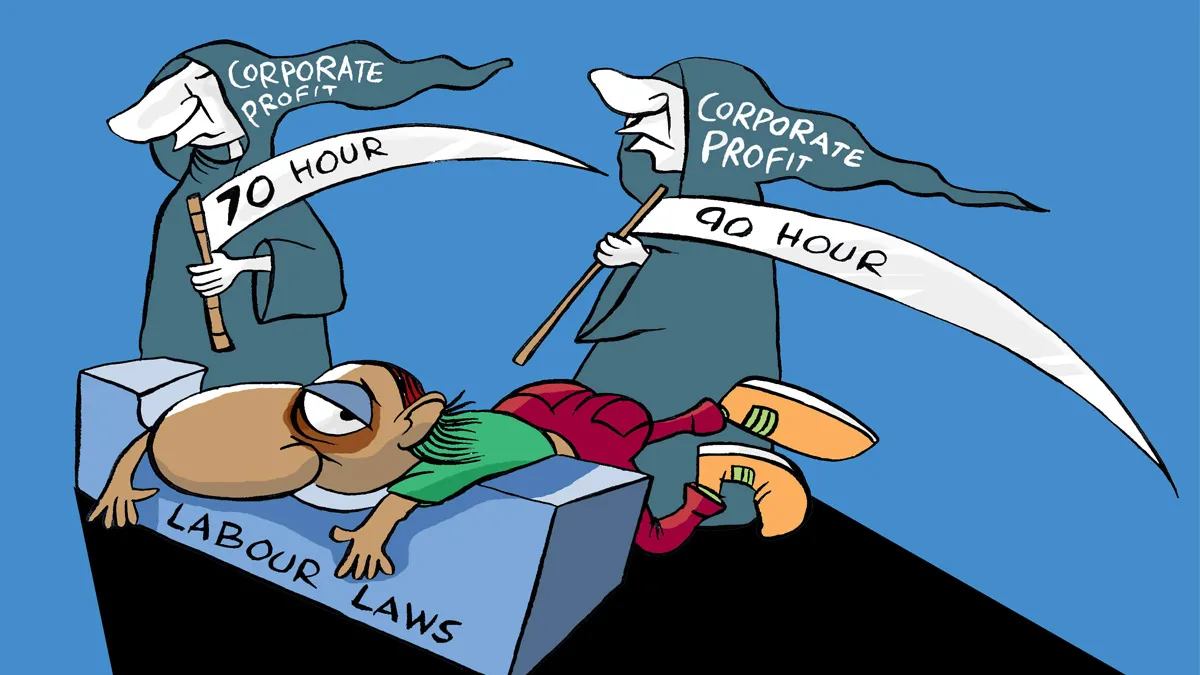
The Indian government is pressing all states and Union Territories (UTs) to publish their rules under the four new labour Codes by October 31, aiming to fully operationalise the new labour law framework. This move is crucial as labour falls under the concurrent list, requiring state-level rule-making for effective implementation.

External Affairs Minister S Jaishankar, addressing the UN General Assembly, condemned the targeting of commercial shipping and seafarers in the Gulf, calling it "simply unacceptable." He also voiced deep concern over the "weaponisation of everything," which he stated has severe consequences for Global South nations, impacting peace, progress, and development globally. India urged restraint, de-escalation, and protection of civilians, while also highlighting the 4F crisis (food, fuel, fertiliser, finance) faced by developing countries.
Airtel Africa's mobile payments arm, Airtel Money, has filed for an initial public offering (IPO) on the London Stock Exchange, with the International Finance Corporation (IFC) agreeing to purchase shares worth up to $90 million at the final offer price.

The Retailers Association of India (RAI) has voiced concerns that the government's new 0.4 per cent Merchant Discount Rate (MDR) on UPI transactions above Rs 2,000 could reverse the progress of digital payment adoption among small retailers. This fee, effective October 15, places the burden on merchants operating on thin margins, potentially pushing them back to cash transactions and undermining the government's formalisation agenda, especially ahead of the festive season.

Fintech company Pine Labs has acquired Shopflo, an online checkout optimisation platform, for Rs 88 crore in an all-cash deal aimed at providing a unified commerce platform for merchants.

The Maharashtra Food and Drug Administration (FDA) has suspended the licences of several food establishments in Mumbai, including the Nair Hospital canteen and Olympia Coffee House, due to serious violations of food safety and hygiene standards. Inspections revealed issues like unsanitary conditions, improper food handling, pest infestations, and lack of trained staff. The FDA also cancelled licences of other businesses and seized unhygienic milk products as part of a festive season campaign.

Prime Minister Narendra Modi employed Gen Z-friendly phrases like "OG" and referenced the film 'Dhurandhar' during his address at Delhi University's Shri Ram College of Commerce. This move, 13 years after a previous impactful speech at the same venue, is part of a broader strategy by the BJP to connect with younger audiences, contrasting India's past challenges with its current global standing.

India has initiated anti-dumping investigations into imports of Glycine from China, following a complaint by Avid Organics, alleging material injury to domestic manufacturers. Concurrently, a separate anti-circumvention probe has begun concerning CPVC resin from China and South Korea, suspected of being routed through Malaysia, Japan, and Thailand to avoid existing duties.

Trai has brought app-based spam calls under tighter regulations through new A2P call rules.
