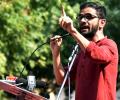
The Supreme Court granted interim bail to two Delhi riots accused, while addressing concerns about conflicting views on bail under the Unlawful Activities Prevention Act (UAPA). The court referred the question of law on whether prolonged incarceration can override UAPA restrictions to a larger bench.

The Supreme Court has directed Delhi Police to expedite its investigation into the assault of a woman advocate, allegedly by her husband, while ensuring the safety of the victim and her children.

The Supreme Court has allowed former West Bengal chief minister Mamata Banerjee and others to file fresh applications regarding their claim that victory margins in 31 constituencies in the recent assembly polls were less than the deletion of votes during the Special Intensive Revision (SIR) of electoral rolls.

The Supreme Court has criticised the Ghaziabad police's investigation into the rape and murder of a four-year-old girl, summoning senior officials and demanding a court-monitored probe.

Justice Surya Kant is set to become the 53rd Chief Justice of India, bringing extensive experience and a record of significant verdicts on key issues.

The Supreme Court is reviewing a plea challenging the 2025 SHANTI Act, which caps liability at Rs 3,000 crore for nuclear plant incidents, raising concerns about victim compensation and operator accountability.

A nine-judge Supreme Court bench has reserved its order on petitions related to discrimination against women at religious places, including the Sabarimala temple, and the scope of religious freedom.

CJI Gavai said that as head of the Judicial Infrastructure Committee he had prepared a model of setting up new taluka and district-level courts
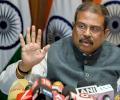
The CJP's rapid rise on social media reflects growing digital dissent and youth frustration with issues like unemployment and exam-paper leaks.
The Supreme Court granted bail to the wife of the alleged 'kingpin' of a Rs 3,700-crore scam and directed that no court shall de-freeze the assets attached by the probe agencies in the case till the trial in the FIRs against the accused are concluded.

Former Chief Justice of India D Y Chandrachud addresses the controversy surrounding his continued stay at his official residence after retirement, citing his daughters' medical needs and ongoing efforts to move to suitable accommodation.

In an unprecedented move, the Supreme Court administration has written to the Centre for vacating the official residence of the Chief Justice of India at Krishna Menon Marg in New Delhi, noting that the current occupant ex-CJI D Y Chandrachud has stayed beyond the permissible period.
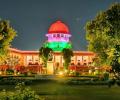
The Centre has asked the Supreme Court to reconsider its judgements decriminalising adultery and same-sex relationships, arguing they were based on a subjective application of 'constitutional morality'.
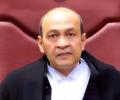
Justice Yashwant Varma of the Allahabad High Court has resigned amid impeachment proceedings sparked by the discovery of burnt currency at his residence, raising questions about judicial conduct and accountability.

The Supreme Court has permitted the NIA to file its charge sheet upon completion of the investigation into the incident in West Bengal where judicial officers were illegally confined by a mob.

The Supreme Court of India has voiced concerns about the potential consequences of individuals questioning religious practices in constitutional courts, warning it could lead to the fragmentation of religions and civilisation. A nine-judge Constitution bench is hearing petitions related to discrimination against women at religious places and the scope of religious freedom.

Justice Surya Kant has been appointed as the 53rd Chief Justice of India, succeeding Justice Bhushan R Gavai. He will assume office on November 24 and serve until February 9, 2027.
The Supreme Court has urged political leaders to promote fraternity while declining to entertain a PIL seeking guidelines on political speeches, emphasizing the need for objectivity and even-handedness in addressing concerns about hate speech and constitutional values.

Speaking to reporters, the CJI said his father and late KG Deshmukh were very close friends.

The Supreme Court of India has directed all high courts to establish timelines for trial courts to expedite the conclusion of acid attack cases across the country, emphasising the need for a more proactive approach and adequate compensation for victims.
The Supreme Court of India has dismissed the use of information from 'WhatsApp University' as evidence in a case concerning religious freedom and discrimination against women at religious sites, including the Sabarimala Temple.

The Supreme Court has criticised the Gurugram Police and a magistrate for their handling of a four-year-old rape victim's case, demanding the presence of key officers and investigation records in court.

The Supreme Court has stated it will not make structural changes to religious practices at the Bankey Bihari temple in Vrindavan, hearing a petition challenging administrative decisions affecting traditions.
The Supreme Court of India is hearing petitions related to discrimination against women at religious places, including the Sabarimala temple in Kerala, and the scope of religious freedom practised by multiple faiths.
The Supreme Court has criticised the Gurugram Police's handling of a three-year-old rape victim's case, citing an 'insensitive' approach and ordering key officials to appear before the court with all investigation records.

The Supreme Court has deferred the hearing on a PIL alleging large-scale banking fraud involving the Anil Dhirubhai Ambani Group and its firms to May 8.
The Supreme Court of India has ruled that a minor child cannot be forced to carry a pregnancy to term, urging the government to amend laws to allow rape survivors to terminate unwanted pregnancies beyond 20 weeks.

The Supreme Court has deferred the hearing on the CBI's petition challenging the suspension of Kuldeep Singh Sengar's life imprisonment in the 2017 Unnao rape case.

Chief Justice of India assures to look into a plea regarding stray dogs after a previous order mandated relocation of strays in Delhi-NCR.
The Supreme Court has stated that roads cannot be blocked for religious activities and that while religious denominations have autonomy in worship, the government can interfere if secular activities are affected.
The Supreme Court of India has stated that the time has come for a Uniform Civil Code (UCC), while hearing a plea challenging the Shariat law of 1937. The court suggested that the legislature should address the issue of discrimination against Muslim women.

The Supreme Court has referred Christian Michel James' plea for release in the AgustaWestland VVIP chopper scam case to another bench. The Delhi High Court previously dismissed his petition, but James continues to challenge his detention and the India-UAE extradition treaty.

The Centre has supported the restriction on women of menstruating age entering Kerala's Sabarimala temple, arguing that the Supreme Court's 2018 judgement assumes male superiority.

Chief Justice of India Sanjiv Khanna has recommended the impeachment of Allahabad High Court judge Yashwant Varma following an investigation into a cash discovery incident at his residence. The recommendation follows a report by a Supreme Court-appointed committee that confirmed allegations of cash discovery against Justice Varma. The CJI's recommendation is based on the established in-house procedure for dealing with allegations against judges of constitutional courts.
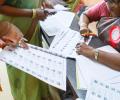
The Supreme Court has declined to intervene in a petition concerning the deletion of names from voter lists in West Bengal, directing the petitioners to seek redressal through established appellate tribunals.
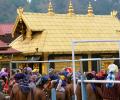
The Travancore Devaswom Board (TDB), managing the Sabarimala temple, argued in the Supreme Court that religious beliefs should be judged subjectively by the community, as the court hears petitions related to discrimination against women at religious places.
The Supreme Court has initiated suo motu action regarding an NCERT class 8 textbook that references corruption in the judiciary, raising concerns about potential defamation and the integrity of the judicial system.

The Supreme Court of India, led by Chief Justice B R Gavai, addressed concerns about being influenced by narratives against the Enforcement Directorate (ED). The court emphasized its independence from news and social media, while also acknowledging instances of overstepping by the ED.

The court is hearing appeals against a CCI order imposing a penalty on Meta and WhatsApp.
The Supreme Court is hearing petitions related to discrimination against women at religious places, including the Sabarimala temple. A nine-judge bench is examining the scope of religious freedom and the exclusion of women based on age and menstrual status.
