
Indian women's doubles pairs Sreeja Akula-Syndrela Das and Yashaswini Ghorpade-Diya Chitale have advanced to the pre-quarterfinals of the table tennis competition at the Asian Games after securing dominant wins over their respective opponents.

Indian table tennis players had a strong showing at the Asian Games, with two women's doubles pairs, Sreeja Akula-Syndrela Das and Yashaswini Ghorpade-Diya Chitale, reaching the pre-quarterfinals. In men's singles, Manush Shah and Manav Thakkar also advanced to the next rounds.

India's Manush Shah and Diya Chitale secured a historic medal in mixed doubles table tennis at the Asian Games by defeating Hong Kong's world No. 4 pair. This marks India's second mixed doubles medal in Asian Games history. While other Indian paddlers faced early exits in various categories, Shah also advanced in men's singles and Yashaswini Ghorpade in women's singles.

India's Manush Shah and Diya Chitale secured a bronze medal in the mixed doubles table tennis event at the Asian Games after a 0-4 loss to China in the semifinals. This marks India's first table tennis medal at the current Games and only the second mixed doubles medal in Asian Games history, following Sharath Kamal and Manika Batra's bronze in Jakarta.

The Indian women's table tennis team secured a thrilling 3-2 comeback victory against Singapore in the Asian Games Group F match, with Sreeja Akula and Yashaswini Ghorpade delivering crucial wins. In contrast, the Indian men's team suffered a 0-3 defeat to Iran in their Group F encounter.

Indian athletes are set to compete across various disciplines including athletics, badminton, boxing, hockey, kabaddi, shooting, squash, swimming, and table tennis at the Asian Games on Friday, September 25. Key events include finals in athletics and shooting, along with crucial knockout stages in team sports and individual events.
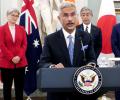
If the only superpower, which calls India an ally, sees the region through an India-Pakistan prism, it is unacceptable. Rather than endorse India's sphere of influence, this undermines it, asserts Shekhar Gupta.

Arjun Menon looks at the Top 10 South films that made an impact in 2024.

'It took us 14 years to get our story into theatres.'

May offers a mix of original Web series and digital movie premieres on OTT.

Aadujeevitham (The Goat Life) is undoubtedly one of the most successful experiments in Prithviraj's journey as an actor, applauds Divya Nair.

Aadujeevitham marks a new direction for Malayalam cinema, where ambition meets resources and the right people, all in favour of stories that deserve to be told on the biggest stage of them all, notes Arjun Menon.

Amrita Singh and Sara Ali Khan were guests at the Sardar Udham screening.

Indian writers Jeet Thayil, Anjali Joseph and Benyamin were on Tuesday named in the Man Asian Literary Prize longlist of 15 authors which also figure Nobel winner Orhan Pamuk.

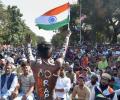
"People in India are showing their angst, their concerns, their worries about the future of India. Everybody wants development, what has Modi done? He has done his own development rather than development of the country," he added.

'If Rahul Gandhi disappears, Modi has to talk about his own policies and why they failed'
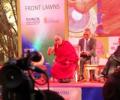
Two Nobel Laureates, four listed writers of this year's Man Booker Prize, Pulitzer Prize winners and finalists, winners of Commonwealth Writers' Prize, Crossword Prize and film stars will be the attraction at the most sought after literary event in India -- the Jaipur Literature Festival.

Modi wants a 'change in the Indian citizen's character.' 'An internal transformation.' 'This is reformation of the sort that is usually done by spiritual and religious leaders.' 'It is not in the domain of popular politics,' points out Aakar Patel.

Summary of sports events and persons who made news on Wednesday

Reticent author Cyrus Mistry on Saturday beat off stiff competition from five other writers to become the fourth winner of the $50,000 DSC prize for South Asian literature for his book "Chronicles of a Corpse Bearer".

The going has never been easy for author Cyrus Mistry, who suffers from a nervous disorder. The reclusive author, who bagged the prestigious South Asian literature award, talks openly to P B Chandra about his illness and how writing has helped him cope with it.
