
Pragya Misra, OpenAI's head of public policy and strategy for India, stated that the next phase of AI will concentrate on driving measurable outcomes rather than mere experiments. She highlighted examples like Cars24 using AI for customer retention and a healthcare company building its CRM with OpenAI's Codex, demonstrating AI's tangible business impact and cost-saving potential. OpenAI aims for artificial general intelligence (AGI) to benefit all humanity by making AI accessible and addressing enterprise concerns like data residency.

AI is no longer a tool only for software engineers and technology teams.
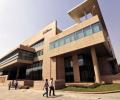
IT services firm Tech Mahindra has announced a collaboration with AI coding platform SpaceXSI to help global enterprises modernise legacy applications, accelerate software delivery, and improve developer productivity through AI-assisted engineering across the software lifecycle. The partnership aims to embed AI intelligence across the software development lifecycle for better business outcomes, focusing on sectors like technology, telecommunications, and banking.

IT services giant Cognizant has established its 'OpenAI Frontier Capability Group', comprising over 25,000 professionals. This new group aims to deliver OpenAI products like Codex and ChatGPT to clients, helping enterprises integrate advanced AI models into their core operations. Cognizant is also scaling OpenAI internally across its sales and customer success functions.

Google found that vulnerability disclosures and their exploitation nearly doubled between January and August 2026.

Nasscom has warned that India's technology workforce risks becoming merely AI-reliant rather than truly AI-native if deep engineering expertise is not preserved. The industry body highlights that while many professionals adopt AI, only a fraction are AI-native, necessitating a shift in academic and industry approaches to foster foundational skills and independent problem-solving.
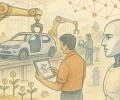
IIT-Kharagpur announced the establishment of India's first dedicated academic school for Physical Artificial Intelligence (AI), named the Benjamin Gupta School of Physical AI. Funded by a Rs 35 crore investment, including contributions from alumnus Vinod Gupta and an anonymous donor, the school will focus on developing intelligent systems that interact with the physical world, moving beyond conventional data-driven AI. Academic programmes are expected to commence soon, aiming to foster reliable and responsible AI technologies for various applications.
India's Engineering Research and Development (ER&D) sector is projected to exceed USD 100 billion in revenue by 2030, driven significantly by the integration of Artificial Intelligence (AI) into engineering workflows. This growth, highlighted by Nasscom, positions India as a critical global engineering hub, necessitating focus on talent development and strategic partnerships.

L&T Technology Services (LTTS) has announced a strategic partnership with Anthropic to integrate its Claude AI models into LTTS' engineering processes and AI platforms. This collaboration aims to redefine engineering work by enabling faster decision-making, streamlining workflows, and accelerating innovation for global clients, coinciding with Anthropic's new rupee-denominated pricing for Indian customers.
Salesforce executives, including South Asia CEO Arundhati Bhattacharya, predict a significant shift in India towards wider enterprise AI adoption, moving from experimentation to production deployments. The company plans to invest in physical infrastructure and talent upskilling in India. Salesforce's vision for the "agentic enterprise" involves a four-layer architecture, emphasising the need for robust security and governance for autonomous agents. Executives also highlighted the evolving nature of jobs, with AI handling repetitive tasks and creating new specialised roles, positioning India as a potential leader in agentic innovation by 2030.
IBM Chairman and CEO Arvind Krishna details the company's substantial annual investment in India and its global USD 10 billion commitment to quantum computing over the next five years. He addresses the potential for AI to displace 10-20 per cent of jobs, particularly in the BPO sector, while also highlighting India's significant opportunity in the AI ecosystem. Krishna urges India to accelerate AI adoption, scale existing tech initiatives, and build its semiconductor manufacturing, advocating for a light-touch approach to AI regulation and emphasizing critical thinking in an AI-driven economy.

Seven of the top 10 best-performing Indian smallcap stocks over the past year, linked to the US data centre boom and AI infrastructure, are now facing a valuation test as enthusiasm for AI investment shows signs of cooling on Wall Street. Analysts warn that the rally in these Indian counterparts may have left valuations increasingly stretched, with any pullback in US capital expenditure potentially weighing on their share prices.

Annual incomes for FDE roles range from approximately Rs 40 lakh to Rs 1 crore.
Adani Enterprises and US-based Jabil have signed a non-binding agreement to establish a 50:50 joint venture in India. This JV will manufacture artificial intelligence and data centre equipment, including AI racks, servers, storage, networking gear, and cooling systems, targeting both Indian and global markets. The collaboration aims to capitalise on India's accelerating data centre demand and the surging global investment in AI compute infrastructure.

Wipro Executive Chairman Rishad Premji announced that clients are now integrating Artificial Intelligence (AI) into their core business processes, moving past initial pilot projects. Speaking at the company's AGM, Premji highlighted AI's role in driving innovation, efficiency, and growth, and noted Wipro's internal AI adoption has significantly streamlined operations.

Indian AI startups are finding it challenging to secure their first few US customers due to the demand for proven track records, high local hiring costs, and visa hurdles, even as venture capital firms launch programmes to facilitate their entry into the American market.

Uttar Pradesh Chief Minister Yogi Adityanath announced the state's ambitious shift from mobile phone assembly to advanced microchip manufacturing, data centres, and artificial intelligence. He highlighted significant investments and growth in the digital economy, attributing the transformation to the "double-engine government's" alignment with national initiatives like 'Make in India' and 'Aatmanirbhar Bharat'. Adityanath also criticised previous administrations for hindering the state's potential.

Infosys co-founder Nandan Nilekani has dismissed fears that artificial intelligence will lead to job losses in India's IT services sector, calling such concerns "hogwash" and "disaster marketing." Speaking at the Bloomberg New Economy Forum 2026, Nilekani argued that AI will actually increase demand for IT firms as it necessitates complex business transformations and creates new types of jobs, particularly in small businesses.
A joint report by Dell Technologies and Zinnov reveals that despite high ambition, nearly 70% of India's Global Capability Centres (GCCs) are stuck at the pilot stage for AI adoption. Foundational gaps in data, infrastructure, and governance are identified as key bottlenecks preventing the scaling of AI initiatives into enterprise-wide production. The report highlights the need for significant reskilling of the workforce and robust foundations for industrialising AI responsibly.

The Indian Navy is enhancing its operational capabilities across all domains, including air, underwater, AI, and quantum technology, to become a multi-domain network force. Vice Chief of Naval Staff, Vice Admiral Ajay Kochhar, highlighted lessons from recent conflicts, the exploration of directed-energy weapon systems, and significant procurement plans, including 42 new platforms on order and RFPs issued for LPDs and next-generation frigates. The Navy's focus on indigenous innovation and technology absorption, guided by "scale, sophistication, speed, and spiral development," aims to meet evolving operational requirements and protect maritime interests, especially amidst ongoing global crises.
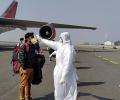
Kempegowda International Airport Bengaluru (BIAL) has unveiled 'Phoenix', a repurposed Boeing 737-200, to enhance its Aircraft Recovery Training School. This initiative expands practical training for disabled aircraft recovery and opens the school's programmes to the global aviation industry, aiming to strengthen operational resilience and readiness in the aviation ecosystem.

The idea addresses an increasingly difficult problem on Earth: Data centres consume enormous amounts of electricity and water.

Indian IT stocks experienced a significant downturn following OpenAI's acquisition of consulting firm Tomoro, intensifying fears that global AI companies are encroaching on traditional IT service models through end-to-end consulting and implementation services.

Global technology giant Google has announced the selection of 20 Indian AI startups for its 2026 Google for Startups Accelerator programme, marking the 10th anniversary of its accelerator initiatives.
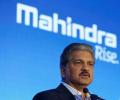
Bristlecone, a Mahindra Group company, reported a 24% year-on-year topline growth and aims for a billion-dollar valuation. The AI-powered supply chain services provider is expanding its offerings to include data analytics, AI, and product engineering, focusing on making supply chains more resilient for its global clients across high-tech, retail, manufacturing, and life sciences segments.

Chinese President Xi Jinping called for global collaboration in artificial intelligence development, emphasising a "symphony of global collaboration" over a "solo performance" by any single nation. Speaking at the World Artificial Intelligence Conference in Shanghai, Xi highlighted the need for ethical AI governance, shared prosperity, and addressing challenges like the widening digital divide. He also announced China's commitment to support developing countries with 5,000 AI research projects and training programmes. The event also saw 29 countries sign an agreement to establish the World Artificial Intelligence Cooperation Organisation (WAICO) in Shanghai.

Dr Lovi Raj Gupta, pro vice-chancellor, Lovely Professional University, explains how aspiring professionals can equip themselves for a competitive AI-driven job market.
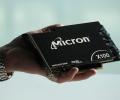
Micron CEO Sanjay Mehrotra announced plans to significantly scale up the company's chip assembly and testing facility in India, moving from "vision to execution" in the nation's semiconductor ambitions. He highlighted the success of the Sanand, Gujarat plant, which is already producing "Made in India" memory chips, and the company's substantial engineering contributions from its Indian centres. Mehrotra also emphasised the critical role of memory chips in the AI era, driving Micron's growth.

Kapil Dev, president of DP World PGTI, advocates for golf to shed its 'elite' image, highlighting its potential for career opportunities and relationship building. Speaking at the announcement of the 27th BT Golf season, he emphasised how corporate support and media partnerships, like that between Business Today and DP World PGTI, are crucial for increasing the sport's visibility and integrating it with corporate India. Other speakers, including PGTI chief Amandeep Johl and golfer Saptak Talwar, echoed the importance of such collaborations for the growth of golf as a sport and a business networking tool.

AI reduces the time taken to find a target and launch a strike. This has led to a major increase in the pace of the conflict, with one report mentioning nearly 900 strikes launched on Iranian targets in the first 12 hours of an operation.

'There was a huge cultural gap. I could not understand the slang, the Mumbai lingo, and would often feel left out during conversations. Since I had studied in the Hindi medium till then, I could not understand English,' says Anup Raaj, an alumnus of IIT-B and founder of InstaPreps AI, a confidence-building platform for students, and coaching institute 7Classes.
Nayagam PP, career counsellor and founder of EduJobs360, explains how traditional engineering choices are being replaced with flexible, future-ready career paths that align with industry requirements.

'...because that protects their aviation industry.' 'The Boeing 787 is one of the most widely-flown wide-body aircraft in the world, and Airbus is running neck-and-neck with Boeing.' 'Airbus is not going to let an opportunity like this pass.' 'If a software problem with the 787 is confirmed, they will use it to increase their own orders.'

US Ambassador to India, Sergio Gor, highlighted the evolving US-India space partnership, moving from cooperation to "co-creation" at the Bengaluru Space Expo. He emphasised joint design, funding, and co-authoring the future of human discovery, citing the NISAR satellite and India's participation in the Artemis Accords as key examples of this growing synergy.

Assam Chief Minister Himanta Biswa Sarma launched the North East Seva Innovation Challenge (NESFIC), envisioning the region as India's 'living laboratory' for technology and problem-solving. The initiative aims to empower young innovators to address real-world challenges faced by government, industries, and citizens, with a focus on practical implementation and government procurement.

Rajasthan Governor Haribhau Bagde highlighted ethanol's potential to protect India from volatile petroleum markets and geopolitical risks, advocating for its widespread production and use. He, along with other officials, emphasised ethanol's role in strengthening the rural economy, ensuring timely cane payments, and combating carbon emissions, while also discussing its historical context and current government support.

'A lot of people feel there is pressure on the AAIB not to go against Boeing or GE -- both enormous American companies.' 'If the AAIB implicates Boeing or GE, it will impact their sales.' 'If their sales are impacted, jobs are lost in the United States. No government would willingly do that.'
A new study reveals that human cells, including cancer cells, possess the ability to sense their environment far beyond their immediate point of contact, potentially influencing cell movement and cancer spread.
A new study reveals that human cells, including cancer cells, possess the ability to sense their environment far beyond their immediate point of contact, potentially influencing cell movement and cancer spread.
A new study reveals that insects' lightning-fast reactions are due to a 'turbo boost' feature in their brains, which could inspire more energy-efficient robots and self-driving cars.
