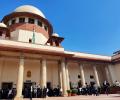
The Supreme Court, in a 2:1 majority, has recalled its previous judgment prohibiting the Centre from granting retrospective environmental clearances to projects violating environmental norms, paving the way for reconsideration of the issue.
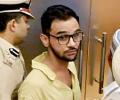
The Supreme Court has refused to grant bail to activists Umar Khalid and Sharjeel Imam in the 2020 Delhi riots conspiracy matter, citing a prima facie case against them under the UAPA. However, bail was granted to other activists in the same case.
The Supreme Court has expressed serious concern over the Enforcement Directorate's allegations of obstruction by the West Bengal government and Chief Minister Mamata Banerjee during raids related to a coal-pilferage scam. The court intends to examine the matter and has also taken note of the commotion at the Calcutta High Court during hearings related to the case.

The Madras high court on Friday directed the Central Board of Film Certification (CBFC) to grant a censor certificate to actor-turned-politician Vijay's upcoming film Jana Nayagan, setting aside the board's directive to refer the matter to a review committee.
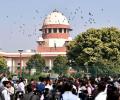
A bench comprising Chief Justice B R Gavai and Justices Ujjal Bhuyan and K Vinod Chandran dismissed the PIL filed by lawyer Vishal Tiwari after Solicitor General Tushar Mehta objected to it.

The opposition party also vowed to expose the "vendetta politics" against its leadership, asserting that the Congress cadre is agitated and is going to show its strength against the "misuse of agencies."

The Delhi police vehemently opposed the bail pleas of activists Umar Khalid, Sharjeel Imam and others in the February 2020 riots case, saying it had become a trend now for doctors and engineers to engage in anti-national activities. The police cited inflammatory speeches and violent protests as reasons for opposing bail.

The Supreme Court of India is considering formulating pan-India guidelines to prevent road accidents on expressways and national highways, following a fatal accident in Rajasthan. The court is focusing on the issue of illegal 'dhabas' and encroachments along highways as potential causes of accidents.

The Supreme Court has given the Centre four weeks to respond to pleas seeking the restoration of statehood to the Union Territory of Jammu and Kashmir.

The Attorney General has granted consent for initiating contempt action against an advocate, Rakesh Kishore, who hurled a shoe towards Chief Justice of India B R Gavai. The Supreme Court was informed of this development on Thursday.
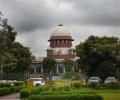
The Supreme Court has directed all High Courts to submit details of pending acid attack cases and is considering setting up special courts for their expeditious disposal. The court is also considering amending the law to include acid attack survivors under the Rights of Persons with Disabilities Act.

Chief Justice of India B R Gavai affirmed his respect for all religions after facing online criticism regarding comments made during a case about the reconstruction of a Lord Vishnu idol.

Justice Ujjal Bhuyan, who is sharing the bench, differed with the course of action adopted against the errant lawyer, and said, "I have my own views on this, he is the CJI, it is not a matter of joke!"
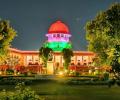
The Supreme Court of India has stated it will not monitor every instance of hate speech, citing existing legal and institutional mechanisms.
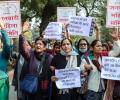
The Supreme Court on Monday stayed the Delhi high court's order suspending the life sentence of expelled Bharatiya Janata Party leader Kuldeep Singh Sengar in the 2017 Unnao rape case.

The Delhi high court on Monday asked Congress leaders Sonia Gandhi, Rahul Gandhi and others to respond to a plea by the Enforcement Directorate (ED) challenging the order of the trial court that refused to take cognisance of its chargesheet against them in the National Herald case.
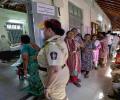
The Supreme Court has addressed the issue of reservation quotas in Maharashtra local body elections, stating that the final results of elections in 57 local bodies, where the 50% quota ceiling has been breached, will depend on its judgment in the case.
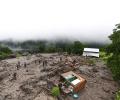
A bench of Chief Justice B R Gavai and Justice K Vinod Chandran also issued notices to the Union Ministry of Environment, Forest and Climate Change, the National Highway Authorities of India (NHAI) as well as the governments of Himachal Pradesh, Uttarakhand, Jammu and Kashmir and Punjab.

The ED has accused Congress leaders Sonia Gandhi and Rahul Gandhi, as well as late party leaders Motilal Vora and Oscar Fernandes, along with Suman Dubey, Sam Pitroda, and a private company, Young Indian, of conspiracy and money laundering.
The Supreme Court has directed the Maharashtra government and its state election commission to conduct local body elections, clarifying that the results will be subject to the court's final verdict, especially concerning the 50% quota limit. The court will hear pleas regarding OBC reservation in local bodies in January 2026.

The Supreme Court of India has questioned the legal status of Rohingya refugees living in the country, raising concerns about providing resources to illegal entrants while Indian citizens face poverty.
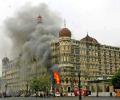
The trial of Abu Jundal, accused in the 26/11 Mumbai terror attacks, is set to resume after the Bombay High Court overturned a lower court order requiring authorities to hand over confidential documents to the accused.

The Supreme Court has directed the CBI to conduct a pan-India investigation into digital arrest scams and questioned the RBI about its lack of AI usage in detecting and freezing accounts used by cybercriminals.

Earlier, the party's members of Parliament had written to Prime Minister Narendra Modi for removing Mehta over his reported meeting with West Bengal Bharatiya Janata Party leader Suvendu Adhikari.

The Supreme Court expressed serious concern over custodial deaths, calling it a 'blot' on the system. The court is pushing for compliance with orders to install CCTV cameras in police stations and central investigation agencies to curb human rights abuses.

It is shameful that Kashmir Times has been attacked in the way it has and that Anuradha Bhasin has not found more voices to speak in support of her and her paper, points out Aakar Patel.
The Supreme Court has expressed serious concern over the rising cases of digital arrest cybercrime in India, where fraudsters extort money from victims by posing as law enforcement officials. The court has vowed to deal with such cases with an iron hand and has sought reports from the Ministry of Home Affairs and the CBI.
Delhi Police strongly opposes bail pleas of activists Umar Khalid, Sharjeel Imam, and others in the February 2020 riots case, claiming it was a pre-planned attack on the nation's sovereignty and an attempt to divide society on communal lines.

Chief Justice of India Bhushan Ramkrishna Gavai retired, reflecting on his career, commitment to the Constitution, and social justice.

A lawyer allegedly attempted to throw a shoe at Chief Justice of India BR Gavai during court proceedings. Security intervened, and the lawyer was removed from the premises. The CJI remained composed and continued with the proceedings.

Amid the ongoing debate over the Trinamool Congress seeking removal of Solicitor General of India Tushar Mehta over his alleged meeting with West Bengal Bharatiya Janata Party leader Suvendu Adhikari, TMC state general secretary Kunal Ghosh on Tuesday dropped unannounced at Mehta's residence, but was denied entry.
A bench comprising Chief Justice B R Gavai and Justices Augustine George Masih and AS Chandurkar also directed that the offending video be immediately taken down and restrained the YouTube channel from republishing it or similar content.

The Supreme Court on Monday deferred to October 13 the hearing on a plea of telecom major Vodafone Idea Ltd seeking quashing of the additional adjusted gross revenue (AGR) demands for the period until 2016-17.

The Supreme Court is scheduled to pronounce interim orders on key issues related to the Waqf (Amendment) Act, 2025, including the power to denotify waqf properties.
The Supreme Court is scheduled to pronounce interim orders on key issues related to the Waqf (Amendment) Act, 2025, including the power to denotify properties declared as waqf.

Solicitor General Tushar Mehta revealed a fake, verified X account created in the name of the 'Supreme Court of Karnataka' to highlight the dangers of unchecked online activity during a hearing on X Corp's petition challenging government takedown orders.
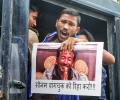
The Supreme Court has sought responses from the Centre and the Ladakh administration regarding the detention of climate activist Sonam Wangchuk under the National Security Act (NSA). Wangchuk's wife has filed a plea challenging the detention, claiming it violates his fundamental rights. The court has given the Centre and Ladakh administration 10 days to respond and has scheduled the next hearing for November 24.
The Supreme Court of India, led by Chief Justice B R Gavai, addressed concerns about being influenced by narratives against the Enforcement Directorate (ED). The court emphasized its independence from news and social media, while also acknowledging instances of overstepping by the ED.

The Supreme Court declined to initiate contempt action against a lawyer who hurled a shoe at the Chief Justice of India, citing the CJI's own refusal to proceed against him. The court is considering guidelines to prevent such incidents.

The Supreme Court is considering entrusting the CBI with the investigation into digital arrest cases, citing the magnitude and pan-India spread of such crimes. The court has sought details of FIRs registered in different states and union territories and is monitoring the progress of the investigation.
