
The Supreme Court of India has directed the central government to establish a no-fault compensation policy for individuals who experience serious adverse events after receiving a COVID-19 vaccine.

The observations came from a bench of Chief Justice Surya Kant and Justice Joymalya Bagchi which was hearing pleas questioning the validity of Section 152 of the Bharatiya Nyaya Sanhita (BNS).

Madhya Pradesh High Court seeks Centre's clarification on NRAI licence status, orders release of 1,000 cartridges each to shooters.

'My argument was straightforward: If the Constitution allows this reservation and SC/ST and OBC candidates are already getting reservation in private institutions -- backed by Constitution Bench orders -- then not extending the same to EWS candidates directly violates the 103rd Amendment and Article 14, which guarantees the right to equality.'
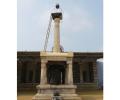
The Supreme Court has sought responses from the Centre, Tamil Nadu government, and others regarding a plea for the Archaeological Survey of India (ASI) to take over the Thirupparankundram temple and ensure daily lamp lighting on a stone pillar.
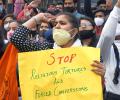
The Supreme Court has sought responses from the Centre and 12 states on a PIL challenging the validity of their anti-conversion laws. The National Council of Churches in India (NCCI) filed the PIL, seeking a stay on the operation of these laws.

The Supreme Court has sought responses from the Centre, the CBI and others on a plea filed by a 78-year-old retired banker who was duped of Rs 23 crore after allegedly being put under "digital arrest" for nearly a month.

The Gujarat ATS has arrested a 22-year-old tailor, Faizan Shaikh, accused of being highly radicalized and planning targeted killings in Uttar Pradesh for perceived insults to Prophet Muhammad. He allegedly operated as a 'lone wolf' and had connections to terror groups like Jaish-e-Mohammed and Al Qaeda.

A Delhi court convicted Kashmiri separatist Asiya Andrabi in a UAPA case related to waging war against India and membership of a terrorist organization.

The Supreme Court has questioned the NIA regarding the detention of Kashmiri separatist leader Shabir Ahmed Shah in a terror funding case, asking the agency to justify his detention for over six years.
The Supreme Court denied bail to activists Umar Khalid and Sharjeel Imam in the 2020 Delhi riots conspiracy case, citing prosecution material suggesting their involvement in planning and strategic direction. The court granted bail to other activists but emphasized the seriousness of the allegations against Khalid and Imam.

Current situation risks rendering ongoing operations untenable: ISL clubs to AIFF

A government doctor and his wife have been detained in Jammu and Kashmir for allegedly misusing their positions to mask unlawful activities, including radicalizing local women through social media.

The Supreme Court expressed serious concern over custodial deaths, calling it a 'blot' on the system. The court is pushing for compliance with orders to install CCTV cameras in police stations and central investigation agencies to curb human rights abuses.
The Supreme Court has declined to urgently hear pleas seeking a stay on anti-conversion laws enacted by several states, including Uttar Pradesh, Gujarat, and Madhya Pradesh. The matter is now scheduled for hearing in December.
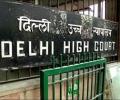
The Delhi high court on Friday ordered status quo on the removal of social media posts on Adani Group of Companies by senior journalist Ravish Kumar and digital news platform Newslaundry.

The Supreme Court has allowed certified manufacturers to produce green crackers, but restricted their sale in Delhi-NCR without approval. The court has asked the Centre to review the ban on firecracker manufacturing in the region.

Quota activist Manoj Jarange demands the Maharashtra government implement a GR for issuing Kunbi caste certificates to Marathas before September 17, threatening further action if the deadline is missed.
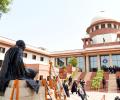
Calling itself the "custodian of the Constitution", the Supreme Court on Thursday asked if it could "sit idle" if a constitutional functionary like governor failed to discharge duties, as it reserved its verdict on the presidential reference on grant of assent to bills.
The Supreme Court has raised concerns about discrimination against persons with disabilities in employment, questioning the Centre on the lack of 'upward movement' for meritorious candidates. The court also ordered nationwide monitoring of care institutions for persons with cognitive disabilities.
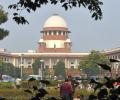
The Supreme Court has questioned the central government about the possibility of constructing a border wall to prevent illegal immigration, drawing parallels with the US border policy. The court also addressed concerns about the detention and deportation of Bengali-speaking migrant workers.
The Supreme Court is scheduled to hear a plea for the restoration of statehood to Jammu and Kashmir. The plea highlights the delay in restoration and its impact on democratic rights and development.

The SC has sought a response from the Centre on a plea seeking the restoration of statehood to Jammu and Kashmir.

The assistant solicitor general (ASG), appearing in the matter for the Union of India, informed the court that the children currently lack valid travel or identity documents. Based on this submission, the court observed that immediate deportation was not reasonable at this stage.

The Supreme Court is scheduled to hear a plea on August 8 seeking directions to the Centre for the restoration of statehood to Jammu and Kashmir. The plea highlights concerns about the delay and its impact on democratic rights and development.
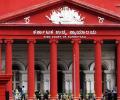
A lawyer for Elon Musk's X told the Karnataka high court on Tuesday that if every "Tom, Dick and Harry" government official is authorised to send content takedown notices then it would amount to misuse of official powers, remarks that drew strong condemnation from the Centre as well as the judge.
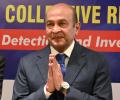
The Supreme Court questioned Justice Yashwant Varma regarding his plea to invalidate an in-house inquiry panel report that indicted him after a large amount of burnt cash was discovered at his official residence during his time as a Delhi High Court judge.
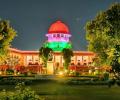
Article 363 bars the interference of courts in any disputes which may arise from certain treaties, agreements, covenants, sanad, engagements, etc., executed between a princely state and the government of India.

The Supreme Court of India dismissed a plea seeking the inclusion of Vinayak Damodar Savarkar's name in the Emblems and Names (Prevention of Improper Use) Act, 1950. The petitioner, appearing in person, argued for the inclusion based on his 30 years of research and claimed a need to establish facts about Savarkar in a legally verifiable manner. However, the court found no violation of fundamental rights and suggested the petitioner make a representation to the Union of India for curriculum inclusion. This dismissal follows the court's earlier reprimand of Congress leader Rahul Gandhi for his remarks on Savarkar at a rally in Maharashtra, although criminal proceedings against Gandhi were stayed.

Referring to the enactment of the Chhattisgarh Auxiliary Armed Police Force Act, 2011 which created a trained force to aid and assist the security forces in maintaining law and order in the state, the bench said in its view it cannot be said to be an act of contempt of the order of 2011 passed by this court.

The Karnataka high court on Tuesday strongly criticised actor and filmmaker Kamal Haasan for his recent remark suggesting that "Kannada was born out of Tamil", and observed that a "single apology could have resolved the situation."
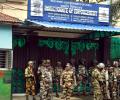
The Supreme Court of India has repeatedly criticized the Enforcement Directorate (ED) for exceeding its authority and misusing its powers. The latest rebuke came on Thursday, when the court accused the agency of 'crossing all limits' in a money laundering probe against a Tamil Nadu state-run liquor retailer. This follows a string of similar observations by the Supreme Court and high courts across India, raising concerns about the ED's investigative practices and the potential for misuse of its powers.
The Delhi High Court has ruled that an undertrial's prolonged incarceration cannot be a reason to grant bail in terrorism cases, emphasizing the gravity of such offenses and their potential to destabilize the nation. The court denied bail to separatist leader Nayeem Ahmad Khan in a terror-funding case involving Lashkar-e-Taiba (LeT) and 26/11 Mumbai attack mastermind Hafiz Saeed. The court considered the accused's argument regarding a prolonged trial and his right to liberty but emphasized that the serious nature of the crime, with its potential to disrupt national unity and create fear among the public, outweighs the length of incarceration. Khan, who was arrested in 2017, has been accused of conspiring for secession of Jammu and Kashmir through terrorist activities, receiving funding from Pakistan, and organizing anti-India rallies and demonstrations. The court highlighted the evidence, including witness statements and documents, supporting the accusations against Khan.

Wing Commander Vyomika Singh's role at the press briefing for Operation Sindoor is consistent with her experience as a helicopter pilot in Jammu and Kashmir during the course of her career.

Unless Governor Ravi or the Union of India moves in appeal, seeking a hearing by a constitutional Bench, this is where it all will have to end, observes N Sathiya Moorthy.

The Supreme Court of India will hear a batch of pleas seeking a probe into the alleged unauthorised use of Pegasus spyware for the surveillance of journalists and others next week. The court had previously ordered a technical panel to investigate the matter but received no reports. Senior advocate Shyam Divan, appearing for some petitioners, urged the court to pass directions as the reports were not shared. The court has now listed the matter for hearing on April 29.
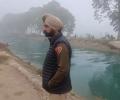
The Supreme Court of India has directed the governments of Punjab and Haryana to cooperate with the Centre in finding an amicable solution to the long-standing dispute over the Sutlej-Yamuna Link (SYL) canal. The court deemed the de-notification of land acquired for the canal in Punjab an "act of high-handedness" and emphasized the need to consider "wider ramifications" beyond legal considerations. The court has set August 13 for a further hearing if an amicable solution is not reached.
The Supreme Court of India on Tuesday questioned the issue of using "spyware against terrorists" and stated that any report touching upon the country's "security and sovereignty" won't be made public. The court indicated it might address individual concerns regarding privacy breaches, but the report of the technical committee would not be a document for public discussion. The court will examine the extent to which the report can be shared publicly. The court's statement came during a hearing on a petition related to the alleged use of Pegasus spyware for surveillance. The court also emphasized that "having spyware is not wrong, against whom you are using is the question" and that the security of the nation cannot be compromised. The hearing has been adjourned to July 30.
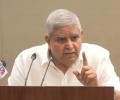
Rajya Sabha member Kapil Sibal has criticised Vice President Jagdeep Dhankhar for questioning the judiciary over the timeline for the president to take decisions, calling it "unconstitutional " and a lowering of the dignity of the chair. Sibal asserted that Dhankhar's remarks are not neutral and amount to an attack on the judiciary by the executive. He also pointed out that the president acts on the aid and advice of the council of ministers, and therefore, the president's power cannot be curtailed. Sibal urged Dhankhar to seek a review of the judiciary's decision or an advisory opinion from the Supreme Court if he has problems with it. He also questioned why Dhankhar only focuses on actions taken during Congress governments and not after 2014.
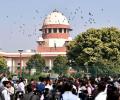
The Supreme Court of India has stayed a Lokpal order that allowed complaints to be filed against a sitting high court judge. The court termed the order "something very, very disturbing" and a concern for the independence of the judiciary. The bench issued notices to the Centre, the Lokpal registrar, and the complainant, directing them to keep the identity of the judge confidential. The court will hear the matter again on March 18.
 © 2026 Rediff.com - Investor Information - Advertise with us - Disclaimer - Privacy Policy - Sitemap - Feedback - About us - Terms of use - Grievances