
Manufacturers are planning a hike of over 15 per cent in the second quarter of calendar year 2026, as memory prices shoot through the roof.

Tech giant Apple has recorded its highest-ever value share of 28 per cent in the Indian smartphone market, driven by a surging "premiumisation" trend where consumers are increasingly opting for high-end devices, according to a report by Counterpoint Research.

GenAI smartphones are mobile devices that leverage large-scale, pre-trained GenAI models to create original content or perform contextually aware tasks.

India's entry-level 5G smartphone segment, typically held to be those priced below 10,000, is set to bustle in the upcoming festival season as brands like HMD, Poco, and Lava launch their products.

US President Donald Trump has threatened to impose tariffs on Apple products if the tech giant does not shift iPhone production from India to the United States. Trump said he expects iPhones sold in the US to be manufactured in America and not India, or anyplace else. He also said that he had a "little problem" with Apple CEO Tim Cook for building manufacturing facilities in India. Cook had previously said that the majority of iPhones sold in the US would have India as their country of origin. Experts say that shifting production to the US would be more expensive than assembling iPhones in India.

Apple's ambitious strategy to expand iPhone exports, shift more production from China to India at a faster pace, and grow its domestic market hits a Trump-sized roadblock.

A report titled 'India Monthly Mobile Handsets Market Review', CMR claims that November last year was the third consecutive month when smartphone shipments in India crossed one million units and saw the launch of 23 smartphone models.

The company will, however, not bring its new 5G-enabled Pixel 5 and Pixel 4a (5G) to India and Singapore markets.

In October, OnePlus said, it recorded Rs 500 crore of revenue in only the first two days of the festive sale on Amazon.in. The firm is looking at going beyond the metro cities by scaling up its offline stores to over 5,000 and setting up more than 100 'experience centres' in the top 50 cities by next year.

The wait for the new iPhone is over as the tech giant Apple officially launched its new iPhone 13 and iPhone 13 Pro on September 14.

It has captured 38 per cent of the feature phone segment in 2018 through frequent innovation, says Arnab Dutta.
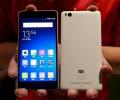
Chinese handset maker Xiaomi overtook Samsung to become the top player in the Indian smartphone market in the December quarter, ending the Korean company's 6-year dominance, reports by Canalys and Counterpoint Research said.

Industry sources said all the iPhone 7 handsets shipped in had been sold out.

Trends like bundled offers and 4G-LTE feature phones could become mainstream in 2018

Indian phone company Lava reveals a new strategy, reports Arnab Dutta.

By the end of 2017, the Chinese firm had emerged as the fastest growing brand after posting 343 per cent growth with 19 per cent market share for the full year.

Experts say launches would pick up pace from mid-March.

Apple issued full-page advertisements on Tuesday.

Samsung is lining up new products, increasing focus on e-commerce channels and tightening its grip over retail outlets.

These will be available at Apple authorised retailers from September 29

Analysts tracking Apple said the India results were glimpses of what the company could achieve in emerging markets with a right pricing strategy for its products and local manufacturing.

Revenue share from India has inched up to nearly 0.8 per cent of its global sales. The revenue growth rate is in stark contrast to the firm's performance in volume terms.

Feature phones still hold the majority of the 270 million handsets market in the country/

The GST rate on mobile phones will be hiked to 18 per cent while that on maintenance repair overhaul (MRO) services for aircraft will be lowered to 5 per cent with effect from April 1, Finance Minister Nirmala Sitharaman said on Saturday. The GST rate on handmade and machine-made matchsticks has been rationalised to 12 per cent from 5 per cent and 18 per cent respectively.

Sale of iPhones hits the bottom; firms to postpone new launches; shipment might fall short of 2016 target.

Incubated for over three years, the OnePlus 5 comes with a Snapdragon 835 processor.

The number of new entrants is decreasing since 2015, as Indian market matures

India is the world's third largest smartphone market.

Oppo is the second Chinese brand after Xiaomi to secure single-brand retail licence. Xiaomi has now 600 retail partners.

In 2015, as many as 15 major Chinese smartphone brands stepped into India.

With 8.5 per cent market share in the quarter ended September 2017, Nokia makes it to the top four bestselling feature phones in India.

Chinese mobile brands are deeply entrenched in the Indian market. A move to bar them may send a bold diplomatic message. But its cost for the local industry is anybody's guess. In the event that Chinese brands face curbs, two handset makers - Samsung and Apple - squarely stand to gain.

To promote localisation of manufacturing and reduce its import bill, the government increased basic customs duty on mobile handsets - from 10 per cent to 15 per cent.

Lenovo, Xiaomi, Vivo, Gionee lead the onslaught, beating Indian and global brands with smart deals and astute image management measures.

The Chinese smartphone maker's focus on offline retail has helped it overtake Samsung in top 50 cities in India.

The once-popular brand plans to try its luck in the smartphone market with reliability as its key proposition.

Samsung recently introduced its "S bike" mode, a feature targeted at India's legions of motorbike riders that, when activated, notifies callers that the phone's owner is riding and cannot answer
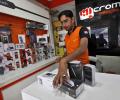
Internal management tensions, stiff opposition from Chinese handset makers led to halving of the company's market share

Price, specifications, features and all that you need to know about Apple's hot new 10th anniversary phone.
