
The Centre on Thursday assured the Supreme Court that it will neither denotify Waqf properties, including "Waqf by user", nor make any appointments to the central Waqf council and boards till May 5.
A bench of Justices B R Gavai and Augustine George Masih observed it was pained to say that some of the observations made in the high court order depicted total insensitiveness and an inhuman approach.

The Supreme Court of India began hearing a batch of petitions challenging the constitutional validity of the Waqf (Amendment) Act, 2025. The bench, led by Chief Justice Sanjiv Khanna, asked both sides to address whether the court should entertain the petitions or relegate them to the high court. The hearing is underway with senior advocate Kapil Sibal arguing for the petitioners. The act, which was passed by Parliament following heated debates, has been challenged by various parties including AIMIM leader Asaduddin Owaisi, All India Muslim Personal Law Board (AIMPLB), and Jamiat Ulama-i-Hind.

The Supreme Court of India will examine the jurisdiction of the Lokpal, India's anti-corruption ombudsman, in entertaining complaints against sitting high court judges. The court is considering a suo motu proceeding initiated over the Lokpal's January 27 order on the issue. The case involves two complaints filed against a sitting additional judge of a high court, alleging that he influenced a judge of the subordinate judiciary and a judge of the same high court set to deal with a suit filed against the complainant by a private company.

University of Delhi on Monday said the purpose of Right to information (RTI) was not to satiate a third party's curiosity as it challenged the central information commission's order over disclosure of information on Prime Minister Narendra Modi's degree.
Delhi University (DU) has informed the Delhi High Court that it is willing to show its records on Prime Minister Narendra Modi's degree to the court, but not disclose it to "strangers" under the Right to Information (RTI) Act. The university's solicitor general, Tushar Mehta, argued that the "right to privacy" superseded the "right to know" in this case, and that allowing disclosure would expose the university to RTI applications for information about lakhs of its students. The court has reserved its verdict on the matter.

The Supreme Court of India expressed its disappointment and concern after a man was denied the right to bury his Christian father in a Chhattisgarh village, despite the presence of a designated burial area for Christians in the village graveyard. The man, Ramesh Baghel, had to approach the Supreme Court after the Chhattisgarh High Court dismissed his plea, citing concerns about potential unrest. The court criticized the high court's decision and the lack of action by local authorities in resolving the issue, noting that the body had remained in the morgue since January 7th. The case highlights a growing concern about religious intolerance and the need for greater sensitivity and respect for diverse communities in India.

The Supreme Court has adjourned pleas challenging the appointments of the chief election commissioner (CEC) and election commissioners (ECs) under the 2023 law. The court indicated the matter would be listed after the Holi festival break due to a paucity of time. Petitioners, including the NGO Association for Democratic Reforms, argued for an urgent hearing, emphasizing the importance of the issue and the potential impact on democratic processes. The appointment of the new CEC and ECs under the 2023 law, which excludes the Chief Justice of India from the selection panel, has been a point of contention, with petitioners alleging it undermines the independence of the election commission.
The Supreme Court of India has sought the Indian government's response to a petition filed by a Muslim woman seeking to be governed by the Indian succession law instead of Shariat. The woman, Safiya P.M., argues that she does not believe in Shariat and wants to be governed by secular law, including the Indian Succession Act of 1925. The court has asked the government to file a counter affidavit within four weeks.

The Supreme Court of India has dismissed a plea seeking directions to states to take immediate action against mob lynching and cow vigilantism, particularly against Muslims. The court stated that it was not feasible to "micro-manage" such incidents from Delhi and referred to its 2018 verdict, which issued guidelines to address mob violence and cow vigilantism. The court also noted that the new Bharatiya Nyaya Sanhita (BNS) criminalizes mob lynching as a separate offence. The plea argued that there was "gross non-compliance" with the 2018 directions, but the court maintained that authorities were bound by its previous rulings.

The top court also questioned the West Bengal government's decision to hire contractual employees for the protection of doctors and other staff in hospitals.
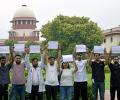
The Supreme Court on Tuesday dismissed the pleas seeking cancellation and re-test of the controversy-ridden National Eligibility-cum-Entrance Test-Undergraduate (NEET-UG) 2024, holding that there was no data on record to indicate a systemic leak of question paper and other malpractices.
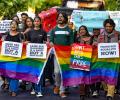
A five-judge bench of the Supreme Court will consider review pleas challenging the October 2023 verdict that declined legal sanction to same-sex marriage. The review pleas will be heard in chambers on January 9, with Justice P S Narasimha being the only member of the original bench that delivered the verdict.

A bench of Justices Surya Kant and N Kotiswar Singh took note of Allahbadia's submission that the podcast was his only source of livelihood and around 280 people employed by him were dependent on the show.
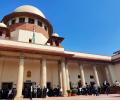
Allowing the Centre's review of the August 23, 2022 verdict, a bench Chief Justice of India DY Chandrachud, Justices PS Narasimha and Manoj Misra recalled the judgement delivered by a three-judge bench headed by former CJI NV Ramana.

The Supreme Court of India has announced its intention to establish an effective mechanism to address caste-based discrimination in educational institutions throughout the country. The court directed the University Grants Commission (UGC) to draft regulations to prevent such discrimination and to provide data on institutions that have implemented equal opportunity cells as mandated by the 2012 UGC equity regulations. The court's decision stems from a public interest litigation filed in 2019 highlighting the prevalence of caste-based discrimination in higher education institutions and its tragic consequences, including the suicides of students like Rohith Vemula and Payal Tadvi.
The Supreme Court of India censured the Assam government for keeping persons declared foreigners in detention centers indefinitely and not deporting them. The court questioned the state's explanation for not sending nationality verification forms to the Ministry of External Affairs, stating that detainees should be deported immediately once identified as foreigners. The court directed the Assam government to initiate the deportation process of 63 declared foreign nationals whose nationality was known and file a status report in two weeks. The court also directed the Centre to provide details of those deported and how it plans to deal with detainees whose nationality is unknown.
"Are you waiting for some muhurat," the Supreme Court remarked on Tuesday as it came down heavily on the Assam government for keeping people declared as foreigners in detention centres indefinitely rather than deporting them.
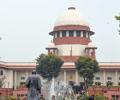
The Supreme Court on Thursday dismissed a batch of pleas seeking to review its October 2023 verdict declining legal sanction to same-sex marriage.

The Supreme Court of India expressed concern over the appointment of DMK leader V Senthil Balaji as a minister in the Tamil Nadu government despite pending money laundering cases against him. The court questioned the state government's decision, stating it is "terribly wrong" to appoint a person as a minister while facing legal proceedings. The matter has been adjourned to January 15, 2025.

A bench of Justices Hrishikesh Roy and SVN Bhatti noted that a separate bench of the apex court had junked the plea filed by AAP leader Sanjay Singh on April 8 in the same case, who is a co-accused in the case.
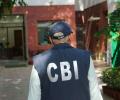
The Central Bureau of Investigation (CBI) is not under the 'control' of the Union, the Centre on Thursday told the Supreme Court while raising preliminary objections on a lawsuit filed by the West Bengal government on the agency going ahead with its probe in several cases without the prerequisite nod from the state.

The apex court said when a particular structure is chosen all of a sudden for demolition and the rest of similarly situated structures in the same vicinity are not even being touched, "mala fide may loom large".
In a viral video of the court proceedings, the judge was seen reprimanding a woman lawyer on Thursday and reportedly made some objectionable comments.

A bench comprising Justices BR Gavai and KV Viswanathan took note of the submissions of Solicitor General Tushar Mehta, representing the Gujarat government, and did not pass any interim status quo order in the meantime as sought by the counsel of the Muslim parties.

The observations were made by a bench comprising Chief Justice DY Chandrachud and Justice Manoj Misra during the hearing of an appeal filed by the City and Industrial Development Corporation, Navi Mumbai against a Bombay high court verdict.
Besides the present CJI Chandrachud, former CJIs Ranjan Gogoi and SA Bobde and former judges Ashok Bhushan and S Abdul Nazeer were part of the bench which had delivered the historic verdict on November 9, 2019.

Even Ajmal Kasab was given a fair trial in our country, the Supreme Court on Thursday remarked and indicated it may set up a courtroom inside Tihar Jail for the trial of J-K separatist leader Yasin Malik in a kidnapping case.
The Supreme Court on Friday said if it finds that authorities in Gujarat acted in contempt of its order on demolition of properties, it will ask them to restore the structures.

The Supreme Court on Friday ordered immediate medical aid for farmer leader Jagjit Singh Dallewal, who is on an indefinite fast at the Punjab-Haryana border. The court also urged farmers to adopt the Gandhian way of protesting and to ensure that Dallewal's life is saved. The court has formed a high-powered committee to make recommendations to the stakeholders regarding the farmers' grievances.

The Supreme Court of India expressed concerns about the long-term sustainability of providing free rations to migrant workers, emphasizing the need for job creation and capacity building instead. The court's remarks came during a hearing on the ongoing issue of providing relief to migrant workers, a matter that gained prominence during the COVID-19 pandemic. The court questioned the government's reliance on freebies and stressed the importance of creating opportunities for migrant workers to become self-sufficient. The debate highlighted the challenges of balancing immediate relief with long-term economic solutions for vulnerable populations.
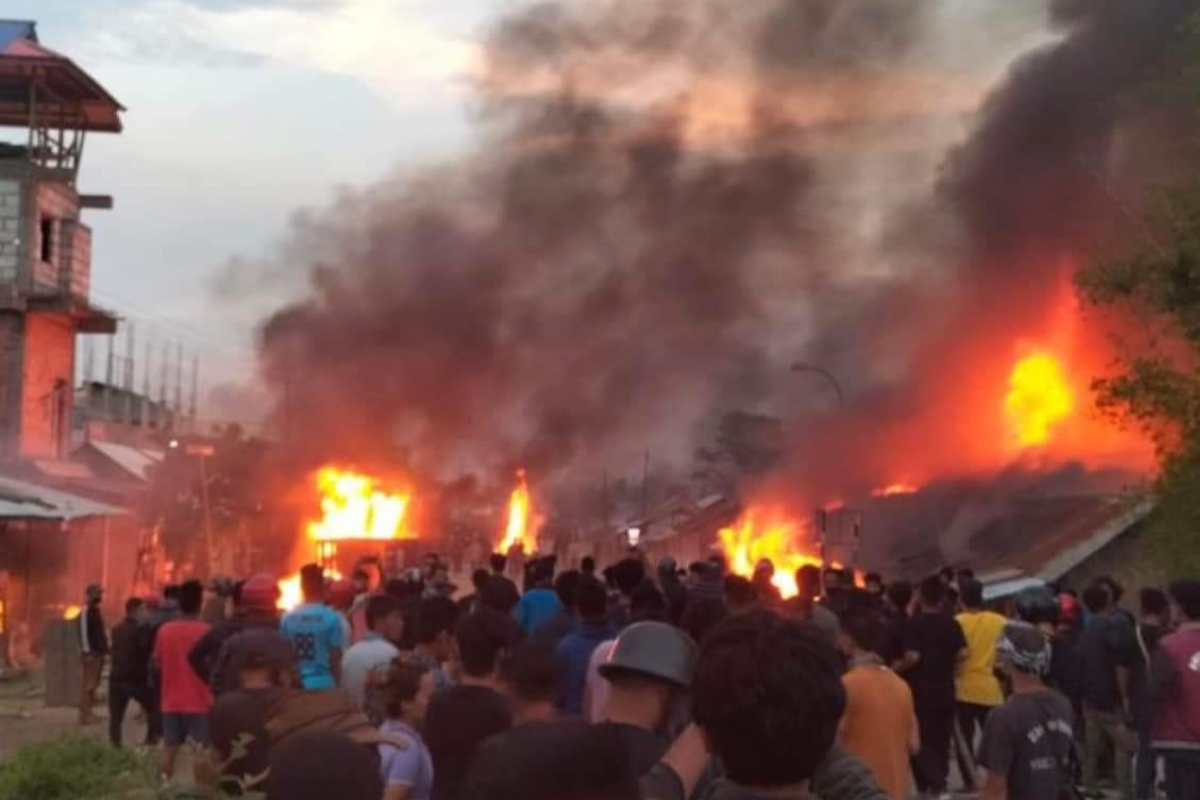
The top court asked the state government to spell out details of its actions taken against the culprits and the encroachers.

The Bombay high court on Monday refused to grant an interim stay on setting up a fact-checking unit (FCU) under the recently amended Information Technology (IT) Rules to identify fake and false content on social media against the government, noting that no grave and irreparable loss would be caused.

On February 1, grappling with the intractable issue of the AMU's minority status, the top court said the 1981 amendment to the AMU Act, which effectively accorded it a minority status, only did a "half-hearted job" and did not restore the institution the position it had prior to 1951.

The apex court in May agreed to hear a plea filed by the father of one of the victims challenging the high court's order acquitting Koli in the case.

The Kashmir issue should be resolved through dialogue and consultation between India and Pakistan, China said on Tuesday while reacting to the Supreme Court judgment on Article 370 upholding the central government's decision on the erstwhile state of Jammu and Kashmir.
The court said the disqualification petitions have to be adjudicated expeditiously.

The Supreme Court on Wednesday dismissed an application seeking the recusal of Chief Justice of India D Y Chandrachud from hearing the pleas relating to legal validation for same-sex marriages.

An exasperated Justice Chandrachud asserted he will not allow any lawyer to "dictate" the procedure of the court.

The bench allowed the rejoinder affidavit to be filed by petitioners in two weeks thereafter and posted the matter for final hearing in January, 2025.
 © 2026 Rediff.com - Investor Information - Advertise with us - Disclaimer - Privacy Policy - Sitemap - Feedback - About us - Terms of use - Grievances