
A bench comprising Chief Justice B R Gavai and Justice Augustine George Masih asked senior advocate Kapil Sibal, appearing for those challenging the validity of the law, and Solicitor General Tushar Mehta, representing the Centre, to file their written notes by Monday.

The Supreme Court has ruled that a Governor cannot send bills to the President for consideration if the state assembly has already cleared them for a second time. The court was questioning the Centre over the powers of the Governor when it comes to granting assent to bills.

On Thursday, MMRDA strongly defended its decision to disqualify L&T from the two infrastructure projects in Mumbai, citing "substantial grounds" for the rejection of its technical bids.
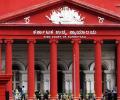
A lawyer for Elon Musk's X told the Karnataka high court on Tuesday that if every "Tom, Dick and Harry" government official is authorised to send content takedown notices then it would amount to misuse of official powers, remarks that drew strong condemnation from the Centre as well as the judge.

The Supreme Court is examining the extent to which courts can intervene when governors delay or refuse to act on bills passed by state assemblies. The court questioned the Centre on whether judicial review is barred in cases of gubernatorial inaction, sparking debate on the balance of power between states and the central government.

BJP-ruled states argued in the Supreme Court that governors and the President have autonomy in assenting to bills passed by state assemblies, asserting that courts cannot mandate assent.

The Supreme Court expressed its disapproval of an analogy used by the Centre in support of the inclusion of non-Muslims in Waqf boards, stating that such logic would disqualify a bench of Hindu judges from hearing matters related to Waqf. The CJI questioned the Centre's stance on the provisions of the Waqf (Amendment) Act, 2025, which allows non-Muslim members in the Central Waqf Council and state waqf boards. The Solicitor General defended the provisions, emphasizing that the non-Muslim inclusion is limited and does not impact the Muslim composition of these bodies. However, the CJI asserted that judges shed their religious affiliations while serving on the bench and maintained their secularity in their judicial capacity.
The Centre has opposed the imposition of fixed timelines on governors and the President for decisions on bills passed by state legislatures, arguing that such constraints were intentionally omitted by the Constitution's framers.

Podcaster Ranveer Allahbadia has filed an undertaking in the Supreme Court stating he will maintain decency in his shows. The undertaking was filed after the court allowed him to resume his podcast "The Ranveer Show" on March 3, subject to maintaining "morality and decency." Allahbadia, popularly known as BeerBiceps, was booked for his comments on parents and sex on comic Samay Raina's YouTube show "India's Got Latent." The Supreme Court previously called his comments "vulgar" and said he had a "dirty mind" which put society to shame.
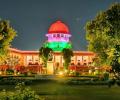
The Centre has told the Supreme Court that imposing fixed timelines on governors and the president to act on bills passed by a state Assembly would amount to one organ of the government assuming powers not vested in it by the Constitution and lead to a "constitutional disorder".

A two-judge bench of the top court had on August 11 directed authorities in Delhi-National Capital Region (NCR) to start picking up stray dogs from all localities "at the earliest" and relocate the animals to dog shelters.
The Supreme Court has questioned the practice of Governors withholding assent to bills indefinitely, stating that it renders the constitutional provision of 'as soon as possible' meaningless.

The Delhi High Court has set aside a Central Information Commission (CIC) order that directed the disclosure of information related to Prime Minister Narendra Modi's bachelor's degree.

In a significant development, the Supreme Court on Thursday recalled its controversial May 2 verdict that had ordered liquidation of Bhushan Power & Steel Limited (BPSL) while setting aside a resolution plan of JSW Steel Limited for the ailing firm. A bench comprising Chief Justice B R Gavai and Justice Satish Chandra Sharma observed that the May 2 judgment, authored by Justice Bela M Trivedi, since retired, did not "correctly consider the legal position as has been laid down in the catena of judgments".
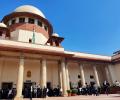
The Supreme Court addressed the issue of probe agencies summoning lawyers for providing legal advice to clients under investigation, emphasising that lawyers should not be summoned merely for offering legal advice but can be if they are assisting in the crime. The court is considering guidelines to prevent investigative overreach and protect lawyer-client privilege.

The Supreme Court expressed serious concern over the Enforcement Directorate summoning advocates for offering legal advice or representing clients during investigations, calling for guidelines on the matter.

As soon as one of the pleas came up for hearing on Friday, Solicitor General Tushar Mehta, appearing for the Centre, objected and said there can't be an "endless" filing of pleas challenging the Act.

The Indian government defended its decision to revoke the security clearance of Turkey-based Celebi without warning, citing an "unprecedented" threat to aviation security. Solicitor General Tushar Mehta argued that giving a hearing or reasons before taking action would "defeat the purpose" in matters of national security. The decision came after Turkey backed Pakistan and condemned India's airstrikes on terror camps in the neighboring country. Celebi, which operates at nine Indian airports, has challenged the government's move in court.

The Supreme Court on Friday directed authorities not to deport to Pakistan six members of a family, who allegedly overstayed their visa, till their citizenship claim is verified.

The Centre on Wednesday told the Supreme Court that nobody can claim right over government land and it is legally empowered to reclaim properties which are declared waqf by using the waqf by user principle.
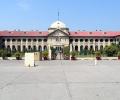
The Supreme Court on Tuesday took exception to the Allahabad high court's recent remarks in a rape case as reportedly saying the complainant "herself invited trouble", and wondered why it made such observations while deciding a bail plea.

A bench of Justices Surya Kant and N Kotiswar Singh also questioned the authenticity of materials placed before it by petitioner Mohd Ismail and others and refused to stay any further deportation of Rohingyas saying similar relief was denied by the court.

The Supreme Court of India has reserved its interim orders on three key issues related to the Waqf (Amendment) Act, 2025, including the power to denotify waqf properties, the composition of waqf boards, and the provision regarding government land. The court heard arguments from both the petitioners, who challenged the validity of the amended law, and the Centre, which defended the Act as a secular concept. The petitioners sought interim orders to prevent the implementation of certain provisions while the court considers the legal challenges.

The Supreme Court has announced it will decide in April whether to reconsider its 2022 verdict upholding the Enforcement Directorate's powers to arrest and attach property under the Prevention of Money Laundering Act (PMLA). The court is hearing a batch of pleas seeking a review of the July 2022 verdict, which upheld the ED's powers of arrest and attachment of property involved in money laundering, search and seizure under the PMLA. The verdict came on a batch of over 200 petitions filed by individuals and other entities questioning various provisions of the PMLA.

The CJI called Justice Gavai his "biggest support" while expressing confidence in the latter's leadership and commitment to constitutional values.
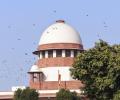
The Indian government defended the Waqf (Amendment) Act, 2025 in the Supreme Court, arguing that waqf, while an Islamic concept, is not an essential part of Islam. Solicitor General Tushar Mehta stated that waqf is essentially charity, which is recognized across religions, and cannot be considered a fundamental tenet of any faith. He also argued that the amended law addresses secular aspects of waqf and activities unrelated to Islam, and that "waqf by user" does not grant ownership of public land. Mehta highlighted the extensive consultations involved in the bill's creation, including feedback from various stakeholders. The hearing will continue on Thursday.

The Supreme Court of India on Tuesday questioned the issue of using "spyware against terrorists" and stated that any report touching upon the country's "security and sovereignty" won't be made public. The court indicated it might address individual concerns regarding privacy breaches, but the report of the technical committee would not be a document for public discussion. The court will examine the extent to which the report can be shared publicly. The court's statement came during a hearing on a petition related to the alleged use of Pegasus spyware for surveillance. The court also emphasized that "having spyware is not wrong, against whom you are using is the question" and that the security of the nation cannot be compromised. The hearing has been adjourned to July 30.
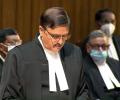
Justice Abhay S Oka, known for his unwavering commitment to liberty and constitutional values, bid farewell to the Supreme Court of India. In his final address, he stressed his dedication to upholding constitutional liberties, emphasizing that it was his "honest endeavor" to fulfill the dream of the Constitution's framers. He also expressed gratitude to the bar and his colleagues for their support and shared heartfelt memories from his time on the bench. Justice Oka's departure marks the end of a distinguished judicial career spanning over two decades, during which he served as a judge of the Bombay High Court, Chief Justice of the Karnataka High Court, and ultimately, as a Supreme Court justice.

"Liberty is granted to newly-added respondents (states) to file a response within 15 days from the date of service, and rejoinder if any be filed after 15 days. The interim order to continue and will equally apply to the cases mentioned in the amended writ petition. We direct no further cases be registered without the permission of this court," the bench's order said.

Chief Justice of India Justice B R Gavai on Friday praised Justice Bela M Trivedi for her career trajectory from the subordinate judiciary all the way up to the Supreme Court, where she became the eleventh woman judge to be appointed in its history.
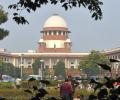
The Supreme Court on Monday said the pleas challenging the Waqf (Amendment) Act's constitutional validity will now be taken up by a bench headed by Chief Justice of India-designate Justice B R Gavai on May 15 as the incumbent CJI will be demitting office on May 13.
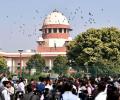
The Supreme Court on Monday said the trial of the Manipur ethnic violence cases, probed by the Central Bureau of Investigation, would be conducted in Guwahati, Assam, where it was transferred to earlier.

The Supreme Court of India has refused to halt the redevelopment project of Dharavi in Mumbai, allowing the Adani Group to proceed with their project. The court rejected a plea from Seclink Technologies Corporation, the original highest bidder for the project in 2018, which challenged the tender process and the award to Adani Properties Pvt Ltd in 2022. The court directed Adani Properties to make payments through a single bank account and ordered Seclink Technologies to file an affidavit detailing their increased offer for the project. The project work has already commenced, with constructions underway and 2,000 people employed on the site.

The Supreme Court of India has asked DMK leader V Senthil Balaji to choose between his ministerial post in Tamil Nadu and his freedom. The court expressed concern over Balaji's reinstatement as a minister despite being granted bail in a money laundering case related to the "cash-for-job" scam. The court fears that Balaji's presence as a minister could influence witnesses in the case. The court has given Balaji until April 28 to make a decision.
The Supreme Court of India has assured the creation of a robust mechanism to address the alarming number of suicides occurring in Indian Institutes of Technology (IITs) and Indian Institutes of Management (IIMs). The court was informed that 18 suicides had taken place in these institutions over the past 14 months. The court has also directed the University Grants Commission (UGC) to finalize draft regulations aimed at combating caste-based discrimination in educational institutions.

Underscoring the 'presumption of constitutionality in favour of law', the Supreme Court on Tuesday said petitioners challenging the waqf law needed a 'strong and glaring' case for interim relief.

The Supreme Court of India has agreed to hear on May 6 the pleas of the Kerala government against the governor over the delay in approving bills passed by the state assembly. The court will consider whether the issues raised in the Kerala petition are covered by a recent judgment on a similar plea by Tamil Nadu, which set timelines for governors and the President on granting assent to bills.

The Supreme Court of India is set to rule on the case of a pastor whose body has been lying in a mortuary for 15 days due to a dispute over his burial site in a Chhattisgarh village. The court expressed concern over the delay and urged for an amicable settlement, while the Chhattisgarh government insisted on the designated burial area for Christian tribals being 20-30 kilometers away from the family's village. The court will deliver its verdict after hearing arguments from both sides.
The Supreme Court of India has stayed a Lokpal order that allowed complaints to be filed against a sitting high court judge. The court termed the order "something very, very disturbing" and a concern for the independence of the judiciary. The bench issued notices to the Centre, the Lokpal registrar, and the complainant, directing them to keep the identity of the judge confidential. The court will hear the matter again on March 18.
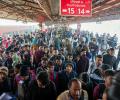
The Delhi high court on Wednesday asked the Railways to examine the fixing of maximum passengers and sale of platform tickets -- issues raised in a public interest litigation (PIL) over the recent stampede at the New Delhi Railway Station.
 © 2026 Rediff.com - Investor Information - Advertise with us - Disclaimer - Privacy Policy - Sitemap - Feedback - About us - Terms of use - Grievances