
The contrived controversy over the so-called blockade of the India-Nepal border has obscured the perilous path on which the current ruling elite in Nepal are taking the country towards.

New age technology will reshape India's future.

'The US-India relationship is in a different league altogether,' Obama administration officials tell Aziz Haniffa/Rediff.com in Washington, DC.

If we value India, we must not only 'Make in India', but defend the idea of India, too.

While a centralised approach to running things expedited decision-making in Gujarat it may become the very thing that decelerates Modi in the Centre, opines Nilmadhab Mohanty.

When a Chinese warship entered Japanese waters, the Indian commander called on China to maintain discipline at sea. Dr Rajaram Panda explains the significance of the Malabar exercises between India, Japan and the US.

Indeed, Prime Minister Narendra Modi, who as Gujarat chief minister was considered close to certain business groups and industrialists, has hardly been seen with any Indian business head.

'The combination of the LeT and the ISI is the most dangerous terrorist challenge in the world because it carries a real and present danger of provoking nuclear war.'

Narendra Modi's diplomacy and persuasive prowess has ensured long-term investments from China and Japan.
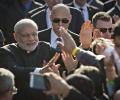
'Stand-alone' trip to North American nation and a strong track record in Gujarat open doors to business.

'The BJP is not the party it was 10 years ago. It has changed. It is emerging like the Congress.' 'Sometimes, I feel the BJP has taken the Congress' space.' 'Its politics is also resembling the Congress.'

Finance Minister Arun Jaitley is unlikely to heed economists' suggestion that an inheritance tax be introduced in Budget 201415 as an additional revenue stream.
Finance Minister Arun Jaitley is unlikely to heed economists' suggestion that an inheritance tax be introduced in Budget 201415 as an additional revenue stream.
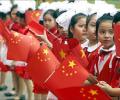
Chinese leaders may well respond to challenges with heightened rhetoric.

'I could see it not having any impact whatsoever,' says Stephen P Cohen on Obama's India visit.
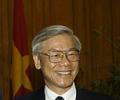
India-Vietnam relationship has its own imperatives and dynamism. In India's look east policy Vietnam has been the major pivot, at least in terms of security and strategic imperatives, says Rup Narayan Das.

'General Bajwa is believed to consider the internal threats to Pakistan's security as far more serious than the bogey of the Indian threat.' 'This doesn't mean that he is soft on India, only that he is more rational and sensible than his predecessor who had a bit of a chip on his shoulder about India,' points out Pakistan expert Sushant Sareen.
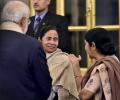
Prime Minister Narendra Modi has positioned himself as a credible partner for Bangladesh. He has scored by getting West Bengal Chief Minister Mamata Banerjee to travel with him to Dhaka, says Srinath Raghavan

Former prime minister Jawaharlal Nehru had sought American assistance and wrote to the then US president John F Kennedy to provide India jet fighters to stem the Chinese tide of aggression during the 1962 Sino-India war, according to a new book.

India must formulate a new growth path to become a top Asian economy.
Activist and journalist Madhu Kishwar on Smriti Irani and the controversy over the four-year course offered by the Delhi University.

'Who in Pakistan was intending to carry out one of the most grievous acts of international terrorism just a few months ago?' Former CIA official Bruce Riedel reveals how the Lashkar-e-Tayiba and the ISI planned the attack on the Indian consulate in the Afghan city of Herat in May to take Indian diplomats hostage and disrupt Narendra Modi's swearing-in.
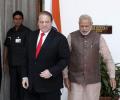
India'Prime Minister Narendra Modi has been congratulated for his speedy diplomacy and his talks with Pakistani counterpart Nawaz Sharif. However, academic Christine Fair and former Pakistan ambassador to US Husain Haqqani dismiss the meeting, calling it merely a photo-op and an exercise in futility. Aziz Haniffa reports.
To be sure, Modi is no Vajpayee; at least that is the impression he gives. However, this doesn't mean that he will be looking for a fight. All it means is that if Pakistan seeks a fight, he will not back down. What it also means is that the pusillanimous approach of the previous governments to ceaseless provocations from Pakistan will probably change, says Sushant Sareen.

The BRICS summit offers Modi an excellent platform to reach out to world leaders and conduct diplomacy on the very ticklish issue of reform of the world governance structure, and to exchange notes with his peers on international, regional and bilateral issues on the margins of the meeting, says Rup Narayan Das.

Indian Ambassador to the United States Dr S Jaishankar told Rediff.com's Aziz Haniffa that it was "a very nice meeting and President Barack Obama was extremely cordial."

'A veiled secret of India's defence and strategic culture is the lack of a serious interest in them by the political class. The Indian National Defence University would fill this void,' feels Lieutenant General Anil Chait (retd).

'In the past the US has been reluctant to name Pakistan directly in an US-India joint statement.'

Arvind Panagariya speaks about climate change, globalisation and India's economy.
We should be prepared for a phase of increased tensions in India-Pakistan relationship thanks to the evolving situation in Afghanistan, says Shyam Saran.

As the context of Panchsheel has changed, it is all the more essential that India and China need to reinvent and redefine Panchsheel for a new world order taking into account globalisation, and mutual economic interdependence. The new Panchsheel, in order to be relevant, needs to shed its binary approach of west verses the east recognising the seamlessness of global frontiers, which globalisation has brought in, says Rup Narayan Das.
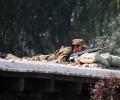
Pakistan faces a challenge largely of its own creation and only political processes can correct it, argues Raza Rumi.
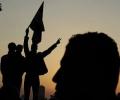
A disparate global network of violent fundamentalist Islamic groups threatens India's eastern flank as much as the north and west with a real possibility of these spilling over into our borders, says Shyam Saran.

The visit of Park Geun-Hye to India, though a symbolic one, will certainly give a further impetus to the strategic partnership between the two countries says Rup Narayan Das.
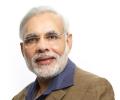
The major driver of Mod's foreign policy can be gauged from his economic priorities such as creating employment opportunities for the youth bulge. Related to this is emphasis on manufacturing, and infrastructure development, which in turn raises the issue of FDI. He has already articulated his views on all these issues, says Rup Narayan Das.

India has no compelling reason to grant his request for asylum but was unduly inhibited in raising its voice against the United States' extensive and vulgar intrusion into the privacy of its institutions and citizens, says Shyam Saran
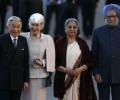
In recent years India-Japan relations have acquired rich economic content and strategic intents. Although the bilateral trade at $18 billion between the two countries is not very impressive and leaves much to be desired, the economic engagement between the two countries is both qualitatively and quantitatively noteworthy. India-Japan defence cooperation, however, has generated a lot interest among the strategic community in the context of rise of China. There has been a lot of speculation about India-Japan strategic partnership to hedge China, says Rup Narayan Das.
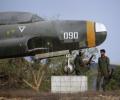
Providing military assistance in the hope that it will change Pakistan's worldview is wrong, says erstwhile ambassador to the United States Husain Haqqani

Permissive communalism, as represented by the Sachar Committee report, cannot become the basis to counter the threat of majoritarianism, says D L Sheth.

Five longtime Republicans -- K V Kumar, Puneet Ahluwalia, Suhail Khan, Ajay Kuntamukkala and Harry Walia -- have been named to the GOP's Asian Pacific American Advisory Council.
 © 2026 Rediff.com - Advertise with us - Disclaimer - Privacy Policy - Sitemap - Feedback - About us - Terms of use - Grievances