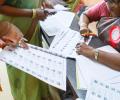
The Supreme Court of India resumed hearing petitions challenging the Special Intensive Revision of electoral rolls in Bihar, addressing the use of Aadhaar and concerns about voter deletions.

Inter Miami's Lionel Messi did not participate in training on Wednesday due to a muscle strain in his left hamstring, with his injury leading to the postponement of what was supposed to be the reigning MLS Cup champions' preseason finale.

Sivagiri Mutt head Swami Satchidananda has voiced concerns over the lack of adequate representation for backward communities in elections by political parties in Kerala, India. He also welcomed the Kerala High Court decision disqualifying the leadership of the SNDP Yogam.

'My argument was straightforward: If the Constitution allows this reservation and SC/ST and OBC candidates are already getting reservation in private institutions -- backed by Constitution Bench orders -- then not extending the same to EWS candidates directly violates the 103rd Amendment and Article 14, which guarantees the right to equality.'

'Credit growth in India remains in double digits, even though corporate borrowing is subdued.' 'Corporate credit is weak because companies are cash-rich and cautious amid global uncertainty.'
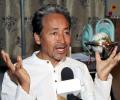
Climate activist Sonam Wangchuk, detained under the National Security Act, denied allegations in the Supreme Court that he incited sedition. His lawyer argued that the police selectively used video evidence to mislead authorities.

The Supreme Court intervened to protect the Punjab Kesari newspaper from coercive actions by the Punjab government and its pollution control board, ensuring its continued publication.

The Supreme Court has sought responses from the Centre, the CBI and others on a plea filed by a 78-year-old retired banker who was duped of Rs 23 crore after allegedly being put under "digital arrest" for nearly a month.

The Supreme Court has directed the Election Commission to display the names of those on the 'logical discrepancies' list at various public offices in West Bengal, addressing concerns about irregularities in the voter rolls.

A bench of Justices Vikram Nath and Sandeep Mehta termed the exorbitant rise of airfares by airlines as "exploitation" and asked the Centre and the Directorate General of Civil Aviation (DGCA) to file their replies to a PIL seeking binding regulatory guidelines to control the unpredictable fluctuations in airfare and ancillary charges imposed by private airlines in India.

A 20-year-old woman, previously employed by a YouTube channel, allegedly committed suicide in Hyderabad due to a 'love failure' after texting her mother in Kuwait.
Supreme Court judge Justice Ujjal Bhuyan asserts the independence of the judiciary and its importance in upholding the Constitution, emphasizing that the government has no role in the transfer of judges.

The Election Commission has uploaded the names of people on the list of SIR logical discrepancies list on its website following a Supreme Court order. The district electoral officers will download the list and display it on panchayat bhavans and block offices.

The Election Commission has released the final electoral roll for Tamil Nadu, revealing a significant decrease in the number of voters due to deletions and new additions.

Dismissing Gandhi's claims, the sources said eight names were finalised for filling the vacancies in the Central Information Commission (CIC) by the three-member committee.

Twelve Indian Super League clubs have accused the All India Football Federation of retaining a surplus from the current season, despite promising not to profit from the league.

The Supreme Court has sought Karisma Kapoor's response to a plea by Priya Sachdev Kapur for a certified copy of the 2016 divorce settlement between Kapoor and her late husband, Sunjay Kapur. The case is related to an ongoing legal battle in the Delhi High Court concerning Sunjay Kapur's assets.

The Supreme Court of India has expressed concern over a growing trend of litigants and lawyers making scandalous allegations against judges when court rulings are unfavorable. The court cautioned against such conduct, emphasizing the duty of lawyers to uphold the integrity of the judicial system.
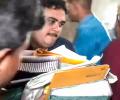
The Supreme Court has expressed serious concern over the Enforcement Directorate's allegations of obstruction by the West Bengal government and Chief Minister Mamata Banerjee during raids related to a coal-pilferage scam. The court intends to examine the matter and has also taken note of the commotion at the Calcutta High Court during hearings related to the case.

Trump administration will use "alternative legal authorities" to enforce tariffs on the countries, assuring that the tariff revenue will remain unchanged.
The Supreme Court has ordered a CBI probe into the Karur stampede, prompting varied reactions from political parties. DMK claims misrepresentation in the petition, while AIADMK sees the decision as a setback for DMK. Other parties express their views on the investigation and its implications.
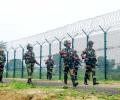
The Indian Army has raised concerns in the Supreme Court regarding the construction of a multi-speciality hospital near the Indo-Bangladesh border in Assam, citing potential security risks from drone movement and long-range sniper rifles. The court is seeking a balance between public health needs and national security.

The Supreme Court declined to intervene in allegations of harassment against women dog feeders, stating it's a law and order issue. The court is hearing arguments in the stray dogs case and addressed concerns about unregulated breeding and exotic imports.

The Supreme Court of India has ruled that a widow is entitled to claim maintenance from her father-in-law's estate under Hindu law, regardless of when her husband died.
The Supreme Court has stayed a Madhya Pradesh High Court order that would have reinstated a judicial officer who was terminated for allegedly creating a nuisance and urinating in front of a woman's berth on a train in 2018.
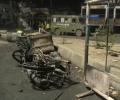
A protest march in Siliguri, India, concerning the alleged assault of a pregnant Adivasi woman, escalated into violence, prompting police intervention and multiple detentions.

The Supreme Court expressed concerns over the dangers posed by stray animals, including dog bites and accidents, and urged civic bodies to strictly enforce rules and regulations. The court is hearing pleas for modification of its earlier orders related to the issue.

The Securities and Exchange Board of India (Sebi) has, in principle, agreed to the proposed settlement of the long-pending colocation and dark fibre cases filed by the National Stock Exchange (NSE), Sebi chairman Tuhin Kanta Pandey said on Wednesday.

The BJP has criticized West Bengal Chief Minister Mamata Banerjee following Supreme Court observations regarding obstructions during ED raids at I-PAC premises, alleging abuse of power and shielding of those accused of corruption.

The Supreme Court declined to hear a plea from the producer of Vijay's 'Jana Nayagan' regarding censor board clearance, directing them to the Madras High Court. The case involves delays in certification and political undertones in the film.

The Chhattisgarh High Court has granted bail to Saumya Chaurasia, a former deputy secretary in the CMO, in two cases related to the alleged liquor scam that occurred during the previous Congress government.
The Supreme Court of India has ruled that an 'act of terror' under the Unlawful Activities (Prevention) Act (UAPA) includes planning, coordination, and mobilization, not just the final execution of the act. The court emphasized that the intent and effect of the act are crucial, not solely the instrumentality used.

The Supreme Court has clarified that a decree passed only against a real estate developer cannot be enforced against its directors or promoters in their personal capacity unless the original adjudication clearly finds them liable.

A petition has been filed in the Supreme Court challenging the Delhi High Court's decision to suspend the jail sentence of expelled BJP leader Kuldeep Singh Sengar in the 2017 Unnao rape case.

The Supreme Court of India has expressed concern over the lack of implementation of stray animal norms and indicated it will direct state governments to pay significant compensation for dog-bite incidents. The court also suggested holding dog feeders responsible for attacks.

The Supreme Court delivered a split verdict on the constitutional validity of Section 17A of the Prevention of Corruption Act, which mandates prior sanction for probing government servants in corruption cases. The case will now be placed before the Chief Justice for forming a larger bench.

Alankar Agnihotri, a 2019-batch Provincial Civil Service officer, resigned from service citing deep disagreement with government policies, especially the new UGC regulations.

The ruling is expected to have wide-ranging consequences for global trade, businesses, consumers, inflation trends and household finances across the country.
The Supreme Court clarified that it has not ordered the removal of all stray dogs, but rather that they should be treated according to Animal Birth Control (ABC) Rules. The court heard arguments on the issue, addressing concerns about rodent populations, hospital safety, and the implementation of existing regulations.

The bench said, "Be that as it may, the subject area shall ordinarily remain open for the public, except to the extent any development or maintenance work in particular places is required."
