
India's Mars orbiter craft has completed eight years in its orbit, well beyond its designed mission life of six months. Plans on a follow-on 'Mangalyaan' mission to the Red Planet, however, are yet to be firmed up.

There was, however, no official word from the country's national space agency, headquartered in Bengaluru.

ISRO Chairman V Narayanan announced the development of a massive rocket capable of placing 75,000 kg payloads in low earth orbit, highlighting India's growing space capabilities and future satellite launches.

Former President and renowned scientist A P J Abdul Kalam on Tuesday complimented Indian Space Research Organisation for the successful launch of Mars orbiter.

India successfully placed its spacecraft in orbit around Mars, becoming the first country in the world to succeed in such an inter-planetary mission in the maiden attempt itself.

The first Trajectory Correction Manoeuvre of India's maiden mission to Mars was on Wednesday carried out successfully by Indian Space Research Organisation scientists on the spacecraft, which is presently travelling some 2.9 million km away from Earth.
Watch the live coverage of the 'Mars Orbit Insertion'.

Tanmaya Nanda provides a quick guide to questions about the Mars mission you always wanted to ask but were afraid to
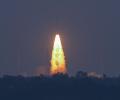
A PSLV rocket carrying Earth observation satellite EOS-09 failed to launch from the Sriharikota spaceport early on Sunday.

The third of the total of five orbit raising manoeuvres of the Mars Orbiter spacecraft was performed early on Saturday, raising its apogee, the farthest point from Earth, to over 71,000 km.

In terms of success rate, the PSLV rocket has an enviable record of 57 successful missions out of 58 commercial ones.
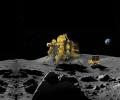
In a boost to the space programme, the government on Wednesday approved the Chandrayaan-4 mission to bring back moon rocks to earth, to send a spacecraft to orbit planet Venus and to expand the Gaganyaan project to build an Indian space station.

ISRO said on Saturday the Aditya-L1 spacecraft has travelled beyond a distance of 9.2 lakh km from Earth, successfully escaping the sphere of Earth's influence.
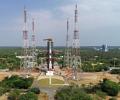
Days after landing on the Moon, India will aim for the Sun on Saturday with its maiden solar expedition, as ISRO's trusted PSLV will carry the Aditya L1 mission on a 125-day voyage to the Sun.
"Indeed, a satisfying feeling," K Radhakrishnan who as the then Chairman of Indian Space Research Oranisation (ISRO) led the Mars Orbiter Mission (Mangalyaan) team said on achieving the milestone.

The Mars Colour Camera onboard Indian Space Research Organisation's Mars Orbiter Mission has captured the image of Phobos, the closest and biggest moon of Mars.

India's maiden Mars mission is a success. And minutes after Mangalyaan made history it joined the Twitterati club.
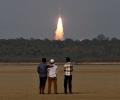
As NASA's Perseverance rover landed on Mars to look for signs of past life, ISRO chief K Sivan said India's next mission to the Red Planet is likely to be an orbiter.
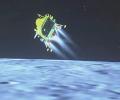
After Chandrayaan-3 touched down on the Moon, the Congress on Wednesday said it is a collective success of every Indian and ISRO's achievement reflects a saga of continuity and is truly fantastic.

Nail-biting moments gave way to celebratory mood at the command centre of Indian Space Research Organisation in Bangalore on Wednesday, as its Mars Orbiter Mission or Mangalyaan entered the red planet's orbit.


In a crucial manoeuvre ahead of India's Mars orbiter's entry into the final destination on September 24, the main liquid engine on the spacecraft was on Monday successfully test fired and its trajectory corrected.
Indian Space Research Organisation's Mars Orbiter, which was placed in inter-Mars trajectory in the early hours on Sunday, has crossed Moon's orbit and is travelling beyond Earth's natural satellite.

In a major boost to the Indian scientific community, the Mars Orbiter Mission (Mangalyaan), on its maiden tryst with the red planet, has completed 300 days of its journey in space and is just 23 days away from reaching its intended orbit.
Although the designed mission life of MOM was six months, the satellite has continued to beam back science data from Mars for the past four years.

The rover will carry out in-situ chemical analysis of the lunar surface during the course of its mobility.

The Mars Orbiter Mission, or MOM, India's first planetary mission to explore Mars, has successfully completed one year around the Red planet on Thursday.

A team of Indian Space Research Organisation scientists presented the first pictures of the Red Planet sent by Mars Orbiter Mission spacecraft to Prime Minister Narendra Modi on Thursday.

After sending missions to the Moon and Mars, ISRO is now readying a spacecraft to orbit Venus to study what lies below the surface of the hottest planet in the solar system and also unravel the mysteries under the sulfuric acid clouds enveloping it.
It's been just a few hours since India's first interplanetary mission, the Mars orbiter, entered the red planet's orbit successfully and it is already hard at work.


A day after India successfully launched the Mars Orbiter in the Red Planet on its first attempt, it tweeted the first image it took and captioned it, 'the view is nice up here'.

Crossing a major milestone in the country's space history, ISRO's Mars Orbiter mission ventured out of Earth's sphere of influence for the first time in an attempt to reach the red planet's orbit

On Monday, ISRO scientists will run a test of the Mars orbiter satellite's main engine and make a small course correction. This is crucial because the engine has been idle for nearly 10 months. T E Narasimhan reports
Indian Space Research Organisation's Mars Mission team has won the prestigious 2015 Space Pioneer Award in the science and engineering category in recognition of achieving the rare feat in its very first attempt.

India's Mars orbiter has sent a picture of regional dust storm activities over the northern hemisphere of the red planet, Indian Space Research Organisation said on Monday.


He said when India celebrates 75th year of Independence in 2022, "and if possible even before, an Indian son or daughter" will undertake a manned space mission on board 'Gaganyaan' "carrying the national flag".

In a once-in-a-million-years encounter, a comet, the size of a small mountain, flew past Mars on Sunday.

On Sunday morning, in its mission to place an earth observation satellite and students satellite into the low earth orbit, the SSLV-D1/EOS-02 blasted off precisely at 9.18 am amid cloudy skies from the first launch pad at Satish Dhawan Space Centre in this spaceport.
 © 2026 Rediff.com - Investor Information - Advertise with us - Disclaimer - Privacy Policy - Sitemap - Feedback - About us - Terms of use - Grievances