
On Tuesday, August 5, 2025, on the 6th anniversary of the abrogation of Article 370 and Article 35A, Jammu and Kashmir Lieutenant Governor Manoj Sinha along with J&K Police Director General Nalin Prabhat and Chief Secretary Atal Dulloo handed over government job appointment letters to family members of terror victims in Srinagar.

Saikia stressed that the Indian cricket board will continue to adhere to the policy formalised by the government.
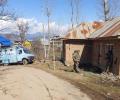
Security agencies are concerned about the increasing use of drones by terror groups in Jammu and Kashmir for surveillance and logistics, replacing human networks.
'This is not a match with one team. There are 6-7 more teams in it. We have to win against them, too. Only then will we win the trophy.'

Spinners of both sides will have a significant role to play considering that Jasprit Bumrah and Shaheen Shah Afridi are the only specialist pacers who will be seen in action in Sunday's match.

Salman Nizar smashed an unprecedented 11 sixes off 13 balls including a 40-run final over

Poonch district alone accounted for 13 civilian deaths among 28 fatalities in the Pakistani shelling and drone attacks in Jammu and Kashmir after the Indian armed forces carried out missile strikes on terror infrastructure across the border under Operation Sindoor in May in retaliation to the April 22 Pahalgam terror attack that left 26 persons, mostly tourists, dead.
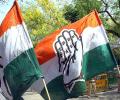
The Congress is fighting the elections in a pre-poll alliance with National Conference and has fielded 32 candidates, mostly in Jammu region, compared to 51 by the regional party. Additionally, the CPI(M) and the Jammu and Kashmir National Panthers Party (JKNPP) have each been allocated one seat while both the Congress and NC had a 'friendly contest' on five seats.

A terrorist was killed in an encounter with security forces in the Akhal forest area of Jammu and Kashmir's Kulgam district. The encounter began after a cordon and search operation based on intelligence inputs.

The Vaishno Devi Yatra remains suspended for the fourth day following a landslide that claimed 34 lives. Pilgrims express concerns about safety, while local associations offer support.

The anti-terror operation was part of Indian security forces' counter-offensive Operation Asan, launched after terrorists attacked an Army convoy in the Battal area on October 28.

Manoj Tiwary said that India should boycott the much-talked-about fixture against their arch-rival Pakistan in the upcoming Asia Cup.

The Jammu Development Authority (JDA) demolished a dozen shops belonging to displaced Kashmiri Pandits in Jammu city, allegedly without issuing notices, sparking protests from various sections demanding action against the officials. The shops were located on JDA land and had been built by displaced Kashmiri Pandits near the Muthi camp three decades ago. The demolition drive sparked outrage from political parties, including the BJP, PDP and Apni Party, and several Kashmir Pandit organisations, who condemned the JDA's action and called for the construction of new shops to help the displaced community sustain their livelihood.
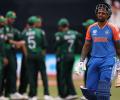
'Engaging with Pakistan at this stage sends out a message that undermines the sentiments of the people of India who stand firmly against any compromise on national security.'
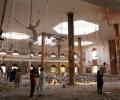
'But that was not our aim. Our objective was already achieved.'
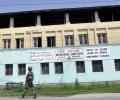
The process for the takeover of the management of the schools began on Saturday morning as officials of district administrations, principals of the respective nearest high and higher secondary schools, accompanied by police teams, reached these schools, the officials said.

The Shree Jagannath Temple Managing Committee (SJTMC) has formed a sub-committee, headed by former Lt Governor of Jammu and Kashmir, Girish Chandra Murmu, to suggest measures to ensure full protection of the temple in light of recent security breaches.

Fresher hiring grew by 8 per cent driven by non-IT services oil and gas, real estate, and education sectors.

To counter the threat and thwart the attempts of Pakistan-based handlers to spread terror in the peaceful areas of the region, officials said the Army, in close synergy with the police and the central armed police forces, has launched relentless operations in the vulnerable regions, especially in the dense forests.

India and Pakistan agreed on May 10 for a cessation of firing and military activity as a result of 'direct contact' between the director generals of military operations (DGMOs) of both nations, which was 'initiated by the Pakistani side', the Centre informed Parliament on Friday.

The Air Chief revealed information about India's damage to Pakistan's defence capabilities while addressing an event at the Hal Management Academy in Bengaluru on Saturday.

Manoj Tiwary shared his thoughts on whether the India-Pakistan clash should take place

A massive landslide struck the old track to the Vaishno Devi shrine in Reasi district of Jammu and Kashmir on Monday, leaving one pilgrim dead and 10 others injured, officials said.

Ahead of the Asia Cup, former Indian cricketer Surinder Khanna shared his views on whether the India-Pakistan clash should be played

Heavy rains exacerbate the flood situation in Punjab, leading to 37 deaths and widespread crop damage. Rescue and relief operations are underway as authorities issue alerts and provide assistance to affected populations.
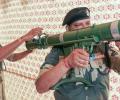
The Border Security Force (BSF) is raising a maiden 'drone squadron' for deployment along the India-Pakistan border. The squadron will comprise reconnaissance, surveillance and attack drones and specially-trained personnel.

The CBI has filed a case against six Jammu and Kashmir police officials for allegedly torturing a fellow constable in custody. The case was registered following a Supreme Court order.
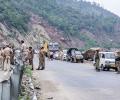
Three Central Reserve Police Force (CRPF) personnel were killed and 15 injured when their vehicle skidded off the road in Jammu and Kashmir's Udhampur district.
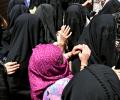
A Gujarat school is under investigation after staging an Independence Day play that depicted burqa-clad girls as terrorists, sparking outrage from the local Muslim community.
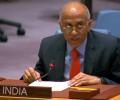
India's Permanent Representative to the UN Ambassador Parvathaneni Harish said that the Indian sub-continent offers a "stark contrast" in terms of progress, prosperity and development models.
The surge in radicalisation has even startled some ex-separatist groups as they are concerned that another religious extremism wave, forced from the other side of the Line of Control, will destabilise the Valley's centuries-old Sufi tradition.

The shocking scenes of physical and psychological trauma unfolded on a massive scale as search and rescue operations were underway, digging out mud-buried bodies and rescuing the injured trapped in slush and rocks after flash floods triggered by a cloudburst devastated Chositi village in Jammu and Kashmir's Kishtwar district on Thursday.

"In 1948, Indian armed forces were in a decisive position to take back Pakistan-occupied Kashmir but then PM Jawaharlal Nehru declared unilateral ceasefire," Amit Shah said. In 1971, Shah said, 93,000 Pakistani soldiers surrendered and India had 15,000 sq km Pakistan territory under control, but still PoK was not taken back. During the 1962 war with China, then PM Nehru bade goodbye to Assam in a speech on Akashvani, he said.
The delayed timing of J&K Lieutenant Governor Manoj Sinha's admission has more to do with deflecting the thrust of the Opposition attack on the prime minister and Union home minister during the monsoon session of Parliament, points out Mohammad Sayeed Malik, the distinguished commentator on Kashmir affairs.

Rijiju also hit out at Congress leader Rahul Gandhi, saying that his own party MPs "get uncomfortable" when he speaks in Parliament and are apprehensive that he will do "anap-shanap baatein" and the party will have to bear the consequences.

It sustained fatal bullet injuries on Monday while attempting to protect the troops from the terrorist assault.

At least 36 Amarnath pilgrims sustained minor injuries when five buses collided in the Ramban district along the Jammu-Srinagar National Highway. The accident occurred due to brake failure, and the injured were treated and continued their journey.

The encounter broke out when a joint search party of the army and police launched a search operation, based on a specific intelligence, in remote Bihali area of Basantgarh in the district this morning. Reinforcements have been rushed in and a massive search operation is going on despite bad weather.
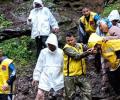
Glimpses from India and around the world that will make you smile and cry.

Both candidates have shifted from their traditional constituencies - Sadhotra from Marh and Sharma from Akhnoor - after these two segments were reserved for Scheduled Castes.
 © 2026 Rediff.com - Advertise with us - Disclaimer - Privacy Policy - Sitemap - Feedback - About us - Terms of use - Grievances