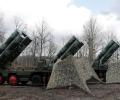
India successfully intercepted or neutralized all Pakistani missiles and drones that targeted 15 Indian cities on Wednesday night, according to official sources. The attack, which was launched in response to India's Operation Sindoor, involved the deployment of Barak-8 missiles, S-400 Triumph air defense systems, Akash surface-to-air missiles, and indigenously developed anti-drone equipment. India retaliated with precision strikes on Pakistani territory, destroying an HQ-9 air defense unit in Lahore and damaging key radar infrastructure. The incident highlights the strength of India's air defense capabilities and its ability to project power with surgical precision.
India expects Turkiye to strongly urge Pakistan to end its support to cross-border terrorism, said ministry of external affairs spokesperson, Randhir Jaiswal during the weekly briefing on Thursday.

The visiting personnel will also ascertain difficulties, if any, being faced by the "families of our war heroes", he said.

Heavy security has been deployed at vital installations in Delhi, including government buildings and areas with high footfalls, following Pakistan's drone attacks on Indian military sites. Police have strengthened vigil in areas with high footfalls and have canceled leaves for all Delhi Police personnel. The developments come after India swiftly thwarted Pakistan's attempts to strike military sites with drones and missiles.

On Friday, March 28, 2025, Chief of Defence Staff General Anil Chauhan, inaugurated Techkriti 2025, Asia's largest intercollegiate technical and entrepreneurial festival, at IIT Kanpur.

A student activist and "independent journalist" from Kerala, Rejaz M. Sheeba Sydeek, has been arrested in Nagpur for allegedly "preparing to wage war against the Government of India." The arrest was made after Sydeek allegedly condemned Operation Sindoor, an Indian Armed Forces operation against terror targets in Pakistan, and criticized operations against Naxalites on his Instagram account. Police found a book about professor G N Saibaba, who faced trial for alleged links with Naxalism, and another about Marxism-Leninism in Sydeek's bag. An English letter seized from his possession appeared to criticize the Indian government for anti-Naxal operations and called for "peace talks between the Indian state and the (banned) CPI (Maoist)".

It was Prime Minister Narendra Modi who picked the evocative term 'Operation Sindoor' to codename the Indian armed forces' strikes on nine terror sites in Pakistan and Pakistan-occupied Kashmir, official sources said on Wednesday.

The usual rush of devotees was missing this year, presumably due to the Pahalgam terror attack and the military action between India and Pakistan following it.

The Madhya Pradesh high court on Wednesday ordered registration of an FIR against state minister Vijay Shah for his controversial remarks targeted at Colonel Sofia Qureshi.
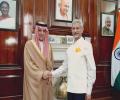
The Saudi statement came as tensions soared significantly, with Pakistan claiming that its three airbases were targeted by Indian missiles and drones early Saturday.
Prime Minister Narendra Modi hailed "Operation Sindoor" as a turning point in the global fight against terror, describing it as a symbol of India's growing strength and clarity of purpose. Addressing the nation through his monthly radio programme Mann Ki Baat, Modi said the operation reflects a changing and resolute India, and has inspired patriotism and self-reliance across the country.

The Chandigarh administration on Friday sounded a fresh air raid siren, appealing to people to remain indoors. The development came amid escalating tension between India and Pakistan.

The Indian Army effectively repulsed multiple drone attacks and other munitions launched by Pakistan's armed forces along the western border on the intervening night of May 8-9. Pakistan also violated ceasefire along the Line of Control in Jammu and Kashmir. The Indian Army said it responded with force, asserting that all nefarious designs will be countered.

US Secretary of State Marco Rubio on Thursday spoke separately with External Affairs Minister S Jaishankar and Pakistani Prime Minister Muhammad Shehbaz Sharif, emphasising the need for de-escalation and reiterated his calls for Pakistan to take concrete steps to end any support for terrorist groups.
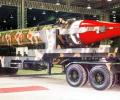
The US intelligence assessment highlights Pakistan's near-certain procurement of weapons of mass destruction-applicable goods from foreign suppliers, primarily through Chinese support.
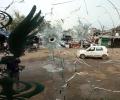
People in several districts of Punjab, Jammu and Kashmir and Gujarat spent an anxious night as authorities enforced blackouts amid heightened tension between India and Pakistan.
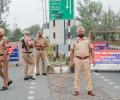
People in some border villages of Ferozepur district in Punjab began moving to safer areas amid soaring tensions between India and Pakistan.

Mahmudabad, head of the political science department at the private university, was arrested on Sunday after two FIRs were lodged on stringent charges, including endangering sovereignty and integrity, for his social media posts related to Operation Sindoor, police and his lawyer said.
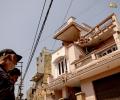
The casualties were reported hours before India and Pakistan agreed to end hostilities, which soared after the Indian Armed Forces hit terror launchpads in Pakistan and Pakistan-occupied Kashmir earlier this week in response to the Pahalgam attack.
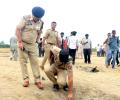
Indian Armed Forces brought down a number of these drones using kinetic and non-kinetic means.

The Indian Army has released a booklet on Operation Sindoor, which was launched to avenge the April 22 ghastly Pahalgam attack in which Pakistan-backed terrorists brutally killed 26 civilians, mostly tourists, and left many injured.

Stock market benchmark indices Sensex and Nifty tumbled over 1 per cent each on Friday as tensions soared between India and Pakistan, fuelling fears of a wider conflict.
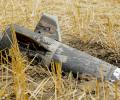
Debris resembling parts of a missile was found in a field in Hoshiarpur, Punjab, while metal parts of unidentified objects were discovered at two locations in Bathinda, sparking panic among locals. The incidents come after India successfully thwarted Pakistan's attempts to target military installations with drones and missiles across the country.
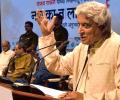
Akhtar criticised vested interest groups in Pakistan, particularly the army, the political establishment and the extreme right wing, for blocking peace efforts between the two nations.

India has carried out strikes against nine terrorist infrastructure in Pakistan and Pakistan-occupied Kashmir, Defence Minister Rajnath Singh said on Wednesday. The strikes were in retaliation to the Pahalgam terror attack in which 26 civilians were killed. Singh said the strikes were precise and destroyed the targets set under Operation Sindoor.

The Indian Air Force conducted precision strikes on terror hideouts in Pakistan, targeting a Jaish-e-Mohammad communication network housed in a primary health centre in Tehra Kalan village. The communication setup was essential for planning and coordinating activities with infiltrated terrorists in Jammu and Kashmir. The strikes aim to dismantle the communication network and hinder the terrorists' ability to operate.

With this decision, the government headed by Prime Minister Narendra Modi has sought to draw a red line against terror incidents and makes clear that it will follow a similar military response as it has after the Pahalgam incident if terrorists linked to Pakistan target India again.

The Supreme Court would likely hear on Wednesday a plea of Ashoka University's faculty Ali Khan Mahmudabad against his arrest for his social media posts over Operation Sindoor.
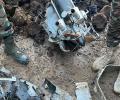
Local residents said a migrant labourer was injured in the incident, while a few houses in the area also sustained damage. Parts of the unidentified object were lying in the area, they said.
External affairs ministry spokesperson Randhir Jaiswal said India will keep the IWT in abeyance until Pakistan "credibly and irrevocably" abjures its support for cross-border terrorism.

The CCS meet was held at the prime minister's Lok Kalyan Marg residence, a day after he held a meeting with the top military brass and accorded operational freedom to the armed forces on the "mode, targets and timing" of India's response to the April 22 attack that killed 26 people.

Indian Army launched Operation Sindoor on May 7 to destroy nine terror infrastructures in Pakistan and Pakistan-Occupied-Kashmir in retaliation to the Pahalgam terror attack. All subsequent retaliations to Pakistani offensives were carried out under the moniker Operation Sindoor.
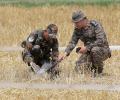
Metal debris was found scattered in three villages of Amritsar district, with some locals claiming them to be parts of missiles. Police are investigating the objects, while the Indian government claims to have foiled Pakistan military's attempts to attack 15 places in northern and western India using missiles and drones. Tensions between India and Pakistan have escalated after India launched missile strikes on terror targets in Pakistan and Pakistan-occupied Kashmir (PoK) in response to the April 22 killing of 26 people by terrorists in Kashmir's Pahalgam.
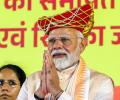
"In Pahalgam, terrorists not only shed the blood of Indians, but also attacked our culture. They tried to divide our society and the biggest thing is that the terrorists have challenged the women power of India," Modi said.

Under Operation Sindoor, Indian armed forces not only struck Pakistani military bases near the border but their might was even felt in Rawalpindi where the headquarters of the Pakistani Army is located, Defence Minister Rajnath Singh said on Sunday.

PBKS-DC game also uncertain, say BCCI Sources
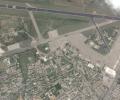
India's strikes on Pakistan damaged runways and structures across at least six airfields, according to a visual analysis by The Washington Post, which experts said were the most significant attacks of their kind in decades of simmering conflict between the two nations.
Since the Pahalgam terrorist attack, China, Pakistan's "ironclad ally", while condemning it, has called for restraint, besides a fair and swift investigation into the attack.
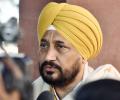
Congress MP and former Punjab Chief Minister Charanjit Singh Channi stoked controversy by demanding proof of the surgical strikes carried out by the Indian armed forces in Pakistan territory in the past under the Bharatiya Janata Party government at the Centre.

Jyoti was among 12 people who have been arrested from Punjab, Haryana and Uttar Pradesh over the past two weeks on charges of espionage, with investigators pointing at an alleged Pakistan-linked spy network operating in north India.
 © 2026 Rediff.com - Investor Information - Advertise with us - Disclaimer - Privacy Policy - Sitemap - Feedback - About us - Terms of use - Grievances